

Best Inventory Management Software with EDI Compatibility in 2026
.png)
April 9, 2026

Key Takeaways (TL:DR)
- The Best Overall Inventory Management Software with EDI Compatibility: Carro provides a modern, flexible approach, enabling inventory-free growth through a vast partner network with seamless EDI and API integrations. It is purpose-built for marketplace expansion and multi-supplier complexity.
- Why Do You Need It: Manual data entry between your inventory system and trading partners leads to costly errors, stockouts, and strained relationships. EDI inventory management software automates this communication, ensuring accuracy and efficiency.
- Who It’s For: This software is essential for retailers, distributors, and brands that exchange documents like purchase orders, invoices, and shipping notices with multiple trading partners. It's crucial for businesses scaling their supply chain.
- How to Choose the Right One: Focus on the system's integration flexibility (API vs. native EDI), its ability to manage multi-supplier workflows, and whether its infrastructure can provide real-time inventory visibility across all partners.
- Price Range: Expect to pay between $149 per month for entry-level, modern platforms and over $25,000 annually for enterprise-level ERP systems.
Table of Contents
Top Inventory Management Software with EDI Compatibility in 2026 at a Glance
What Is EDI Inventory Management Software?
EDI is a standardized digital format that allows different companies' computer systems to exchange business documents like purchase orders (POs), invoices, and advance ship notices (ASNs).
EDI inventory management software integrates two critical business functions: tracking your stock and automating communication with your business partners (Electronic Data Interchange). Instead of manually emailing, faxing, or re-entering order data, an EDI-compatible system translates this information automatically.
For example, when a major retailer orders your product, their system sends a standardized EDI purchase order to your software. Your system instantly processes it, updates inventory levels, and can trigger the shipping process without human intervention. This creates a seamless, fast, and error-free supply chain.
Why Do You Need Inventory Management Software with EDI Compatibility?
Operating without an integrated system is a recipe for operational chaos.
You are forced to rely on manual data entry, which is slow, expensive, and prone to human error. A single typo in a purchase order can lead to incorrect shipments, causing chargebacks from major retailers that can cost thousands.
According to a report on supply chain efficiency, businesses can reduce order processing errors by up to 40% by implementing EDI.
This isn't just about avoiding mistakes; it's about unlocking growth. Many large retailers and distributors require their suppliers to be EDI-compliant. Without it, you are locked out of major sales channels. EDI inventory management software automates these connections, letting you scale your partnerships, reduce operational costs, and fulfill orders faster.
It transforms your supply chain from a manual bottleneck into an automated engine for growth.
Here's the expanded version with an additional paragraph for each section, woven naturally into Carro's positioning:
Who Needs EDI Inventory Management Software?
Different businesses require EDI capabilities for unique reasons, but the core need for automated, standardized communication remains the same.
1. 3PLs and Warehouses
Third-party logistics providers manage inventory for multiple clients, each with their own set of trading partners. EDI is essential for receiving inbound shipping notices, sending outbound order confirmations, and providing real-time inventory updates to clients and their retail partners, ensuring smooth operations across a complex network.
For 3PLs looking to reduce integration overhead, platforms like Carro complement EDI capabilities by adding a composable, plug-and-play layer that sits alongside existing warehouse and fulfillment systems. Rather than forcing a rebuild of operational infrastructure, this approach allows 3PLs to connect their network of retail partners and suppliers through a unified system - automating order routing and reconciliation without introducing new complexity into an already intricate operation.
2. Distributors
Distributors sit at the center of the supply chain, buying from manufacturers and selling to retailers. They use EDI to automate the entire lifecycle, from sending POs to suppliers to receiving orders from retailers. This automation is crucial for managing high volumes of transactions accurately and maintaining slim margins.
Beyond transaction automation, distributors increasingly need a smarter way to manage their retailer relationships at scale. Modern dropship platforms extend EDI functionality by adding real-time inventory syncing, automated payouts, and performance visibility across the entire partner network - giving distributors the operational control they need to protect margins while expanding their retail footprint without taking on additional headcount or infrastructure costs.
3. B2B and Wholesale Brands
Brands selling to other businesses rely on EDI to streamline the wholesale ordering process. It allows them to efficiently process bulk orders, manage complex pricing structures, and provide accurate stock availability to their business customers, strengthening partner relationships.
However, wholesale-only distribution is no longer the only path forward for B2B brands. Platforms built for modern dropship partnerships allow brands to selectively approve retail partners, define their own margin structures, and get paid instantly when products sell - bypassing the long negotiation cycles and delayed cash flow that typically come with traditional wholesale. This gives B2B brands a complementary, lower-friction channel to grow distribution without compromising brand standards or profitability.
4. D2C Retailers Expanding into Retail
Direct-to-consumer brands looking to expand into big-box retail stores will find that EDI is non-negotiable. Major retailers like Walmart, Target, and Home Depot mandate EDI compliance for all their suppliers to manage their massive scale.
For D2C brands pursuing distribution beyond big-box, modern partnership platforms offer an equally powerful - and far more agile - alternative. Rather than waiting months for wholesale negotiations to close, brands can activate new retail partnerships in weeks, reaching established retailer audiences without upfront inventory commitments or paid acquisition spend. This approach lets D2C brands diversify their distribution strategy, test new retail relationships with minimal risk, and build direct insight into where and how their products are selling across partner storefronts.
5. Online Marketplaces
Modern marketplaces managing hundreds or thousands of suppliers need a flexible way to ingest product catalogs and route orders. While traditional EDI is one method, platforms offering flexible integrations via API, SFTP, and EDI provide a more adaptable infrastructure to onboard a diverse range of suppliers quickly.
For marketplaces focused on growth, the technical integration is only part of the challenge - the bigger opportunity lies in operationalizing the entire supplier lifecycle from a single platform. Purpose-built marketplace infrastructure goes beyond catalog ingestion, automating order routing, fulfillment tracking, settlement, and performance monitoring across every supplier relationship. This end-to-end orchestration is what allows marketplace teams to scale assortment and GMV without scaling their internal operations, adding new product categories and brand partners without introducing the operational drag that typically slows growth at scale.
Best Inventory Management Software with EDI Compatibility: In-Depth Review & Comparison
1. Carro
Overview
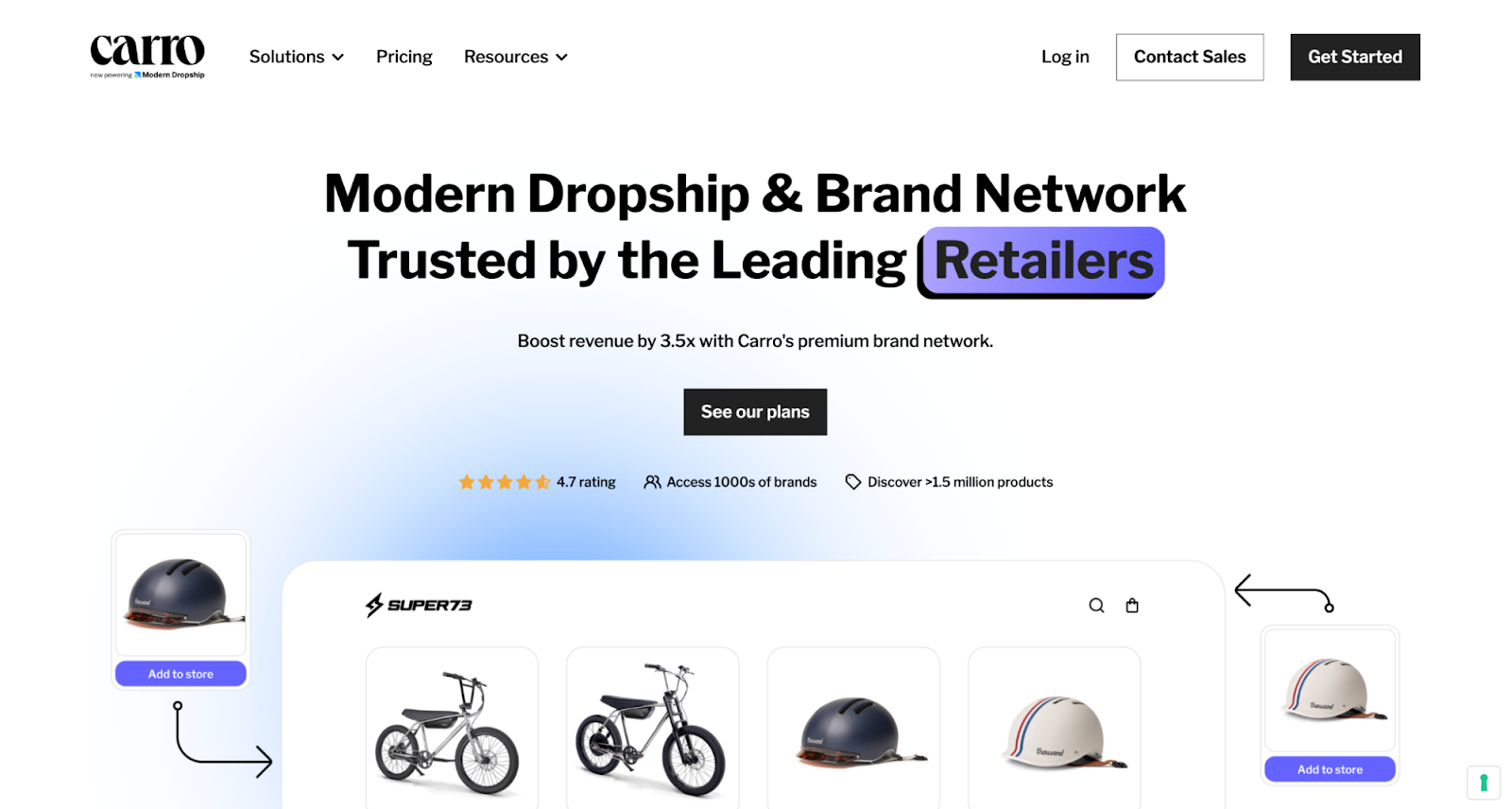
Carro, now powering Modern Dropship, is a purpose-built dropship platform that redefines how retailers and marketplaces grow their product assortment - without the cost or risk of holding inventory. Instead of simply tracking the products you own, Carro allows you to expand your product catalog by selling items from over 1,500,000 products sourced from vetted, established brand partners - without the cost or risk of holding inventory.
Think of it as borrowing supply.
With just a few clicks, you can browse and add complementary products to your store, with product pages, descriptions, and images synced instantly.
Carro’s platform manages the entire supplier lifecycle, from onboarding and catalog ingestion to automated order routing and payments. When a customer purchases a partner product, the order is routed directly to the supplier, who ships it to the customer. You collect the profit, and the supplier gets a new sale.
Built for modern, curated retail experiences, Carro combines traditional EDI and SFTP connections with a flexible, API-first infrastructure, designed for the speed and demands of today’s e-commerce landscape.
Ideal For
- Online marketplaces seeking to rapidly scale their supplier network and automate operations.
- DTC retailers aiming to expand into new product categories without inventory investment.
- Deal-driven retailers that need to onboard new suppliers and products quickly for promotions.
Top Features
- Real-Time Sync & Integrations: Product information, pricing, and inventory are updated automatically across partners. Carro supports native connections with Shopify, WooCommerce, BigCommerce, and Magento (Adobe Commerce), alongside EDI and SFTP for maximum flexibility across any supplier's technical setup.
- Automated Order Routing: When a customer purchases a partner product, the order is automatically and instantly sent to the correct supplier for fulfillment, eliminating manual work.
- Hand-Matched Supplier Network: Go beyond simple connections. Carro’s team helps you discover and partner with complementary brands, ensuring your expanded catalog is curated with high-demand products.
- Seamless Catalog Expansion: Broaden your product assortment and grow your business while Carro simplifies the complexities of multi-supplier inventory and order management.
Why We Stand Out
Carro is built specifically for the complexities of modern marketplaces, not generic dropshipping. It enables inventory-free growth, allowing retailers and marketplace operators to expand their assortment and revenue without adding headcount or operational sprawl. The platform provides end-to-end supplier orchestration and a real-time, marketplace-grade infrastructure that protects the customer experience while you scale.
Pros
- Radically reduces inventory risk and capital investment.
- Flexible integration options (API, EDI, SFTP) adapt to any supplier's technical capability.
- Purpose-built for complex, multi-supplier marketplace workflows.
- Access to a curated network of vetted brand partners, with over 1,500,000 products available across a wide range of categories.
Cons
- Primarily focused on inventory-free partnership models, not for managing your own warehouse stock.
- Best suited for businesses running on major e-commerce platforms. Native integrations are available for Shopify, WooCommerce, BigCommerce, and Magento (Adobe Commerce), alongside EDI and SFTP support for broader compatibility.
- The transaction fee model may not be ideal for ultra-low-margin businesses.
Reviews
- Average Rating: ⭐⭐⭐⭐⭐
- Review Sentiment: Carro is viewed very positively overall, especially by brands looking to expand reach and assortment without heavy overhead. Merchants say it is a “game changer” for rapidly expanding catalogs with complementary products, becoming more of a one‑stop shop, and unlocking new revenue streams through seamless cross‑store partnerships. Users consistently praise the smooth integration, strong user experience, responsive and accessible support team, and the quality of partner brands, noting that Carro has helped small brands get in front of major retail partners, drive sales, and even spark viral social moments.
Pricing
Carro offers usage-based pricing that scales with your business. Plans start with the Build tier at $149/month + 7% per sale. The Scale plan is $299/month + 5% per sale, and a custom Enterprise plan is available for high-volume businesses.
Final Verdict
Carro is the best choice for businesses whose growth strategy involves expanding product selection through partnerships. It modernizes the concept of EDI by offering a more flexible, faster, and scalable infrastructure designed for e-commerce. If your goal is to grow without the burden of owning inventory, Carro is the definitive solution.
2. Cin7 Omni
Overview
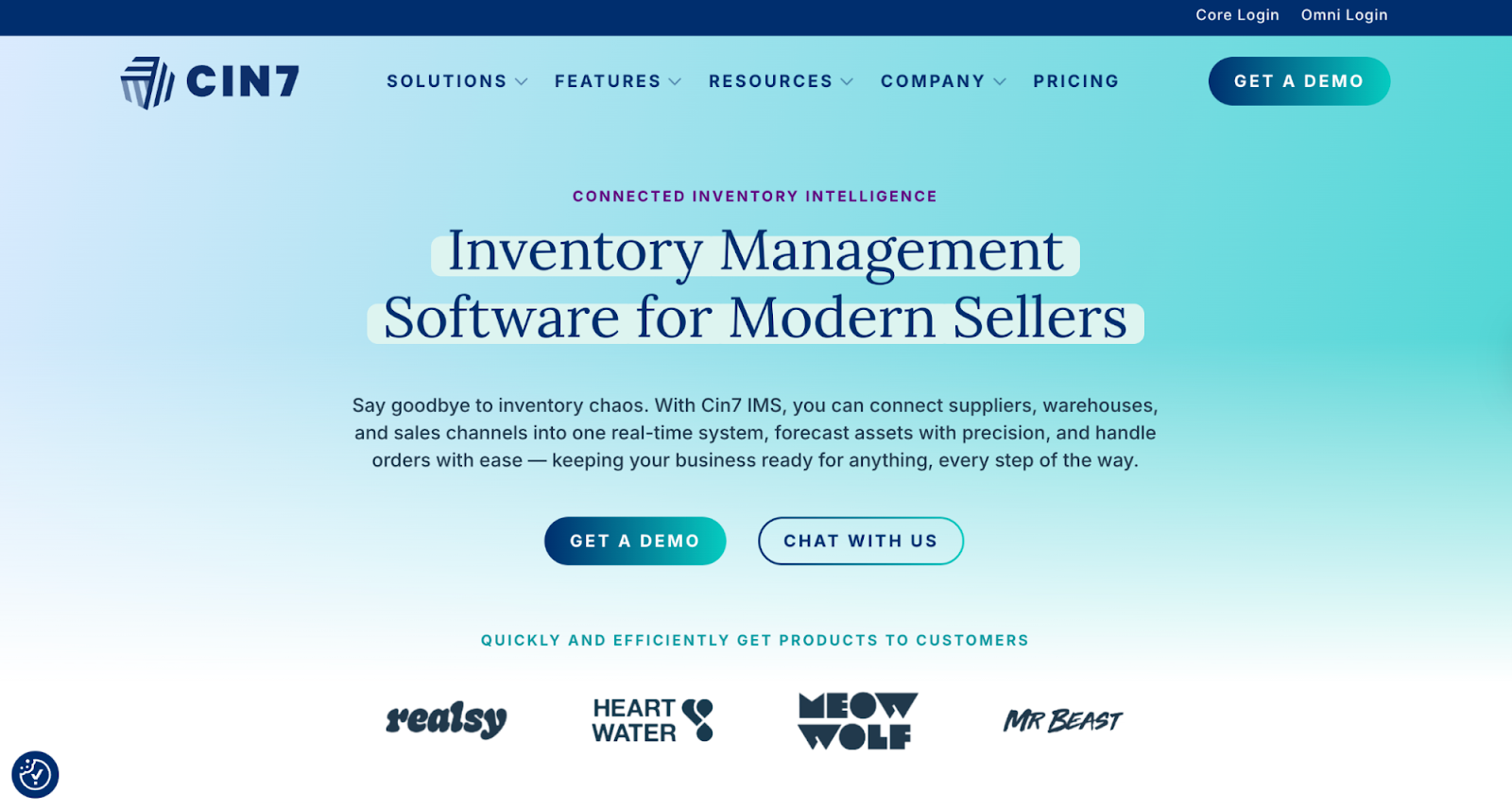
Cin7 Omni is a comprehensive inventory management platform designed for mid-market product sellers. It positions itself as a "Connected Inventory Performance" solution, unifying inventory management, order management, a B2B wholesale portal, and POS for physical retail.
Its built-in EDI functionality is a core part of the offering, designed to connect users with major retailers and 3PLs without needing a separate EDI provider.
What sets Cin7 Omni apart from other EDI tools is its ability to serve as a true operational backbone for product businesses. The platform is particularly well-suited for companies that manufacture or assemble their own goods, offering light manufacturing support alongside inventory tracking.
Its automation workflows help reduce manual data entry across purchasing, sales, and fulfillment - making it a practical choice for teams managing significant transaction volumes across multiple sales channels simultaneously.
Ideal For
- Brands selling through multiple channels (D2C, B2B, and retail).
- Businesses that manufacture their own products.
- Companies needing an all-in-one solution that includes POS and warehouse management.
Top Features
- Built-in EDI: Native EDI connections managed within the Cin7 platform, simplifying the process of becoming compliant with major trading partners.
- Warehouse Management (WMS): Includes features for managing warehouse processes like picking, packing, and shipping.
- B2B Portal: An online portal for wholesale customers to browse products and place orders directly.
- POS Integration: Connects inventory from online stores with physical retail locations.
Why They Stand Out
Cin7’s strength is its all-in-one approach. For a growing business, it can replace several disparate systems (inventory, EDI, POS) with a single, unified platform. This makes it one of the smartest choices for brands that are scaling complexity across manufacturing, wholesale, and retail channels.
Pros
- Consolidates multiple business functions into one system.
- Strong support for businesses with both online and physical stores.
- Good for light manufacturing and assembly workflows.
Cons
- Can be complex to set up and learn.
- The user interface is functional but can feel dated compared to newer platforms.
- Some users report that customer support can be slow to resolve issues.
Reviews
- Average Rating: ⭐⭐⭐⭐
- Review Sentiment: Cin7 Omni is viewed positively overall, especially by small and mid‑sized retail and eCommerce businesses that like its powerful inventory control, multi‑location support, key integrations (e.g., Xero, QuickBooks, Shopify), and cloud‑based, all‑in‑one design. The main complaints are slow or inconsistent support, issues and extra work around EDI and some integrations, reliance on self‑service/video onboarding, and a sense from some users that it still lacks polish and features for more complex or EDI‑heavy operations.
Pricing
Cin7 offers flexible pricing to fit businesses of all sizes, starting at $349/month for the Standard plan, ideal for small businesses with unlimited inventory locations and basic integrations. The Pro plan at $599/month provides advanced tools for growing businesses, while the Advanced plan at $999/month supports high-volume operations with features like material requirements planning. For enterprises needing fully customizable solutions, the Omni plan offers tailored pricing upon request.
Final Verdict
Cin7 is a powerful and versatile solution for businesses that need a single platform to manage their multi-channel sales and inventory. Users who fit its "make, sell, and store" model consistently praise its inventory control and integrations with tools like Xero, Shopify, and QuickBooks. That said, be prepared for a learning curve, self-service onboarding, and potentially slow support - particularly if EDI is a heavy part of your operation. It is a strong contender if your business fits its model, but go in with realistic expectations around implementation and support responsiveness.
3. TrueCommerce EDI Solutions
Overview
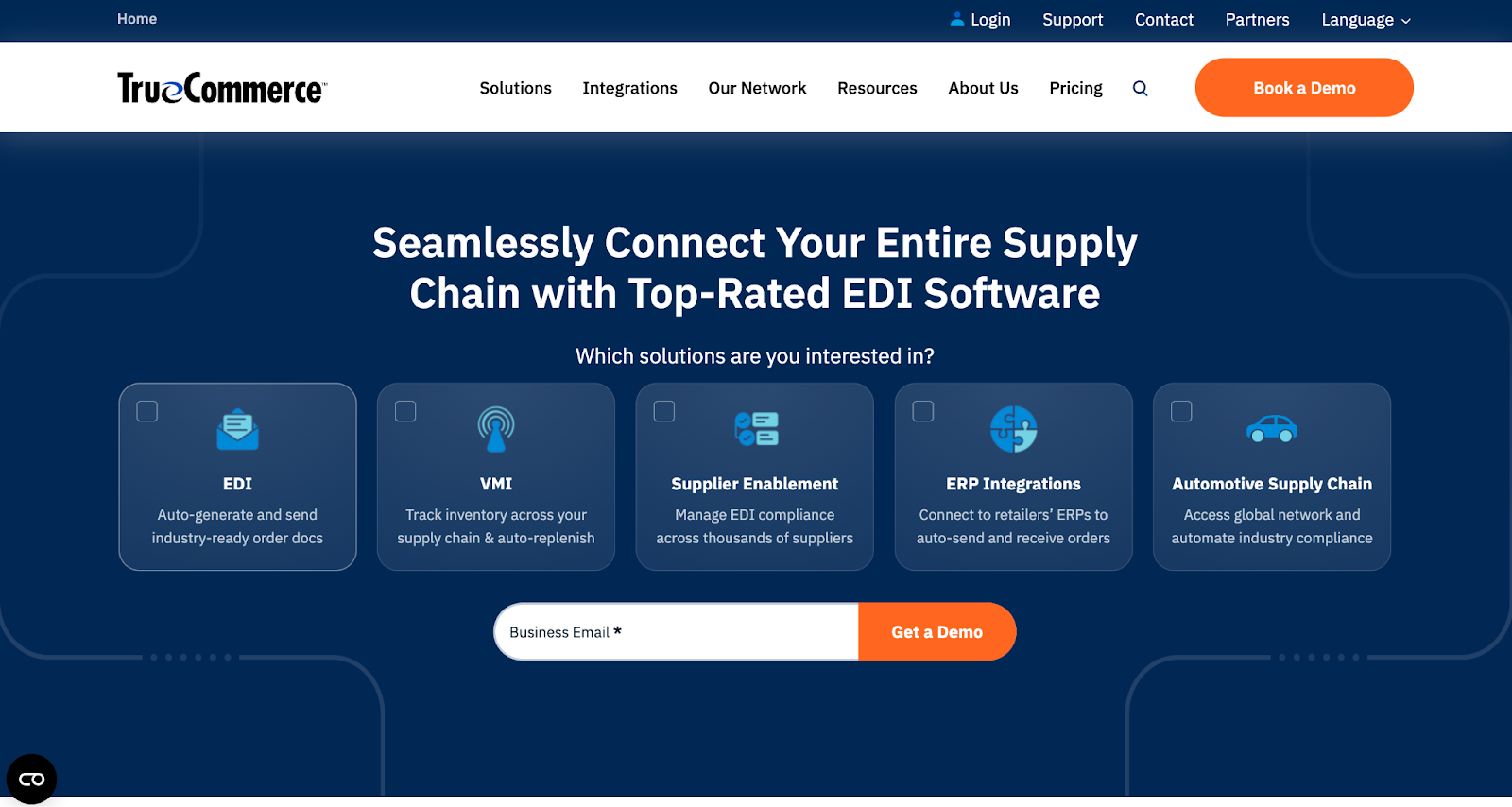
TrueCommerce is not just a software provider; it's a fully managed EDI service. They specialize in handling every aspect of your EDI connections, from initial setup and mapping to ongoing maintenance and support. Their solution integrates with over 100 ERPs, CRMs, and e-commerce platforms, acting as the central hub for all trading partner communications. This hands-off approach is designed for businesses that want to outsource the complexity of EDI entirely.
TrueCommerce also extends its value beyond basic document exchange by offering storefront and fulfillment integrations that connect the EDI layer directly into broader commerce operations.
For businesses with strict compliance requirements - particularly those supplying to major retailers like Walmart or Target - TrueCommerce's pre-tested, certified connections significantly reduce the risk of chargebacks and compliance penalties.
Their supplier enablement programs are also worth noting, as they help businesses bring their own vendor networks up to EDI compliance standards. This reduces friction across the entire supply chain rather than just at the retailer interface.
Ideal For
- Businesses that want a "done-for-you" EDI solution.
- Companies that need to connect with a large, diverse network of trading partners.
- Enterprises with complex ERP systems like SAP or Oracle.
Top Features
- Managed Service: TrueCommerce's team manages all EDI mapping, testing, and support, reducing the burden on your internal IT staff.
- Vast Trading Partner Network: Pre-established connections to over 92,000 trading partners worldwide.
- Supplier Enablement: Offers programs to help onboard your own suppliers onto the EDI network.
- ERP Integration: Deep integrations with a wide range of popular business systems.
Why They Stand Out
TrueCommerce’s primary differentiator is its managed service model. While other solutions provide the tools to manage EDI, TrueCommerce provides the service. This makes it one of the strongest choices for companies that lack in-house EDI expertise or want to ensure compliance without hiring a dedicated team.
Pros
- Removes the technical complexity of managing EDI.
- Highly reliable and scalable for large enterprises.
- Excellent for ensuring compliance with major retailers' strict EDI mandates.
Cons
- Can be more expensive than self-service EDI solutions.
- Less flexibility and control compared to in-house or API-driven solutions.
- The sales and onboarding process can be lengthy.
Reviews
- Average Rating: ⭐⭐⭐⭐
- Review Sentiment: TrueCommerce EDI Solutions is viewed positively overall, especially by businesses that value strong EDI functionality, good ERP integrations (e.g., QuickBooks, SAP, Dynamics), and very responsive, knowledgeable customer support that many describe as outstanding and all‑inclusive. Users like the ease of automating purchase orders, invoices, ASNs and other documents, the generally user‑friendly, mailbox‑style interface, and the long‑term stability once integrations are properly set up. The main complaints are steep learning curves and confusing or lengthy implementations, performance issues such as slow or unstable portals, and inconsistent experiences with support capacity and project management, with some customers reporting missed timelines, very slow onboarding (many months without going live), and frustration when issues require coordination across multiple internal departments at TrueCommerce.
Pricing
TrueCommerce uses custom, quote-based pricing. Costs depend on the number of trading partners, transaction volume, and the complexity of the integration.
Final Verdict
If you view EDI as a complex but necessary utility and prefer to outsource it to experts, TrueCommerce is an excellent choice. Customers frequently praise the knowledgeable support team and the reliability of integrations once they're live. However, "once they're live" is the key caveat - onboarding can stretch for many months, and implementations sometimes suffer from poor project management and slow coordination. For agile businesses needing speed to go live, that risk is worth weighing carefully before committing.
4. NetSuite
Overview
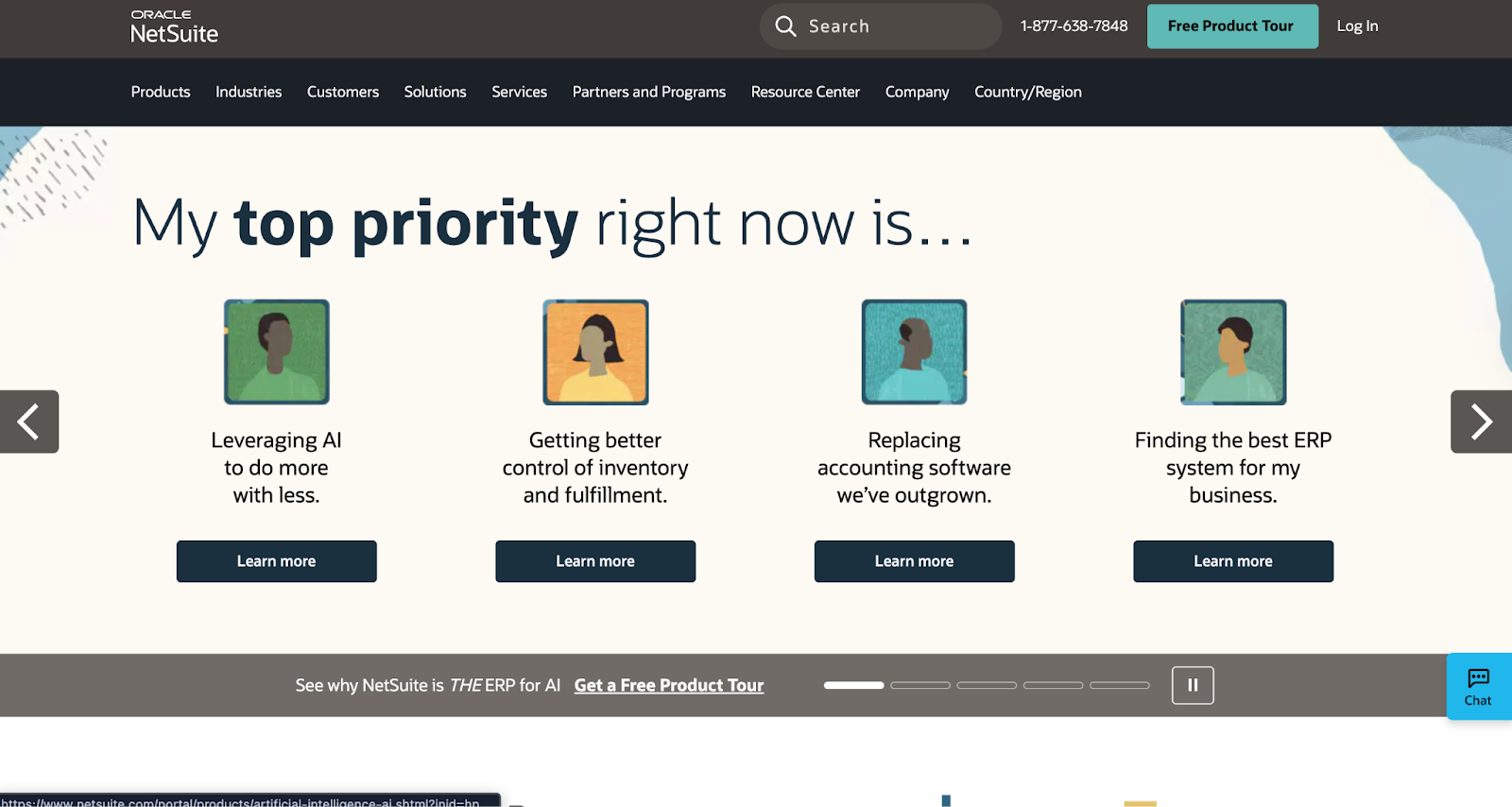
NetSuite, owned by Oracle, is a comprehensive cloud ERP (Enterprise Resource Planning) system. Inventory management and EDI are just two components of a much larger suite that includes financials, CRM, e-commerce, and more.
NetSuite's EDI capabilities are typically enabled through its Electronic Payments and Bank Feeds SuiteApp, which automates the exchange of documents with banks, suppliers, and customers. It's designed for mid-sized to large enterprises seeking a single system to run their entire business.
Because EDI in NetSuite is embedded within a broader ERP framework, every transaction - from a supplier purchase order to a customer invoice - feeds directly into the company's financial records without manual reconciliation. This tight integration between supply chain operations and financial reporting is where NetSuite delivers its most significant value.
For businesses operating across multiple geographies, subsidiaries, or legal entities, this unified data model reduces reporting complexity and provides real-time visibility into landed costs, margins, and cash flow that siloed EDI solutions simply cannot match.
Ideal For
- Large, established enterprises with complex global operations.
- Businesses that have outgrown their current accounting and inventory software.
- Companies needing a single source of truth for all business data, from finance to supply chain.
Top Features
- Unified Business Platform: Combines financials, inventory, CRM, and e-commerce in one database.
- Advanced Inventory Management: Supports multi-location inventory, cycle counting, demand planning, and warehouse management.
- Global Capabilities: Handles multiple currencies, tax regulations, and international subsidiaries.
- Native EDI: EDI functionality is built into the platform, ensuring seamless data flow with financial records.
Why They Stand Out
NetSuite's biggest advantage is its unified data model. Because everything from an EDI purchase order to a final sales invoice lives in one system, it provides unparalleled visibility across the entire business. It is one of the smartest choices for companies looking for a long-term, scalable platform that they will not outgrow.
Pros
- A complete, all-in-one system for running a business.
- Infinitely scalable and customizable.
- Provides deep visibility into financial and operational performance.
Cons
- Very expensive, with significant implementation and subscription costs.
- Implementation is complex and can take several months.
- Requires specialized expertise to manage and customize effectively.
Reviews
- Average Rating: ⭐⭐⭐⭐
- Review Sentiment: NetSuite is viewed positively overall as a powerful, highly customizable, cloud‑based ERP that centralizes finance, operations, and reporting, with strong accounting features, robust reporting/saved searches, good multi‑currency and consolidation support, and a broad ecosystem of integrations. Most users feel it “does exactly what it needs to do” and appreciate that it can become a one‑stop shop for many business processes once properly set up, though they note a learning curve. The main complaints focus on high pricing and costly customizations, performance issues (slow page loads, occasional instability), a sometimes unintuitive or “click‑heavy” interface, and implementations or changes that can be lengthy and complex, often requiring expert help rather than simple self‑configuration.
Pricing
NetSuite pricing is custom and typically starts around $25,000 per year, with implementation fees often matching or exceeding the annual license cost.
Final Verdict
NetSuite is the powerhouse option for large enterprises that need a robust, all-encompassing ERP, and its EDI features are a natural extension of its financial and supply chain capabilities. However, reviewers consistently flag high costs, complex implementations that require specialist expertise, and a click-heavy interface that takes time to master. For companies that can absorb those upfront investments, the long-term payoff is a highly scalable system - but it remains complete overkill for small to mid-sized businesses that only need strong inventory management and EDI connectivity.
5. SPS Commerce
Overview
SPS Commerce is another major player in the cloud-based supply chain management space, with a strong focus on the retail industry. Their flagship product, SPS Commerce Fulfillment, is a full-service EDI solution that helps businesses connect to their retail partners. Like TrueCommerce, they emphasize a managed service approach, handling the complexities of EDI for their clients. They also offer analytics tools that provide insights into sales performance and supply chain trends.
One area where SPS Commerce particularly shines is vendor compliance. Retailers have increasingly strict requirements around order accuracy, labeling, and shipment timing, and non-compliance can result in costly chargebacks. SPS Commerce has built its platform around helping suppliers consistently meet these demands across a large and diverse retail network.
Their item data management capabilities also address a frequently overlooked challenge - ensuring that product information is accurate and consistent across every retailer's system. This reduces friction during onboarding and minimizes catalog discrepancies that can delay time to shelf or cause order errors downstream.
Ideal For
- Suppliers, manufacturers, and 3PLs heavily focused on the retail channel.
- Businesses looking to optimize their supply chain with data and analytics.
- Companies needing a full-service EDI provider with deep retail expertise.
Top Features
- Full-Service Cloud EDI: Manages the complete EDI lifecycle, from testing to production support.
- Retail Network: Extensive network of pre-built connections to thousands of retailers, grocers, and distributors.
- Analytics & Insights: Provides performance dashboards to track sales, fulfillment rates, and other key metrics by retail partner.
- Item Data Management: Helps synchronize product information across your retail network to ensure consistency.
Why They Stand Out
SPS Commerce’s deep focus on retail analytics sets it apart. They don't just transmit data; they help you understand it. This makes them a strong choice for brands that want to use their supply chain data to make smarter decisions about sales and inventory planning with their retail partners.
Pros
- Deep expertise in the retail industry.
- Strong analytics and reporting capabilities.
- Full-service model reduces the need for in-house EDI staff.
Cons
- Pricing can be complex and may include per-document fees.
- The user interface is often described as clunky and not intuitive.
- Like other managed services, it offers less direct control than an in-house solution.
Reviews
- Average Rating: ⭐⭐
- Review Sentiment: SPS Commerce has a mixed to negative perception overall, but reviewers do highlight some important positives: it offers broad retailer connectivity, handles the technical EDI mapping and compliance work for you, and can reliably automate document flows (POs, invoices, ASNs) once everything is set up, which is especially attractive for smaller teams that do not want to build or maintain EDI in‑house. The main complaints are around aggressive or unclear sales and billing practices, high and rising costs, rigid long‑term contracts, slow or painful onboarding and implementations, and difficulty getting timely, effective support, leading many customers to feel the service offers poor value unless they are required to use it by specific trading partners.
Pricing
SPS Commerce uses a custom pricing model based on the services you need, the number of trading partners, and your transaction volume.
Final Verdict
SPS Commerce is a capable choice for retail-focused businesses that need broad retailer connectivity and don't want to manage EDI in-house. However, customer reviews paint a cautionary picture: aggressive billing practices, rigid long-term contracts, slow onboarding, and inconsistent support leave many users feeling the price doesn't match the value - unless a specific trading partner requires it. If you have a choice in provider, it's worth comparing alternatives closely before signing a contract.
How to Choose the Best Inventory Management Software with EDI Compatibility (What To Consider)
Selecting the right software is a critical decision.
Look beyond the feature list and consider these key factors:
1. Integration Flexibility (API, EDI, SFTP)
Does the software force you into a rigid, old-school EDI framework, or does it offer modern alternatives? A platform with flexible integration options–including APIs, SFTP, and EDI–can connect with any partner, regardless of their technical sophistication. This is crucial for future-proofing your business.
This matters most when you're managing a diverse supplier network, where partners range from enterprise distributors running legacy EDI systems to emerging DTC brands operating entirely through modern APIs.
A platform that can accommodate all of them through a single control layer - without requiring custom development for each connection - dramatically reduces the time and cost of bringing new partners live. The goal isn't just technical compatibility; it's the ability to onboard the right partners quickly and keep operations running smoothly as your network grows.
2. Supplier & Partner Onboarding Process
How quickly and easily can you connect new trading partners? A solution with a slow, manual onboarding process will hinder your growth. Look for platforms that automate onboarding and have pre-built connections to a large network of partners to accelerate your time-to-market.
Beyond speed, consider what happens after onboarding. Partners need ongoing visibility into their orders, inventory levels, returns, and payouts. If they can't access that visibility independently, your internal team becomes the default support layer, adding unnecessary workload.
The best platforms provide suppliers with a self-service experience that reduces back-and-forth communication. At the same time, they give you the controls needed to set standards, approve partners selectively, and remove underperformers when necessary.
Onboarding is just the starting line, not the finish line. The right solution ensures the entire partnership lifecycle is manageable at scale.
3. Total Cost of Ownership
Don't just look at the monthly subscription fee - consider the total cost. Are you being charged extra for implementation, support, new connections, or per-document transaction fees? What seems affordable upfront can become expensive when hidden fees start piling up. Always choose a provider with transparent, scalable pricing.
Then, there are the indirect costs that you won’t find on a pricing page. Think about the engineering hours your team will spend on custom integrations, the operational headcount needed to manage manual processes, and the revenue lost during slow implementations.
Legacy platforms and managed EDI services are notorious for accumulating hidden costs as your partner network grows. Their fees are often tied to each new connection or transaction volume tier. Instead, look for usage-based pricing models that scale with your revenue. They’re fairer, more predictable, and built for growing businesses.
4. Real-Time Data Sync
In e-commerce, data that is minutes old is useless. Can the system provide true real-time inventory updates across all channels and partners? Batch updates or sync delays lead to overselling and stockouts. Insist on a platform built on a real-time infrastructure.
The downstream consequences of poor data sync extend well beyond stockouts. When inventory, pricing, and product information are out of sync across a distributed supplier network, the customer experience breaks down - and it's your brand that takes the hit, regardless of which supplier caused the issue.
Real-time infrastructure isn't just an operational nicety; it's the foundation of a consistent customer experience at scale. This is particularly important for marketplaces and retailers running mixed catalogs, where owned inventory and partner-fulfilled products exist side by side in the same storefront.
5. Scalability and Performance
Will the software grow with you? Consider its ability to handle an increasing number of SKUs, orders, and trading partners without slowing down. An enterprise-grade infrastructure is essential for any business serious about scaling its operations.
Scalability also means organizational scalability - the ability to grow your assortment, partner network, and transaction volume without proportionally growing your internal team.
Platforms that automate order routing, reconciliation, fulfillment tracking, and payouts free your operations team from the manual work that typically piles up as a marketplace scales. The right solution should reduce operational drag as you grow, not increase it. If adding ten new suppliers means ten new manual workflows, the platform isn't truly scalable - it's just deferring the complexity onto your team.
Everything You Need to Know About EDI Inventory Management Software
Start Growing with Carro
Choosing the right EDI inventory management software is about more than just automating documents; it's about building an infrastructure for growth. While traditional EDI solutions can connect you to partners, Carro empowers you to grow through partners–without the inventory risk.
Imagine expanding your product catalog with access to over 1,500,000 products from vetted brand partners - without spending a dime on stock. Picture a system that automatically routes orders and syncs inventory in real time, letting you focus on strategy instead of spreadsheets.
That’s the power of Carro. We provide the flexible, modern, and scalable platform to make it happen.
FAQs About Inventory Management Software with EDI Compatibility
What is EDI in inventory management?
EDI, or Electronic Data Interchange, is a technology that allows businesses to exchange information and documents electronically in a standardized format. In inventory management, EDI is used to streamline communication between suppliers, retailers, and partners by automating the exchange of key information, such as purchase orders, invoices, and inventory updates. This reduces manual data entry, minimizes errors, and accelerates transactions, making inventory management more efficient and accurate. EDI compatibility, like the kind Carro offers, ensures seamless connectivity with your partners and enhances your operations' scalability and automation.
What is the best inventory management software with EDI compatibility in 2026?
The best inventory management software with EDI compatibility in 2026 is Carro, especially for businesses focused on flexible, inventory-free growth. Its platform combines EDI support with modern API and SFTP integrations, allowing seamless connection with any type of brand partner to rapidly expand your product catalog and automate order fulfillment.
What should I consider when choosing the right EDI inventory management software for me?
When choosing the right EDI inventory management software, you should consider five key factors. Evaluate the platform's integration flexibility (EDI, API, SFTP), the speed of its partner onboarding process, the total cost of ownership including any hidden fees, its ability to provide real-time data synchronization, and whether its infrastructure can scale with your business growth.
How does Carro differ from similar alternatives?
Carro differs from alternatives by focusing on inventory-free growth rather than just managing existing stock. While competitors like Cin7 or NetSuite help track inventory you own, Carro enables you to sell products from a curated network of vetted brand partners - with access to over 1,500,000 products - without ever holding the inventory yourself. This unique dropship model - backed by Account Managers who personally hand-match retailers with brand partners based on category, audience, and positioning - eliminates inventory risk and unlocks rapid catalog expansion. Unlike generic supplier directories, Carro's curation ensures every partnership is a strategic fit, not just a technical connection.
How do I get started with Carro?
Getting started with Carro as a retailer is quick and easy, though the process may vary slightly depending on your platform. For Shopify users, simply set up your account, connect your Shopify store, and start adding supplier products to your store. To begin, open Carro from the Sales Channel section of your Shopify dashboard and click "Set Up" under the "Retail" section. Fill out your contact details, select the partnership categories that interest you, and choose your Retail subscription plan. Make sure a Shopify account with “Approve app charges” permission approves the update, then add a credit card for seamless transactions. Finally, update your Carro permissions. Once these steps are completed, your retailer setup is done, and you can start browsing and syncing supplier products to your store effortlessly.
How easy is it to switch to Carro?
Switching to Carro is designed to be a seamless transition. Unlike rigid, traditional systems, Carro integrates effortlessly with your existing e-commerce platform. Think of it less as a replacement and more as a powerful upgrade. Our dedicated onboarding team will guide you every step of the way, ensuring that you can start leveraging our partner network for growth without disrupting your current operations.
Is EDI technology outdated?
EDI technology itself is not outdated; it remains the standard for automated document exchange for thousands of major retailers and distributors. However, traditional EDI implementations can be rigid and slow. Modern platforms like Carro have evolved the concept by offering more flexible, API-first integrations alongside EDI to support a wider range of partners and enable faster, more agile supply chains.
Can I use EDI if I sell on Shopify?
Yes, you can absolutely use EDI if you sell on Shopify, but it typically requires a third-party app or integration partner. Solutions like Carro or specialized EDI connectors from the Shopify App Store can bridge the gap between your Shopify store and your trading partners' EDI systems, allowing you to automate orders and inventory updates.


Related Posts
.png)
.png)
.png)
