

The Best Inventory Management Tools for Retailers (2026)
.png)
April 17, 2026
.png)
Key Takeaways (TL;DR)
- The Best Inventory Management Tool for Retailers: Carro is the top choice for retailers looking to expand their product catalog without holding inventory, thanks to its collaborative commerce model leveraging its dropship platform.
- Automation is Essential: Modern tools automate stock tracking, saving countless hours and reducing human error.
- Scalability Matters: Choose a solution that grows with your business, offering features like multi-location tracking and advanced analytics as you expand.
- Integration is Key: Ensure the software integrates seamlessly with your POS, e-commerce platforms (like Shopify), and accounting tools to create a single source of truth.
- Data-Driven Decisions: The best tools provide deep insights into sales velocity and profitability, helping you make smarter purchasing decisions.
Table of Contents
- Top Inventory Management Tools for Retailers: At a Glance
- Why Inventory Management Matters for Retailers
- What to Look for in Inventory Management Tools
- Top Inventory Management Tools for Retailers in 2026
- Carro: Best for Dropship Programs
- Zoho Inventory: Best Budget-Friendly Option
- NetSuite: Best for Enterprises
- EasyReplenish: Best for SMBs
- Cin7: Best for Multi-Warehouse Control
- Key Features to Consider
- How Carro Solves the Retail Inventory Dilemma
- Frequently Asked Questions (FAQs)
Top Inventory Management Tools for Retailers: At a Glance
We have analyzed the market to bring you the definitive list of the best inventory management software for retail store operations.
Here is how they stack up.
1. Carro

Carro is redefining how brands grow by shifting the focus from transactional listings to authentic brand partnerships. While traditional inventory management tools focus on managing the stock you own, Carro empowers you to sell stock you don't own. It is the premier platform for your dropship program.
Why it’s the best:
Carro’s model is simple but powerful: it lets you “borrow supply”. Instead of holding inventory or negotiating dozens of supplier contracts, you connect your marketplace to Carro’s network of vetted brands.
When a customer buys a partner's product on your site, the order is automatically routed to that brand for fulfillment. You essentially gain a warehouse with zero inventory risk.
Key Features:
- Hand-Matched Supplier Network: Account Managers will connect you to retailers with complementary brands to ensure curated products.
- Automated Order Routing: Orders are split and sent to the correct supplier automatically.
- Real-Time Sync: Inventory levels and pricing sync in real-time, preventing overselling.
- Unified Cart: Customers can buy your products and partner products in a single checkout experience.
Pros:
- Zero inventory risk and carrying costs.
- Increases Average Order Value (AOV) by offering complementary products.
- Fastest way to expand product categories.
- Seamless Shopify integration.
Cons:
- Primarily focused on virtual inventory rather than managing your physical warehouse operations (though it integrates with tools that do).
Verdict: If your goal is growth, catalog expansion, and risk reduction, Carro is in a league of its own. It allows you to act like a massive retailer without the massive overhead.
2. Zoho Inventory

For startups and small businesses operating on a tight budget, Zoho Inventory offers incredible value. It is part of the extensive Zoho ecosystem, meaning it plays very well with other Zoho apps like Books (accounting) and CRM.
Why it stands out:
Zoho brings enterprise-style features like serial number tracking and batch tracking to the small business market at an affordable price point. It’s intuitive, easy to set up, and covers all the basics of inventory management software for retail effectively.
Key Features:
- Multi-Channel Selling: Syncs with Amazon, eBay, Etsy, and Shopify.
- Warehouse Management: Manage stock across multiple locations.
- Shipping Integrations: Native integrations with major shipping carriers to print labels.
- Bundle Management: Easily group items to sell as a single unit (kitting).
Pros:
- Excellent free plan for very small businesses.
- Strong mobile app for managing stock on the go.
- Seamless integration with Zoho’s suite of business tools.
Cons:
- Scaling limits; high-volume sellers might find the automation features lacking.
- Support can sometimes be slow for lower-tier plans.
Verdict: Zoho Inventory is the perfect entry point. It stops you from using spreadsheets and gets you into a proper system without breaking the bank.
3. NetSuite

Oracle NetSuite is the heavy hitter of the group. It is a cloud-based ERP (Enterprise Resource Planning) system that manages everything - financials, CRM, e-commerce, and inventory.
Why it stands out:
NetSuite provides a unified view of your entire business. For large retailers with complex supply chains, international operations, and hundreds of locations, NetSuite offers the depth and customization required. It handles complex demand planning, supply chain management, and detailed financial reporting that smaller tools simply cannot touch.
Key Features:
- Demand Planning: Sophisticated algorithms to forecast future demand.
- Supply Chain Management: Track inventory from the factory floor to the customer's door.
- Multi-Subsidiary Management: Handle different brands or international branches in one system.
- Cycle Counting: automate regular inventory checks without shutting down operations.
Pros:
- Incredibly robust and customizable.
- Scalable to the largest global enterprises.
- Combines inventory with accounting and CRM in one database.
Cons:
- Extremely expensive (licensing and implementation costs).
- Steep learning curve and long implementation time (months, not days).
Verdict: If you are a large retailer with complex needs and a budget to match, NetSuite is the gold standard.
4. EasyReplenish

EasyReplenish focuses on one specific pain point: replenishment. It is designed to take the guesswork out of reordering stock, making it a fantastic tool for D2C brands and SMBs that want to automate purchasing.
Why it stands out:
It bridges the gap between simple spreadsheets and complex ERPs. Its AI-driven forecasting looks at your sales velocity and lead times to tell you exactly when to reorder and how much. This prevents the dreaded stockout while ensuring you don’t over-buy.
Key Features:
- Smart Forecasting: Predicts demand based on historical data and seasonality.
- Automated POs: Drafts purchase orders automatically for review.
- Dashboard Visibility: Clear view of what needs attention immediately.
Pros:
- Extremely user-friendly.
- Focuses on ROI by preventing lost sales.
- Quick setup.
Cons:
- Lacks the broader warehouse management features of tools like Cin7 or NetSuite.
- Integrations are growing but not as extensive as older platforms.
Verdict:
For SMBs where the owner is still doing the buying, EasyReplenish acts like a smart assistant that handles the math for you.
5. Cin7
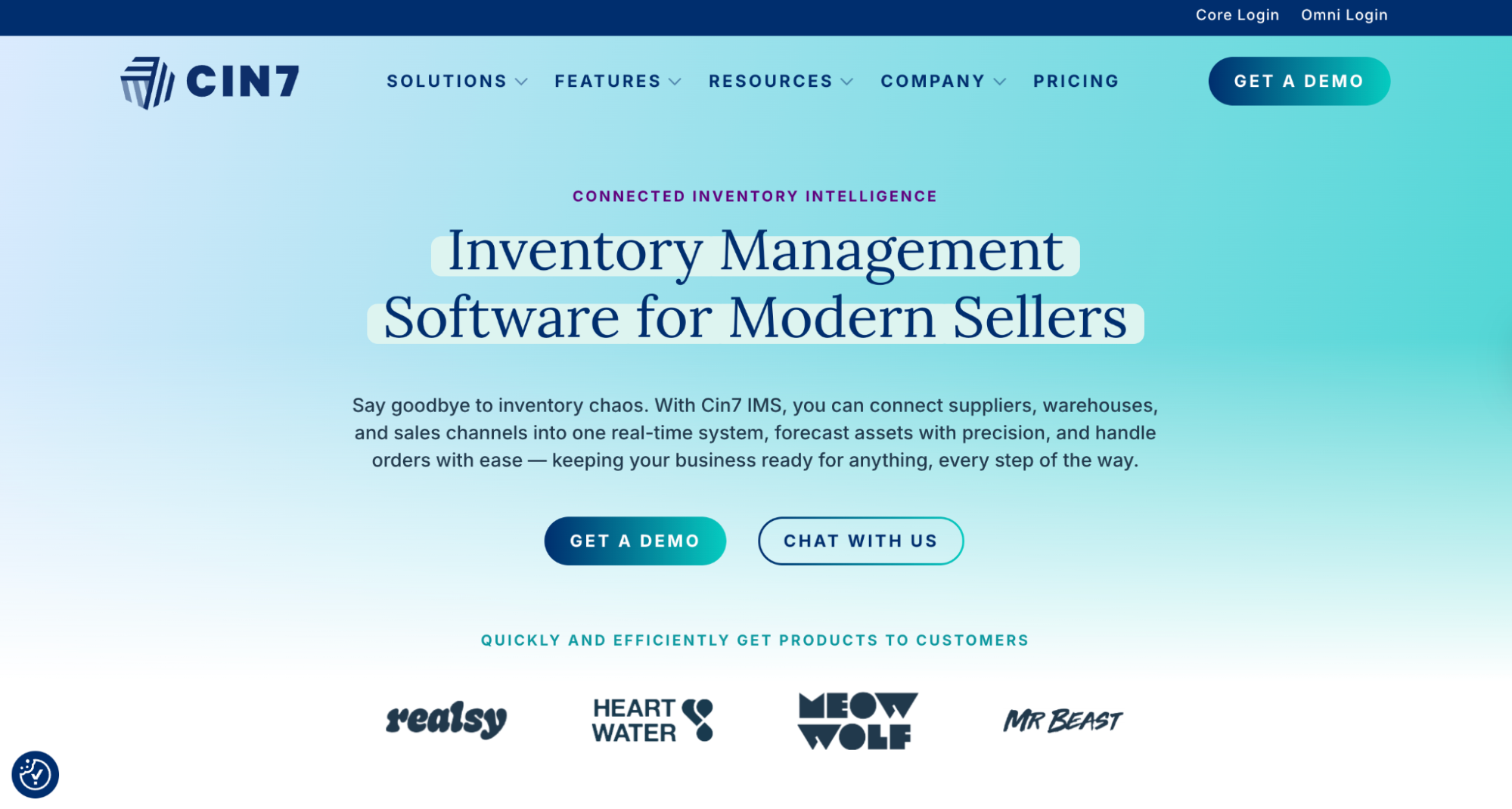
Cin7 (Core and Omni) is a powerhouse for brands that sell everywhere. It connects your inventory, sales channels, stock locations, and workflows into one automated solution.
Why it stands out:
Cin7 excels at "Connected Inventory." Whether you are selling B2B wholesale, B2C on Shopify, or through Amazon FBA, Cin7 keeps it all in sync. It is particularly strong for businesses that have outgrown basic tools but aren't ready for a full ERP like NetSuite.
Key Features:
- B2B Portal: Let wholesale customers order directly through a custom portal.
- POS Integration: Built-in POS for physical retail locations.
- 3PL Integration: connects seamlessly with third-party logistics providers.
- Production Management: Basic manufacturing features for light assembly (BOMs).
Pros:
- Handles complex multi-channel and multi-location setups well.
- Strong automation for order routing.
- Includes POS functionality.
Cons:
- The interface can be complex and intimidating for new users.
- Setup requires time and often a dedicated implementation partner.
Verdict:
Cin7 is the go-to for mid-market retailers who need robust multi-channel control and B2B capabilities.
How Carro Solves the Retail Inventory Dilemma
The biggest risk in retail has always been inventory. Buying it, storing it, insuring it, and hoping it sells. Carro flips this model on its head. Carro empowers retailers and marketplaces to expand their online retail presence effortlessly.
Instead of guessing what your customers want and buying thousands of units, Carro lets you partner with brands they already love. Once you team up with our Account managers, you can add their products to your site in minutes and unlock new revenue by monetizing your traffic better with a wider product range.
When a sale happens, the partner brand ships it directly to the customer. This model has zero inventory risk. There's no upfront cost for inventory; you only pay the supplier when you make a sale. Carro handles the syncing, order splitting, and payments, automating your operations so you can focus on growth.
If you want to scale your retail business without scaling your warehouse headaches, Carro is the solution. Get started today!
Frequently Asked Questions (FAQs)
What is an inventory management platform for retail?
An inventory management platform for retail is a software solution designed to help businesses track, manage, and optimize their inventory across various sales channels. It automates tasks like stock synchronization, order processing, and inventory updates, ensuring that retailers always have accurate stock levels.
Can inventory management tools integrate with Shopify?
Yes, absolutely. Integration with Shopify is a standard feature for top-tier tools. Carro, specifically, offers a deep, native integration with Shopify that makes syncing products and orders seamless. Other tools like Cin7 and EasyReplenish also have strong Shopify connectors.
What to consider when choosing the right tool for inventory management for retail?
When choosing an inventory management tool for retail, prioritize scalability, integration, and automation. Ensure the software can grow with your business and seamlessly connect with platforms like Shopify and other marketplaces. Look for automation features like product syncing and reordering to save time and reduce errors.
Lastly, confirm the tool is secure and complies with regulations like GDPR and CCPA to protect your business and customer data. Addressing these points will help you find a solution that fits your current needs and future growth.
What is the difference between inventory management and a WMS?
Inventory Management Software focuses on the what and how much - tracking quantities, values, and reordering across channels. A Warehouse Management System (WMS) focuses on the where and how within the four walls of a warehouse - optimizing picking paths, bin locations, and packing staff efficiency. Many advanced inventory tools include lightweight WMS features.


Related Posts
.png)
.png)
.png)
