

How to Reduce Ecommerce Operational Costs in 2026 (Without Sacrificing Customer Experience)
.png)
April 9, 2026
Imagine walking into your warehouse (or logging into your dashboard) and seeing money literally evaporating. That’s what happens when operational inefficiencies go unchecked.
In 2026, the margin for error is razor-thin.
Ad costs are climbing, customer expectations for speed are higher than ever, and "free shipping" is no longer a perk - it's a requirement. If you want to survive and thrive, you must learn how to reduce Ecommerce operational costs aggressively but intelligently.
The goal isn't just to slash budgets indiscriminately. It's about optimizing your machine so it runs faster, cheaper, and better.
Whether you are a brand looking to scale or a marketplace trying to streamline, this guide will show you exactly how to trim the fat without cutting into the muscle of your business.
Key Takeaways (TL;DR)
- Shift to Virtual Inventory: The biggest cost center for most retailers is holding stock. Moving to a dropship or partner model (like Carro) eliminates storage fees and inventory risk entirely.
- Automate or Die: Manual data entry for orders and inventory is a silent profit killer. Automation is essential for scaling without adding headcount.
- Returns are a Goldmine (for Savings): Optimizing your returns process isn't just about saving postage; it's about retaining revenue through exchanges and store credit.
- Audit Your Tech Stack: You are likely paying for software features you don't use. Consolidating tools can save thousands annually.
- Negotiate Everything: From shipping rates to payment processing fees, 2026 is the year to renegotiate your contracts based on volume.
Table of Contents
Tips and Strategies for Ecommerce Operations Cost Reduction: At a Glance
Why Ecommerce Operational Costs Are Getting Out of Control in 2026
The ecommerce landscape has shifted dramatically.
A few years ago, you could get away with sloppy operations because customer acquisition costs (CAC) were low. You could simply outspend your inefficiencies.
Today, that math doesn't work.
Three major forces are driving up costs:
- Supply Chain Volatility: The prices of shipping containers, last-mile delivery services, and even the raw materials needed for your products can fluctuate wildly and unpredictably. If you aren't vigilantly tracking these operational expenses, they can quickly - and silently - eat away at your profit margins, turning what looked like a healthy business into a struggling one.
- The "Amazon Effect": Thanks to giants like Amazon, customers now expect 2-day shipping as a standard offering, often for free. For smaller brands, absorbing these significant shipping costs without passing them on to the customer requires exceptionally efficient fulfillment operations and robust logistics. Without a streamlined process, these delivery expenses can severely impact your bottom line.
- Skyrocketing Ad Spend Costs: Digital advertising has become dramatically more expensive across every major platform. CPMs on Meta, Google, and TikTok have surged as more brands compete for the same finite ad inventory, driving up the cost to reach any given audience. For ecommerce brands operating on thin margins, this means the break-even point on a new customer acquisition keeps creeping higher - and any operational inefficiency that cuts into order profitability has an outsized impact on whether a campaign is actually viable or just burning cash.
- Rising Return Rates: As online shopping has matured, customers have adopted a "buy to try" mentality - ordering multiple sizes, colors, or options with the full intention of returning most of them. Processing returns is expensive: reverse logistics, restocking labor, repackaging, and damaged inventory all add up fast. For categories like apparel and electronics, return rates can exceed 30%, effectively making a significant portion of your fulfilled orders a net loss before you factor in any other costs.
- Warehouse and Labor Cost Inflation: Fulfillment center rents, particularly in key logistics hubs, have climbed sharply over the past few years and show no signs of reversing. At the same time, labor costs for warehouse and fulfillment staff have risen due to minimum wage increases and a persistently competitive hiring market. Brands that locked in older lease or staffing agreements are now facing renewals at dramatically higher rates, creating sudden cost jumps that can destabilize an otherwise predictable operation.
To reduce Ecommerce operational costs effectively, you have to stop looking at operations as a "cost center" and start treating it as a strategic asset.
Where Are You Actually Losing Money?
Cutting costs isn't just about trimming the obvious expenses - it’s about uncovering the hidden inefficiencies draining your budget. Many brands overlook the less obvious culprits, but identifying these issues is the first step toward improving profitability.
Here are four common hidden costs to watch out for:
1. Dead Stock
Inventory that sits in a warehouse for more than 6 months is not an asset; it's a liability costing you storage fees every single day. But the damage goes beyond just storage. Dead stock ties up capital that could be reinvested into faster-moving products, and it often ends up being liquidated at a steep discount - or written off entirely.
The root cause is almost always a forecasting problem: either you overbought based on optimistic projections, or a product fell off faster than expected and nobody caught it in time. Regular inventory audits and tighter reorder triggers can prevent a slow-moving SKU from quietly becoming a six-figure write-down.
2. Manual Labor
If you have a human being manually copying and pasting order details from a spreadsheet to a supplier, you are losing money on every single order. And it's not just the labor cost - manual processes introduce human error at every step. A wrong SKU, a missed address field, or a delayed data entry can trigger a cascade of downstream problems: mis-ships, customer complaints, and costly returns.
Beyond order processing, manual labor in inventory reconciliation, invoicing, and reporting compounds the same problem across your entire operation. Any task that follows a predictable, repeatable pattern is a candidate for automation, and the ROI is almost always immediate.
3. Split Shipments
Sending one customer order in three different boxes triples your shipping and packaging costs, but the hidden damage runs even deeper. Each additional shipment is another tracking number for the customer to manage, another opportunity for a delay or a lost package, and another potential support ticket to your team.
Split shipments often happen because inventory is spread across multiple warehouses without a smart allocation system, or because stock availability isn't being checked holistically at the point of order. Solving this requires either better inventory positioning or order management logic that holds shipments until they can be consolidated - both of which pay for themselves quickly.
4. WISMO Tickets
"Where is my order?" inquiries can consume 30–50% of your customer service team's time, making them one of the single largest drains on your support operation. What makes this particularly frustrating is that most WISMO contacts are entirely preventable.
Customers reach out because they haven't received a proactive update, because tracking information is vague or stale, or because a delay occurred with no communication attached to it.
Every WISMO ticket represents a failure somewhere upstream - in your shipping notifications, your carrier reliability, or your post-purchase communication flow. Investing in proactive shipment tracking and automated delivery updates doesn't just reduce ticket volume; it measurably improves customer satisfaction and repeat purchase rates at the same time.
10 Strategies to Reduce Ecommerce Operational Costs in 2026
Ready to lean out your operation?
Here are 10 actionable strategies to reduce operational costs and boost your bottom line.
1. Adopt a Virtual Inventory Model (Dropshipping 2.0)
Holding inventory is expensive. You have to buy it, ship it to your warehouse, insure it, and pay staff to manage it - and that's before a single item sells. Every SKU sitting in your warehouse is capital that's tied up, not working for you. If demand shifts, you're left with dead stock eating into your margins every single day.
The fastest way to cut operational costs is to sell inventory you don't own or touch.
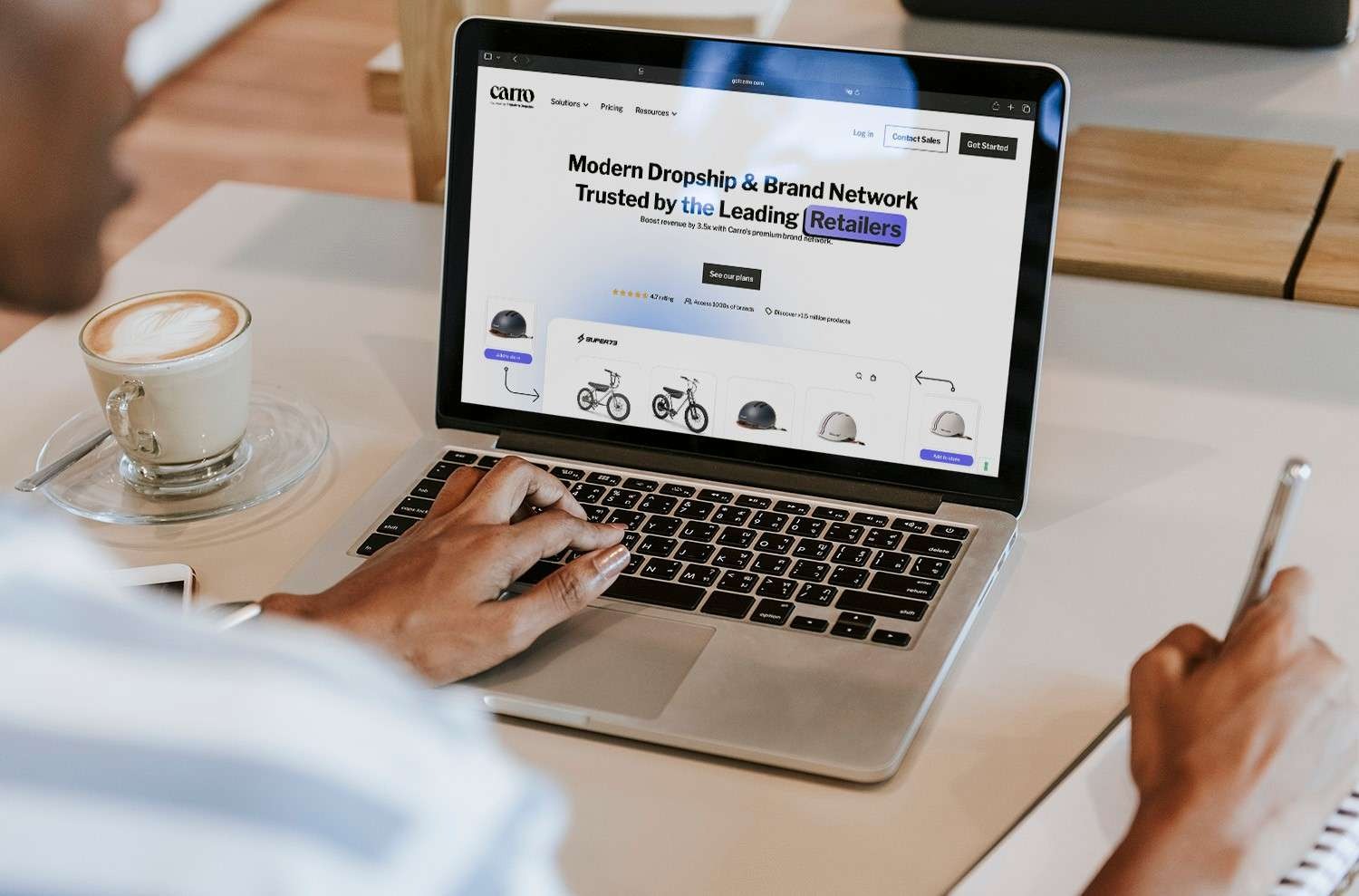
By partnering with established brands through a platform like Carro, you can expand your catalog without purchasing stock upfront. When a customer buys a partner's product on your site, the partner ships it directly. You collect the revenue, they handle fulfillment, and neither party takes on unnecessary risk.
This isn't the race-to-the-bottom dropshipping of the past. Carro connects you with vetted, established brands whose products genuinely complement your catalog - and unlike generic supplier directories, Carro's Account Managers personally hand-match you with brand partners based on your category, audience, and positioning.
You approve every partner, set the terms, and maintain full control over what appears in your store. The customer experience stays seamless - no indication of multi-party fulfillment, no drop in brand standards.
Beyond eliminating inventory carrying costs, you remove warehousing overhead, reduce headcount needed for stock management, and free up working capital that would otherwise be locked in purchase orders.
Carro retailers have seen AOV growth of up to 180% and catalog size increases of up to 3x after adding complementary partner products - because you're not just cutting costs, you're adding products that naturally increase cart size and broaden your appeal to new customers.
Whether you're a retailer looking to deepen your category authority or a marketplace operator expanding assortment across verticals, carrying inventory risk just to fill out a product range means you're paying for growth the hard way.
2. Implement Automated Order Routing

If your business relies on multiple warehouses or dropship partners, manually deciding where to ship an order from can quickly become a time-consuming and inefficient process. Not only does this slow down operations, but it also increases the chances of errors and higher costs.
By using intelligent order routing software, you can streamline this process seamlessly. This technology automatically identifies the closest inventory source to your customer's location, determining the most efficient shipping route in seconds.
For example, if a customer orders from New York and your inventory is stocked in both Chicago and Boston, the software will prioritize the Boston warehouse to minimize distance and delivery time.
This approach ensures packages travel the shortest distance possible, keeping shipping zones lower and significantly reducing postage costs. The result? Faster deliveries, happier customers, and more efficient use of your resources.
3. Automate Customer Service for "Low Value" Tickets

Your human support agents are expensive and talented. Wasting their time on repetitive, predictable questions is one of the most common - and most fixable - cost leaks in ecommerce operations.
Consider what's actually flooding your support queue. "Where is my order?" alone accounts for 30–50% of all inbound tickets. Add return policy questions, shipping timeframe inquiries, and basic product FAQs, and you're looking at the majority of your ticket volume being handled by your highest-cost resource: a human being.
An AI-driven chatbot or self-service portal directly solves this.
Modern tools can pull live order tracking data, surface your return policy instantly, and walk customers through common issues - all without an agent involved. Done well, automation can deflect up to 60% of inbound tickets without any reduction in service quality. In many cases, customers prefer it - they get an instant answer at 2am instead of waiting in a queue.
The compounding benefit is where this really pays off. When agents aren't buried in WISMO tickets, they can focus on conversations that actually move the needle - preventing escalations before they become refunds, or supporting retention on accounts showing signs of churn. That's a fundamentally different return on your labor cost.
The implementation bar is also lower than most brands expect.
Many tools integrate directly with your order management system and existing help center content, meaning you can have a functional self-service layer running in days. The key is mapping your most common ticket types first and building automated flows around those specific scenarios.
The goal isn't to remove humans from customer service - it's to make sure they're only handling the conversations that actually require them.
4. Negotiate with Carriers (and Use Hybrid Services)

Think of the published rates from major carriers like FedEx, UPS, or DHL as a starting point, not a final offer. If you're consistently shipping a decent volume of packages, you have valuable leverage that can be used to your advantage. Don't hesitate to engage in direct negotiations to secure better pricing.
Make it a habit to renegotiate your carrier rates at least once a year. Your shipping profile can change, and so can the market, so it’s crucial to ensure your rates still reflect your business needs.
Additionally, explore the cost-saving potential of hybrid shipping services, such as UPS SurePost or FedEx SmartPost. With these options, the major carrier manages the long-haul transportation, while the final-mile delivery is handed off to the USPS. For lightweight residential deliveries, this blended approach can often be significantly cheaper than standard end-to-end service from a single carrier.
5. Optimize Packaging to Beat DIM Weight

Most ecommerce brands know shipping is expensive. Fewer realize they're actively making it more expensive through poor packaging decisions - and paying the price on every single order.
Carriers like UPS, FedEx, and USPS don't just charge by actual weight. They charge by dimensional (DIM) weight, calculated by multiplying a package's length, width, and height, then dividing by a carrier-specific divisor. If that number exceeds the actual weight, you're billed at the higher rate. Shipping a small item in an oversized box means you're paying to ship empty air - on every order, every day.
A packaging audit is one of the highest-ROI operational projects you can run. Pull your top 20 SKUs and measure the actual packaging against the product dimensions. You'll often find significant discrepancy. Reducing a box by just two inches on each dimension can drop you into a lower DIM weight tier, saving $1–$4 per shipment. At any meaningful order volume, that compounds quickly.
Beyond right-sizing, consider the format itself. Poly mailers are dramatically cheaper and lighter than boxes for apparel, soft goods, and non-fragile items. Padded mailers can replace small boxes entirely for certain products. And while custom-sized boxes carry a slightly higher unit cost, they typically pay for themselves fast through reduced shipping charges.
The other hidden cost is materials - excess void fill and bubble wrap used to compensate for oversized packaging adds quiet, per-order cost that most brands never track.
Packaging optimization won't make headlines internally, but it shows up permanently in your unit economics on every order you ship going forward.
6. Reduce Returns with Better Product Data

Returns are a triple threat: you lose the sale, you pay for return shipping, and you often can't resell the item as new. For categories like apparel and footwear, return rates can exceed 30% - meaning nearly one in three fulfilled orders is actually a net loss when you factor in all associated costs.
The good news is that a significant portion of returns are preventable. Most happen because the product didn't match the customer's expectations - and that's almost always a product content problem, not a product quality problem. Investing in better product detail pages is one of the cheapest, highest-leverage fixes available to you.
Here's what actually moves the needle on return rates:
- Sizing charts specific to each product - not a generic brand chart. Include measurements in both inches and centimeters, and note any known fit quirks.
- High-quality video showing fabric movement, stretch, weight, and how the item looks on different body types - things photos simply can't communicate.
- Multiple images from every angle, including close-ups of texture, hardware, seams, and any details that affect the purchase decision.
- Honest, detailed product descriptions that include material composition, weight, and any relevant care or fit notes.
- Customer reviews that reference sizing accuracy - phrases like "runs small" or "fits true to size" are more persuasive than any copy you'll write yourself.
- Comparison guides for products where customers commonly struggle to choose between options.
Better product data doesn't just reduce returns - it improves conversion rates at the same time. Customers who feel confident in their purchase are more likely to buy and less likely to send it back.
7. Consolidate Your Tech Stack

App bloat happens fast. You subscribe to one tool for pop-ups, another for reviews, loyalty, SMS, upsells - and suddenly you're paying $2,000+ per month on overlapping SaaS subscriptions that don’t integrate well and require multiple logins to manage.
Audit your apps and subscriptions. Ask: is this driving measurable ROI, and does a broader platform already cover this? Consolidating onto multi-function tools can cut costs and simplify your data environment.
The cost of a bloated stack goes beyond fees:
- Integration maintenance - More apps mean more connections that can break during updates or API changes.
- Data fragmentation - Splitting customer data across platforms hurts personalization and retention.
- Staff time - Managing multiple dashboards, troubleshooting, and training adds hidden labor costs.
- Page speed - Too many third-party scripts slow your site, reducing conversions.
For retailers managing dropship or multi-supplier operations, tech fragmentation hits hardest with supplier management, order routing, and inventory syncing. Consolidating these workflows onto one platform often delivers significant savings and efficiency.
A leaner stack is easier, cheaper to maintain, and performs better thanks to unified data.
8. Outsource Fulfillment (3PL) Correctly
Running your own warehouse offers control but comes with high fixed costs like leases, insurance, and labor that drain cash flow, especially during slow months.
One solution is moving to a third-party logistics (3PL) provider. This converts fixed warehouse costs into variable ones, meaning you only pay for what you ship. If you explore this option, carefully evaluate 3PL partners on pricing transparency, location, and their returns process.
But what if you didn't need to own inventory in the first place?
For retailers and marketplaces wanting to expand their product selection, a virtual inventory model managed through a platform like Carro removes fulfillment responsibility for partner products entirely - while giving you visibility and control over supplier performance and SLA standards.
A platform like Carro gives you access to over 1,500,000 products from vetted, established brands that you can add to your store without buying stock or managing warehousing. Partner brands handle fulfillment, while you collect the revenue. This doesn't just reduce costs - it removes an entire category of operational overhead.
Ultimately, the most efficient fulfillment operation is the one you don't have to run.
9. Use Inventory Management Software to Prevent Overstocking

Overbuying is just as damaging as stockouts - it just hurts you more slowly.
Cash tied up in slow-moving SKUs is cash unavailable for marketing, product development, or anything else that drives growth. And when those SKUs don't sell, you're left choosing between paying storage fees indefinitely or liquidating at a steep discount that wipes out your margin.
Investing in demand forecasting and inventory management software removes the guesswork from your buying decisions. Tools that analyze historical sales data, seasonality patterns, and current sell-through rates help you order exactly what you need - reducing carrying costs, minimizing dead stock, and eliminating the reactive fire-sale discounts that quietly destroy profitability.
When choosing an inventory management tool, here’s what to look for:
- Demand forecasting based on historical velocity, seasonality, and sales trends - not just gut instinct or last year's numbers.
- Reorder point automation that triggers purchase orders when stock hits a defined threshold, preventing both stockouts and panic overbuying.
- SKU-level reporting that flags slow-moving inventory before it becomes a dead stock problem, giving you time to act with promotions or markdowns.
- Supplier lead time tracking so reorder timing accounts for actual fulfillment windows, not optimistic estimates.
- Bundle and variant-level visibility so you're not accidentally overstocking one color while running out of another.
The brands that manage inventory best aren't buying more conservatively - they're buying more intelligently. And the less owned inventory you're managing overall - by expanding your catalog through virtual inventory partnerships rather than purchase orders - the less forecasting risk you carry in the first place.
10. Leverage High-Margin Products to Offset Costs
Sometimes the most effective way to manage operational costs isn't cutting expenses - it's improving your margin mix so your profitable products do more heavy lifting. If your core products operate on thin margins, adding high-margin complementary items can meaningfully change your overall unit economics without touching a single line of your cost structure.
This is where a platform like Carro becomes a direct lever on profitability. By adding partner brand products to your store - accessories, consumables, complementary categories - you introduce SKUs that carry zero inventory risk, zero warehousing cost, and zero fulfillment overhead on your end. Every sale is largely incremental profit that helps offset the fixed operational costs your core products have to carry.
Research the top dropshipping products with high profit margin and add them to your store. These products require zero operational overhead from you but contribute pure profit that helps offset your fixed operational expenses.
How to Prioritize Which Operational Costs to Cut First
Not all costs are created equal - and cutting in the wrong order can do more damage than the inefficiency you were trying to fix. Slashing your marketing budget might save money this month but starve your pipeline for the next six. Cutting headcount before automating the work those people are doing just transfers the bottleneck.
Follow this hierarchy when deciding where to start.
1. Waste First
Waste is the easiest win because eliminating it costs you nothing except the discipline to find it. This is anything consuming money without delivering value in return - and it's almost always hiding in plain sight.
Common sources of pure waste in ecommerce operations include unused or redundant software subscriptions that nobody cancelled, oversized packaging that inflates your DIM weight on every shipment, manual data entry tasks being performed by staff who could be doing higher-value work, and inventory that's been sitting in a warehouse for six months or more with no realistic path to selling through. None of these require a strategic decision or a trade-off. They just require an audit.
Start here. The savings are immediate, the risk is zero, and the process of auditing for waste often surfaces the inefficiencies you'll tackle in step two.
2. Inefficiencies Second
Once you've eliminated pure waste, turn your attention to processes that work - but work badly. These are the manual, error-prone workflows that consume disproportionate time and headcount relative to the value they produce.
In ecommerce operations, the highest-leverage inefficiencies to automate are typically order routing, inventory syncing across supplier partners, fulfillment tracking, and post-purchase customer communication. Each of these is a repeatable, rules-based process that technology handles more accurately and at a fraction of the cost of a human doing it manually.
When orders are automatically routed to the right supplier, inventory levels update in real time, and customers receive proactive tracking updates without anyone lifting a finger - your cost per order drops and your error rate drops with it.
The ROI on automation is almost always immediate, and unlike cutting headcount, it typically allows you to scale volume without scaling costs proportionally.
3. Negotiables Third
Once your house is in order - waste eliminated, key processes automated - you're in a much stronger position to negotiate. Suppliers, carriers, landlords, and SaaS vendors all have more flexibility than their standard contracts suggest, especially when you come to the table with clean data, clear volume commitments, and a credible alternative.
Carrier rates are often the biggest opportunity here. Consolidating shipping volume with fewer carriers, committing to volume thresholds, and reviewing your service level mix can unlock meaningful per-shipment savings.
Similarly, supplier payment terms, platform subscription fees, and warehouse lease rates are all negotiable - particularly if you've been a reliable, long-term customer and can demonstrate that your operational improvements are driving volume growth.
Don't negotiate from a position of desperation. Negotiate after you've cleaned up operations and can show what your business looks like when it's running efficiently.
4. Strategic Pivots Last
The deepest cost reductions come from changing the underlying business model - but these decisions carry the most risk and require the most deliberate evaluation. This is why they come last, not first.
The most impactful strategic pivot available to most ecommerce operators today is shifting from an owned-inventory model to a virtual inventory model for catalog expansion. Rather than buying stock, warehousing it, and absorbing all the associated fixed costs, you expand your product range through trusted brand partnerships - where the partner handles fulfillment entirely and you collect the margin on every sale. Through a platform like Carro, this shift can happen in weeks rather than months, without custom development or operational disruption.
Other strategic pivots - moving to a 3PL for your core fulfillment, consolidating your tech stack onto fewer platforms, or restructuring your supplier relationships - all have meaningful cost implications but require careful planning before execution.
The key distinction between a strategic pivot and the steps above is that pivots change how your business operates fundamentally. Get the quick wins first. Then make the structural moves from a position of stability, not urgency.
The Real Cost of Bad Cost-Cutting
Be careful. A best practice for reducing Ecommerce fulfillment costs is to avoid cuts that directly impact the customer experience.
If you switch to a cheap, unreliable shipping carrier to save $1 per package, but 10% of packages arrive late or damaged, you haven't saved money. You've lost customers.
The cost of acquiring a new customer is always higher than the cost of retaining an existing one.
Cheap packaging that breaks creates returns. Cheap support bots that frustrate users create churn.
How to Know When Operational Cost-Reduction Is Hurting Your Customer Experience
Monitor your metrics closely as you implement changes.
If you see these red flags, pull back:
- NPS (Net Promoter Score) drops: Customers are telling you they are less likely to recommend you.
- Return Rate spikes: This might mean your new packaging isn't protecting the product, or your new supplier has quality issues.
- CS Ticket Volume increases: If customers are asking "Where is my order?" more often, your new "cheap" shipping carrier is failing you.
Everything You Need to Know About Ecommerce Operational Costs Reduction
Stop Paying for Inventory You Don't Need to Own
The fastest way to cut ecommerce operational costs isn't negotiating better carrier rates or auditing your tech stack - it's eliminating the biggest cost center in your business entirely.
Carro connects you with vetted, established brands so you can expand your product catalog without buying stock, managing warehouses, or adding operational overhead. Your partners handle fulfillment. You collect the revenue. And your customers get a seamless experience from start to finish.
Retailers on Carro have seen up to 3.5x revenue growth, AOV increases of up to 180%, and up to 3x growth in catalog size - not by spending more, but by selling smarter.
FAQs about Operational Cost Reduction
What Is Ecommerce Operational Cost Reduction?
Ecommerce operational cost reduction involves systematically identifying and eliminating waste in your business processes. It covers everything from supply chain logistics and warehousing to software subscriptions and labor costs. The goal is to improve the bottom line without negatively impacting product quality or customer satisfaction.
What Are the Main Operational Costs in Ecommerce?
The main costs in e-commerce are Inventory, Shipping/Fulfillment, and Marketing/Acquisition. Inventory includes purchasing and storing goods, while Shipping/Fulfillment covers picking, packing, and postage. Marketing/Acquisition, or customer acquisition costs (CAC), can often exceed $30 per customer. Additional expenses like payment processing fees, returns, and SaaS technology also significantly impact overall costs.
How Important Is Cost Reduction for Ecommerce Profitability?
Reducing operational costs is crucial in eCommerce, where net margins are typically tight at 10-20%. Cutting costs by 10% can have the same impact on profits as increasing sales by 20-30%. Cost reduction is often easier to control than the external factors affecting sales growth.
How Much Should an Ecommerce Business Spend on Operations?
An ecommerce business should spend between 20% to 40% of its revenue on operations. This is a general benchmark, though the exact amount can vary by industry. If your operational costs exceed this range, it may signal inefficiencies in your fulfillment or staffing models.
What Is a Good Operating Cost Ratio for Ecommerce?
A good operating cost ratio for ecommerce is below 30% of revenue. For many successful DTC brands, keeping OpEx under this 30% threshold allows enough room for marketing spend and profit. Dropshipping models often achieve even lower OpEx ratios because they eliminate warehousing costs, although this can sometimes come at the expense of lower product margins.
How Do I Know If My Ecommerce Operations Are Inefficient?
You know your ecommerce operations are inefficient if you see clear bottlenecks like high return rates, frequent stockouts, and slow order fulfillment. If orders are consistently taking more than 24 hours to ship, your team is spending hours on manual data entry, or you have high inventory levels but low cash flow, these are all signs that your operations are costing you money. High return rates (above 15%) and frequent stockouts are also direct indicators of operational inefficiency that need to be addressed.
What Is the Biggest Hidden Cost in Ecommerce Operations?
The biggest hidden cost in ecommerce operations is inventory carrying costs. While most business owners calculate the cost of buying a product, they often forget the cost of holding it. These hidden expenses - like storage fees, insurance, and shrinkage - can add an extra 20-30% to your total inventory cost each year. Imagine paying up to a third more for every item just sitting on your shelves. By shifting to a partner-based model, such as finding the best dropshipping niches for high profits, you can eliminate this massive hidden cost.


Related Posts


.png)
