

Best Inventory Management Software for Electronics in 2026
.png)
April 9, 2026
.png)
Key Takeaways (TL;DR)
- Specialized Needs: Inventory management for electronics is complex due to rapid obsolescence, high product variability (SKUs, serial numbers), and the risk of counterfeit parts. Standard inventory systems often fall short.
- Automation is Essential: Manual tracking with spreadsheets is a recipe for disaster. The best inventory management software for electronics automates tracking, prevents overselling, and manages complex product data across all sales channels.
- The Best Inventory Management Software for Electronics: Carro is the top choice for electronics retailers looking to expand their product offerings without the massive financial risk of buying inventory. It enables you to sell products from other vetted brands through a collaborative dropship model.
- Core Features to Demand: Key features include real-time multi-channel sync, serial number and batch tracking, kitting/bundling for accessories, and robust integrations with ecommerce platforms like Shopify.
- Strategic Choice: The right system depends on your business model. Direct-to-consumer retailers, repair shops, and brands that manufacture their own goods have different needs. Your choice should support your specific operational workflow and growth plans.
Table of Contents
- Why Inventory Management for Electronics is Uniquely Challenging
- The Consequences of Getting It Wrong
- The Best Inventory Management Software for Electronics of 2026
- Carro: Best for Catalog Expansion Without Inventory Risk
- Cin7: Best for Multi-Channel Automation
- Fishbowl: Best for Manufacturers Using QuickBooks
- Lightspeed Retail: Best for Integrated POS and Retail
- Zoho Inventory: Best All-in-One for Small Businesses
- Unleashed: Best for Electronics Assembly and Manufacturing
- RepairShopr: Best for Electronics Repair Shops
- Key Features to Look For in Inventory Management Software for Electronics
- Why Spreadsheets Are a Liability for Your Electronics Business
- How to Choose the Right System for Your Electronics Company
- Streamline Your Electronics Business with Carro
- Frequently Asked Questions (FAQs)
Top Electronics Inventory Software: A Quick Comparison
Why Inventory Management for Electronics is Uniquely Challenging
Effective inventory management for electronics is one of the most critical and difficult operational hurdles for businesses in this sector. Unlike apparel or consumer packaged goods, electronics inventory carries a unique set of challenges that can quickly erode profits if not managed with precision. The fast-paced nature of the industry means that what is a hot-selling item today could be obsolete tomorrow.
Imagine launching a new online store for the latest tech gadgets. You invest heavily in stocking up on the newest smartphone model, only for the manufacturer to announce a successor just weeks later. Suddenly, your expensive inventory is devalued, and you're forced to sell at a steep discount. This is the reality for many electronics retailers.
Here are the specific pain points that make managing electronics inventory so difficult:
- Rapid Technological Obsolescence: New models and product updates are released at a dizzying pace. This short product lifecycle means a high risk of "dead stock"—inventory that becomes outdated and unsellable at full price. One study found that the consumer electronics industry has one of the highest rates of inventory write-offs due to obsolescence.
- High Product Variability and SKUs: A single product, like a laptop, can have dozens of variations based on memory, storage, color, and processor. Each variation requires a unique Stock Keeping Unit (SKU). Furthermore, individual devices often have unique serial numbers that must be tracked for warranty and tracking purposes. This creates an explosion of data points that are impossible to manage manually.
- Complex Kitting and Bundling: Electronics are often sold as bundles. A camera might be packaged with a lens, memory card, and carrying case. These kits need to be managed as a single unit for sale, but their components must be tracked individually in your inventory.
- Managing Refurbished and Returned Goods: The returns process for electronics is more complex than in other industries. You must assess the condition of the returned item, test it, and decide whether it can be resold as "new," "open-box," or "refurbished." Each of these categories requires separate tracking and pricing.
- Risk of Counterfeit Products: The electronics supply chain is susceptible to counterfeit goods. Accepting a return or receiving a shipment of fake components can lead to significant financial loss and damage to your brand's reputation. Proper tracking and supplier verification are essential.
These challenges demand a sophisticated approach. A generic inventory tool just won't cut it. You need a system built to handle the speed, complexity, and high stakes of the electronics market.
The Consequences of Getting It Wrong
Failing to implement a robust system for inventory management for electronics doesn't just cause headaches; it directly impacts your bottom line and customer satisfaction. The financial and reputational risks are substantial.
Poor inventory management leads to a vicious cycle of problems:
Ultimately, neglecting inventory management puts a hard ceiling on your company's growth. You can't scale a business on a foundation of guesswork and operational chaos.
The Best Inventory Management Software for Electronics of 2026
Choosing the right platform is crucial for navigating the complexities of the electronics market. A powerful system will not only solve your immediate inventory challenges but also provide the foundation for future growth.
Here is our expert review of the best inventory management software for electronics companies, tailored to different business models and needs.
1. Carro
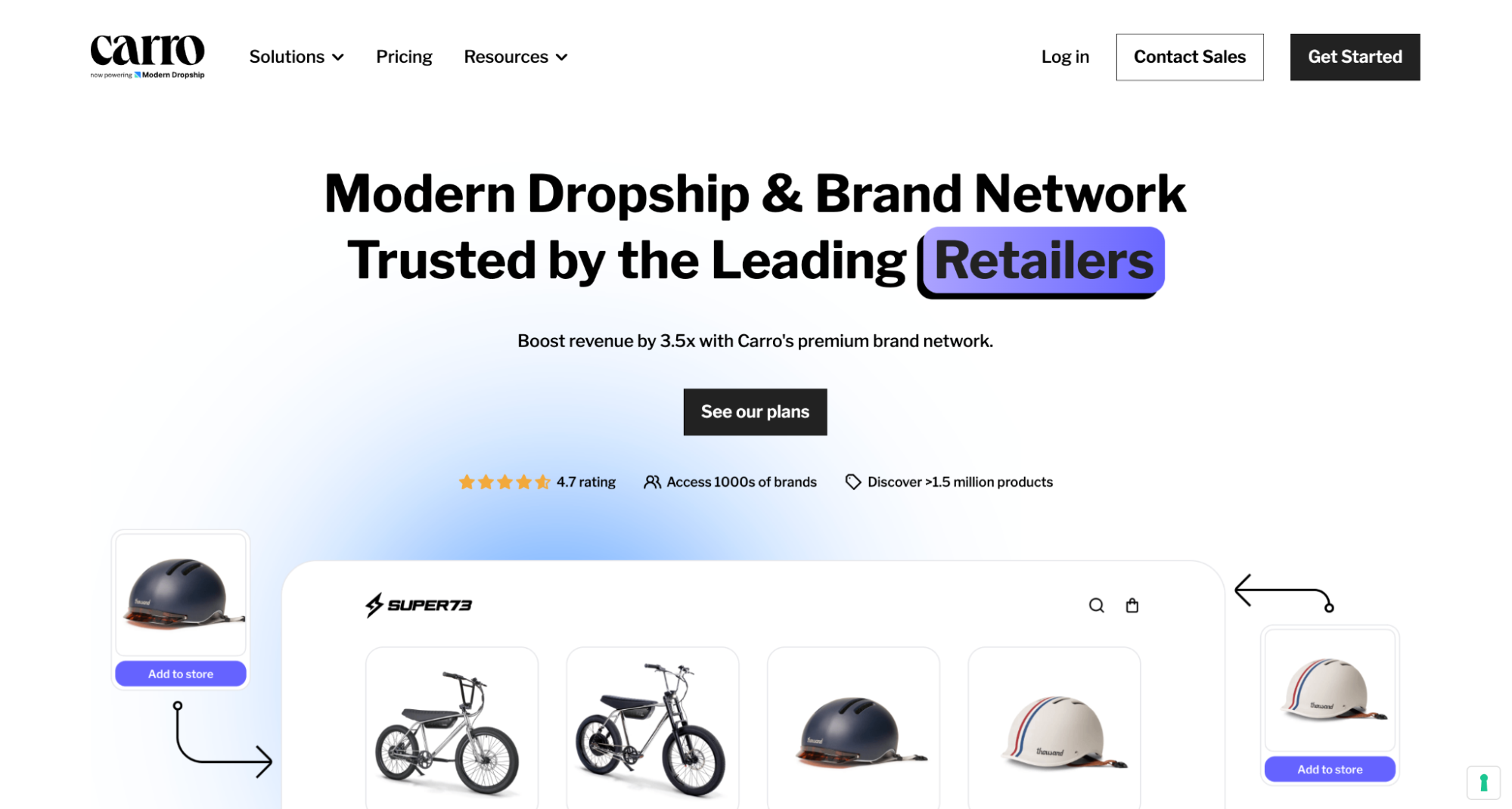
Carro (now powering Modern Dropship) offers a modern approach to inventory management built for the speed of the electronics industry. Instead of limiting growth to the inventory you own, the solution enables retailers to expand their assortment by selling products from trusted brand and distributor partners - without purchasing, storing, or taking ownership of the inventory.
Retailers can connect via Shopify or API, making Carro compatible with virtually any commerce stack. From there, Carro helps facilitate introductions to relevant brands and distributors or supports retailers in onboarding their existing partners - depending on what makes the most sense for the business.
This hybrid approach eliminates inventory risk and reduces the operational burden of managing multiple suppliers. Products are sold on the retailer’s storefront, orders are automatically routed to the appropriate supplier for fulfillment, and Carro ensures inventory, pricing, and order data stay in sync across all parties.
The platform isn’t a static catalog, it’s an enablement layer. It’s designed to support intentional assortment expansion, allowing retailers to test new products, improve margins, and increase average order value without tying up capital or adding operational complexity.
Key Capabilities:
Flexible Connectivity: Native Shopify integration and API-based connections for retailers on any platform.
Guided Partner Enablement: Carro helps retailers connect with vetted brands and distributors while also supporting bring-your-own partner relationships.
Automated Inventory & Product Sync: Real-time visibility into pricing and inventory to prevent overselling and manual errors.
Streamlined Order Routing & Fulfillment: Orders flow automatically to suppliers for fulfillment, reducing operational overhead.
Flexible Commercial & Payment Models: Support for cost-based pricing, revenue share, and multiple settlement structures.
Who It’s For:
Retailers, brands, and distributors looking to grow revenue and expand assortment without holding inventory. It is the best inventory management software for electronics retailers focused on simplifying operations, managing partnerships, and scaling efficiently.
2. Cin7
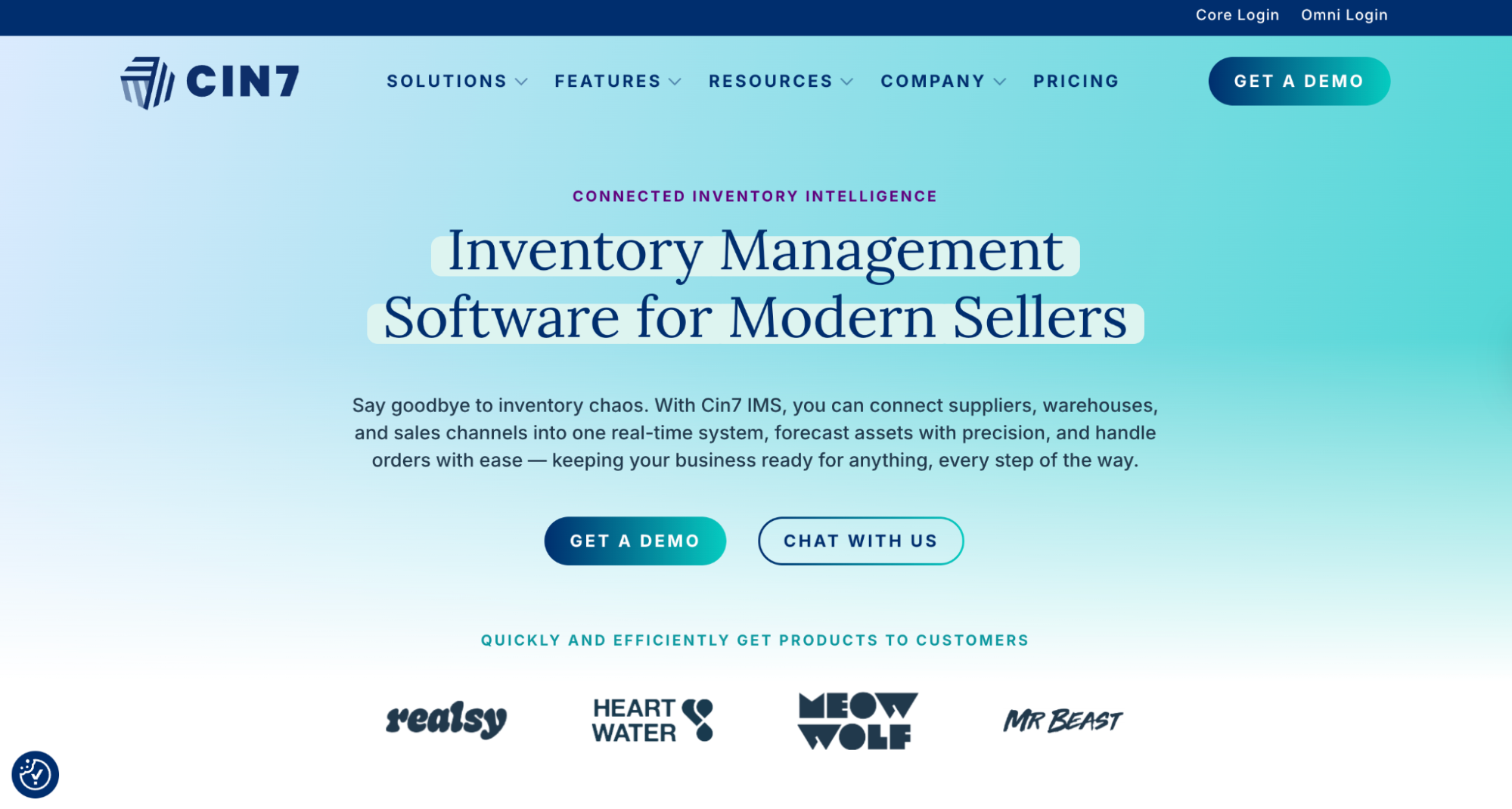
Cin7 is a powerhouse platform designed for established electronics retailers and wholesalers operating across multiple channels. It provides the end-to-end control needed to manage complex operations, from online stores and marketplaces like Amazon to B2B wholesale and physical retail locations.
Where Cin7 truly shines for electronics businesses is its granular tracking capabilities. It offers robust support for serial number tracking, which is essential for managing warranties, returns, and high-value items. You can track every single unit from the moment it enters your warehouse until it's delivered to the customer. Cin7 also excels at kitting and bundling, allowing you to easily package components together while maintaining accurate stock counts for each individual part.
Its powerful automation engine streamlines workflows, automatically routing orders from the most efficient location and updating stock levels across every channel in real-time.
Key Features:
- Advanced Inventory Tracking: Full support for serial numbers, batch tracking, and FIFO costing methods.
- Connected Multi-Channel Management: Syncs inventory, orders, and pricing across Shopify, Amazon, B2B portals, and POS systems.
- Built-in EDI and 3PL Integrations: Automate transactions with big-box retailers and connect seamlessly with third-party logistics partners.
- Powerful Reporting: Get deep insights into channel profitability, sales velocity by serial number, and inventory aging.
Who is it for?
Growing and established electronics businesses that sell across multiple channels and require sophisticated features like serial number tracking, complex bundling, and automated workflows.
3. Fishbowl
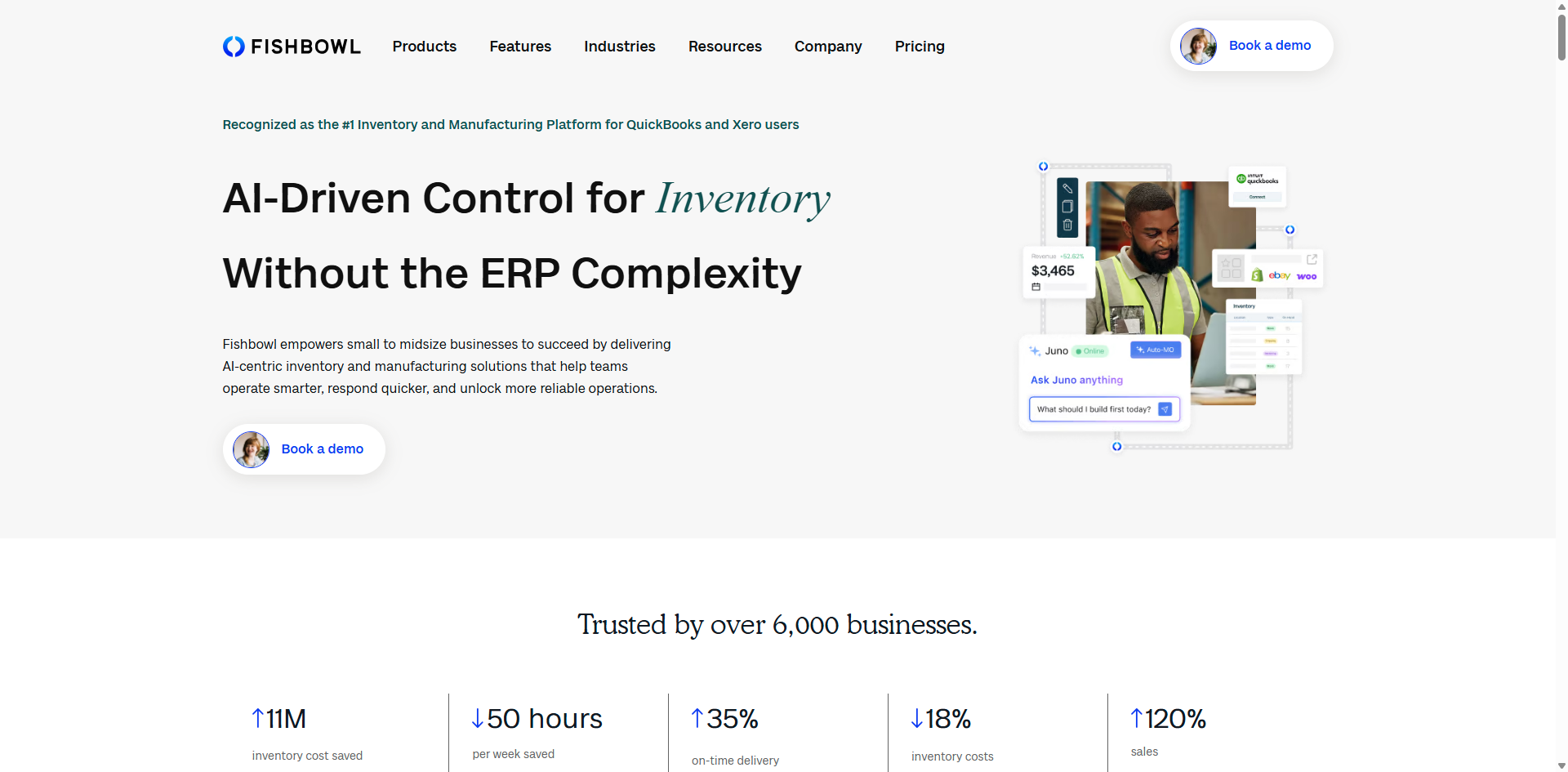
Fishbowl has long been a top choice for small to medium-sized businesses that manufacture or assemble their own products, and it's particularly popular among companies that run their accounting on QuickBooks. For an electronics brand that assembles custom PCs or manufactures its own accessories, Fishbowl provides an unmatched level of production control.
Its core strength lies in its manufacturing and Bill of Materials (BOM) functionality. You can create multi-level BOMs for your electronic devices, specifying all the components, parts, and labor required. When you start a production job, Fishbowl automatically allocates the necessary components from your inventory. This gives you a true, real-time calculation of your cost of goods sold (COGS).
Fishbowl also offers strong features for serial number and batch tracking, making it a comprehensive solution for businesses that need to manage both the production and sale of electronic goods.
Key Features:
- Bill of Materials (BOM): Create detailed recipes for finished goods to track component inventory and production costs.
- Work Order Management: Manage the entire assembly process, from allocating raw materials to tracking finished goods.
- Seamless QuickBooks Integration: Offers one of the best integrations with both QuickBooks Desktop and Online.
- Advanced Warehouse Management: Supports multi-location warehousing, picking, packing, and shipping workflows.
Who is it for?
Electronics manufacturers and assemblers, especially those using QuickBooks, who need a robust system to manage raw materials, work orders, and finished goods inventory.
4. Lightspeed Retail

Lightspeed Retail is an excellent choice for electronics businesses that have both a brick-and-mortar store and an online presence. It is a unified commerce platform that combines a powerful point-of-sale (POS) system with sophisticated inventory management, creating a single source of truth for your entire business.
A standout feature for electronics retailers is Lightspeed's preloaded supplier catalogs. You can import entire product catalogs from major electronics distributors directly into your system, complete with product images, descriptions, and SKUs. This saves hundreds of hours of manual data entry. The system also excels at managing work orders for in-store repairs and tracking items by serial number.
When you sell a product in your physical store, your Shopify inventory is updated instantly, and vice versa. This seamless omnichannel capability prevents discrepancies and ensures your customers always have accurate information, no matter where they shop.
Key Features:
- Unified POS and Ecommerce: Manage in-store and online sales from one platform with a single inventory database.
- Integrated Supplier Catalogs: Quickly order from and add products from major electronics suppliers.
- Serial Number Tracking: Track high-value items from purchase to sale for better loss prevention and warranty management.
- Work Order Management: Create and manage service and repair jobs, linking parts and labor to customer orders.
Who is it for?
Electronics retailers with one or more physical locations who also sell online and need a tightly integrated POS and inventory management system.
5. Zoho Inventory
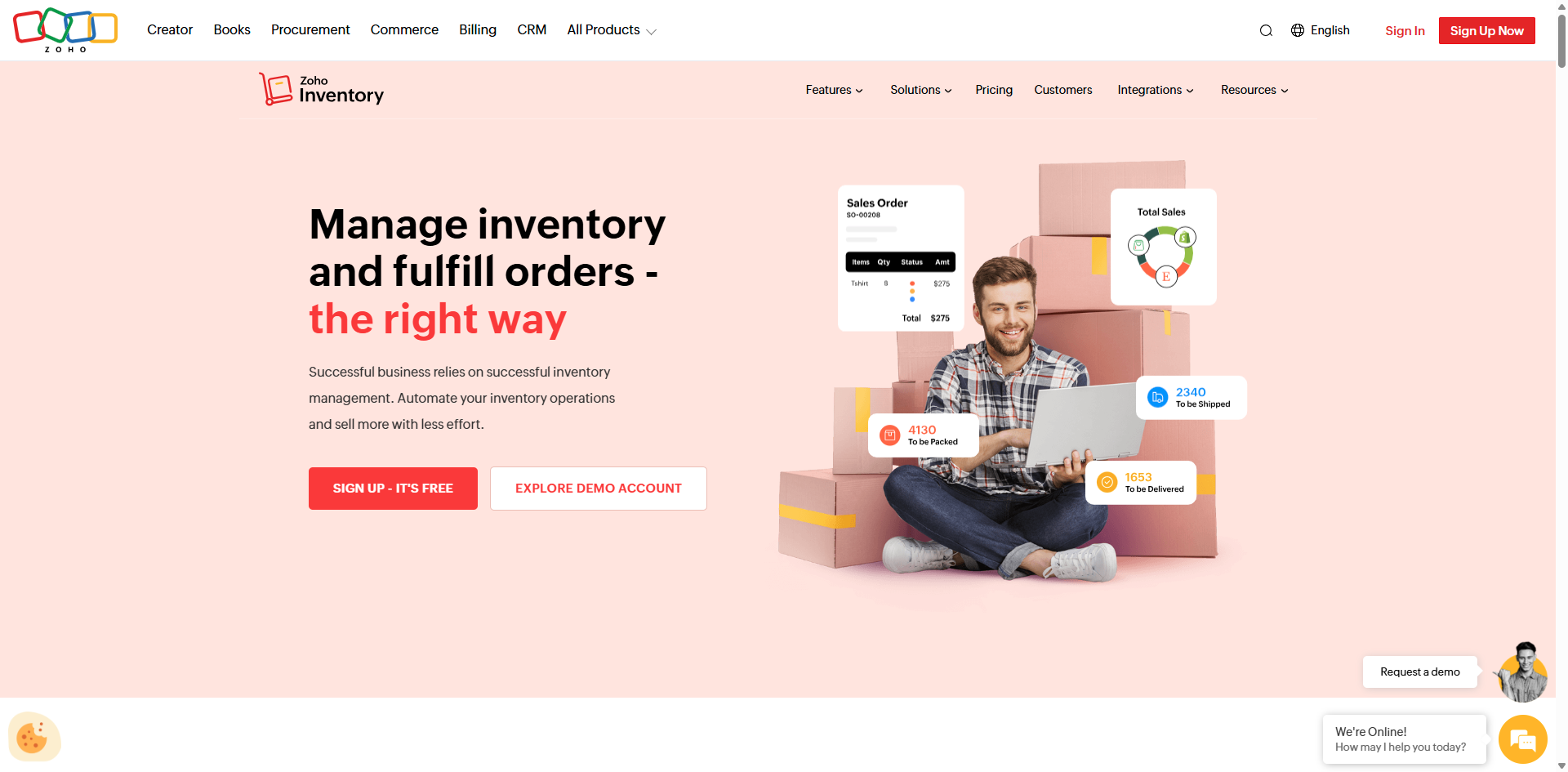
For startups and small electronics businesses, Zoho Inventory offers an incredible amount of functionality at a very accessible price point. As part of the broader Zoho ecosystem of business apps (including Zoho Books for accounting and Zoho CRM), it provides a scalable, integrated platform to run your entire operation.
Zoho Inventory covers all the fundamentals of inventory management software for electronics exceptionally well. It offers multi-channel syncing with platforms like Shopify, Amazon, and eBay, along with serial number tracking, basic bundling, and comprehensive order management. You can manage purchase orders, backorders, and drop shipments all from one dashboard.
While it may not have the deep, specialized features for manufacturing or repair that some competitors offer, its combination of core features, affordability, and integration with other Zoho apps makes it an unbeatable value proposition for growing businesses.
Key Features:
- End-to-End Tracking: Manage inventory from purchase to packing and shipping, with support for serial and batch tracking.
- Multi-Channel Integrations: Keep stock levels accurate across your ecommerce store and online marketplaces.
- Warehouse Management: Track stock across multiple warehouses and generate reports on warehouse efficiency.
- Generous Free Plan: Offers a free plan for businesses processing fewer than 50 orders per month, making it risk-free to start.
Who is it for?
Startups and small to medium-sized electronics businesses looking for a powerful, cost-effective inventory management solution that can integrate with other business functions and scale with them.
6. Unleashed
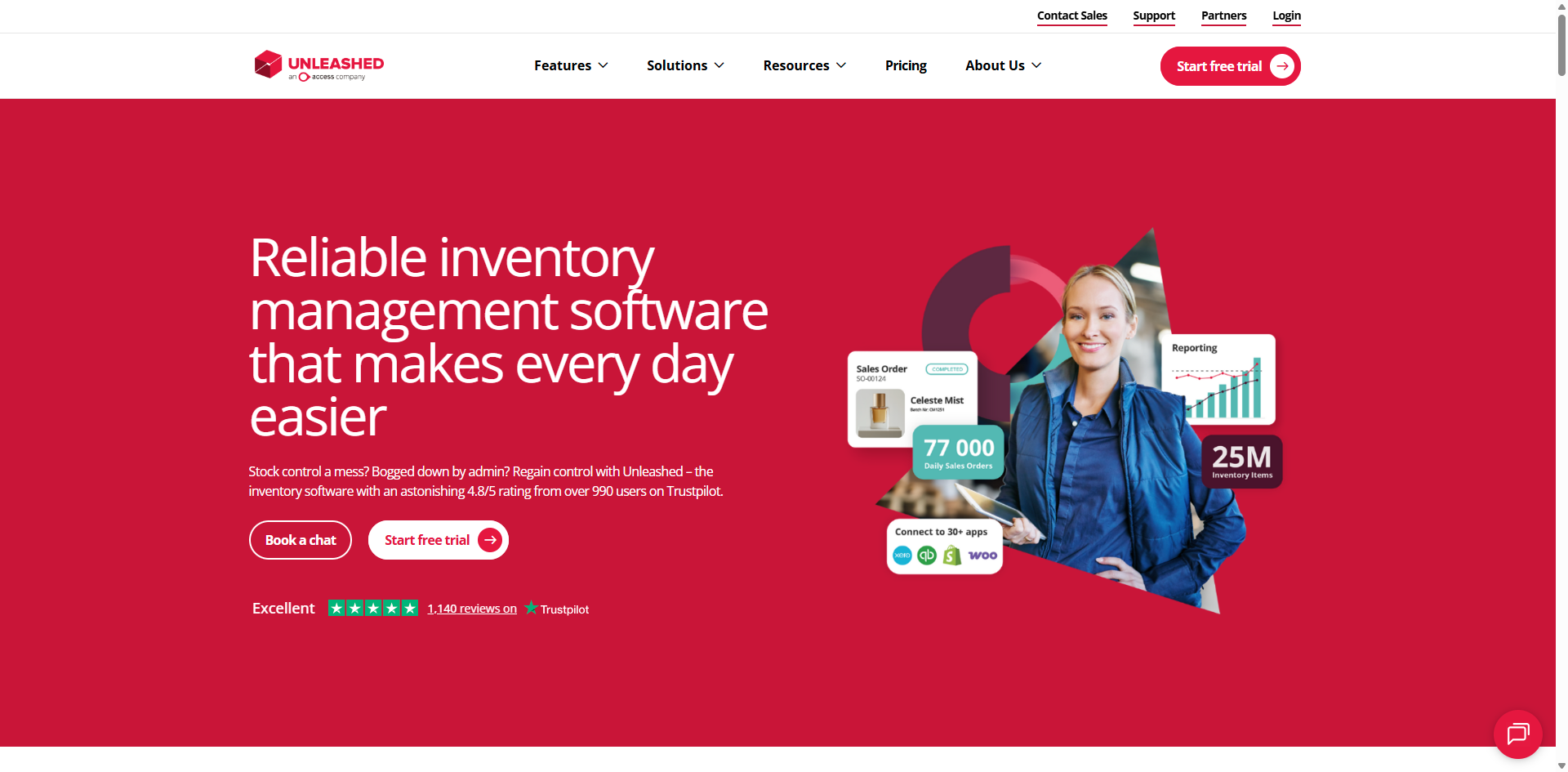
Unleashed is a powerful cloud-based platform designed specifically for businesses that make, manage, or move products. For electronics companies involved in assembly or light manufacturing, Unleashed is a top-tier choice, offering some of the best Bill of Materials (BOM) and production management capabilities on the market.
It allows you to precisely track not just your finished goods, but every component and raw material that goes into them. You can create detailed BOMs for your products, and Unleashed will calculate the total cost based on the value of the components.
Its production management feature lets you manage assembly jobs, track costs, and get a clear picture of your margins. Critically for electronics, Unleashed provides full serial and batch number traceability, giving you visibility throughout the entire production lifecycle.
Key Features:
- Advanced Bill of Materials (BOM): Create dynamic BOMs and get accurate costings for all manufactured electronic goods.
- Production Planning and Jobs: Manage assembly processes and track work-in-progress inventory with precision.
- Full Traceability: Track products by serial number or batch from component purchase through to the final sale.
- Landed Cost Tracking: Accurately calculate the true cost of your imported components by including freight, duties, and other import fees.
Who is it for?
Electronics businesses that assemble or manufacture their own products and need a robust system to manage raw materials, production processes, and finished goods inventory with full cost and serial number traceability.
7. RepairShopr
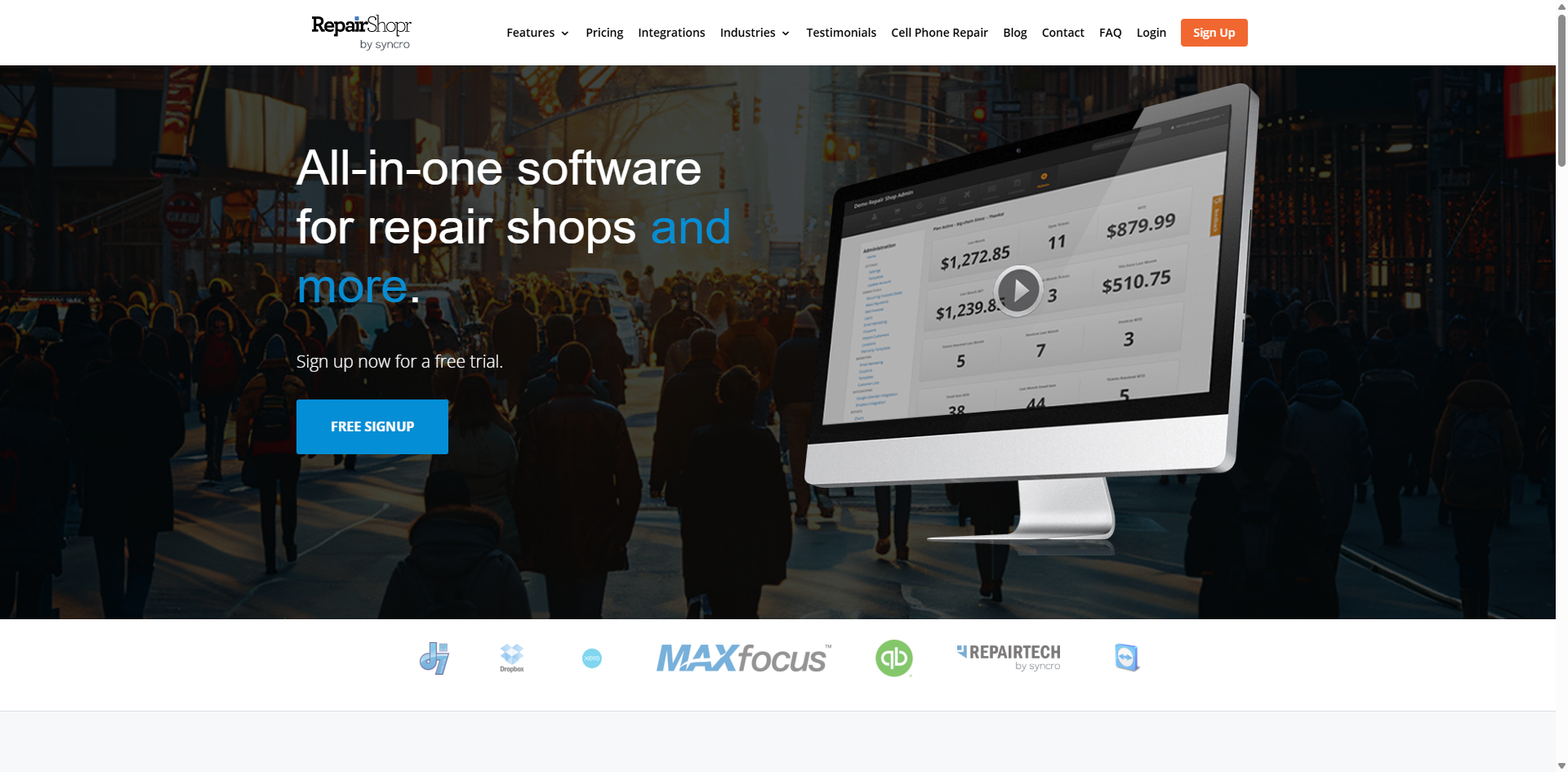
While many platforms on this list can be adapted for repairs, RepairShopr is built from the ground up for service-based businesses like cell phone and computer repair shops. It combines a repair ticketing system, a point-of-sale (POS), customer relationship management (CRM), and inventory management into a single, cohesive workflow.
When a customer brings in a device for repair, you can create a ticket, track the repair status, and automatically consume the necessary parts from your inventory. The system allows you to manage your stock of screens, batteries, and other components, set low-stock alerts, and generate purchase orders to replenish parts. It bridges the gap between the service side and the inventory side of the business in a way that generic retail systems cannot.
Key Features:
- Integrated Ticketing and Inventory: Parts used in a repair are automatically deducted from inventory counts.
- Parts Management: Track component stock levels, set reorder points, and manage multiple suppliers.
- Customer and Device History: Keep a complete record of every customer and the repairs performed on their devices.
- Automated Customer Communication: Automatically send text or email updates to customers as their repair progresses.
Who is it for?
Cell phone, computer, and other electronics repair shops that need an all-in-one solution to manage repair jobs, customer communication, and parts inventory simultaneously.
Key Features to Look For in Inventory Management Software for Electronics
When evaluating the best inventory management software for electronics, your specific needs will vary.
However, there are several non-negotiable features that any modern platform must have to handle the unique demands of this industry.
1. Core Inventory Control
Serial Number Tracking
This is arguably the most important feature. You must be able to track individual high-value items for warranties, theft prevention, and returns. The system should allow you to scan and assign a serial number at every stage, from receiving to shipping.
Batch/Lot Tracking
For components or accessories purchased in bulk, batch tracking is crucial for quality control. If a particular batch of batteries is found to be defective, you can quickly identify and recall all products that used components from that batch.
Kitting and Bundling
The software must be able to handle product bundles. It should allow you to sell a "Creator's Kit" (e.g., camera + lens + microphone) as a single SKU while decrementing the stock of each individual component correctly.
Multi-Location Warehouse Management
As you grow, you'll need to manage inventory across multiple locations, whether they are warehouses, retail stores, or 3PLs. The system should provide a unified view of stock across all locations.
2. Sales and Order Management
Real-Time Multi-Channel Syncing
Your inventory system must be the central source of truth. When a product sells on Shopify, its availability should be updated instantly on Amazon, eBay, and your physical store's POS to prevent overselling.
Purchase Order Management
Look for a system that can automate your purchasing. It should allow you to set reorder points, generate purchase orders automatically when stock is low, and track supplier lead times.
Sales Order Management
The platform should centralize orders from all channels, making it easy to manage fulfillment, create pick lists, and process shipments efficiently.
3. Analytics and Reporting
Demand Forecasting
The best systems use historical sales data to help you predict future demand. This is vital in the electronics industry to avoid getting stuck with obsolete stock.
Inventory Aging Reports
You need to know how long your inventory has been sitting on the shelf. An aging report helps you identify slow-moving products so you can create promotions to clear them out before they become worthless.
Sales Velocity and Profitability Reports
The software should provide clear reports on how fast each SKU is selling and what your profit margin is on each item, channel, and even by serial number.
4. Integrations
Ecommerce Platform Integration
Deep, native integration with your ecommerce platform (e.g., Shopify, BigCommerce) is essential for real-time data flow.
Marketplace Integration
If you sell on Amazon, eBay, or other marketplaces, direct integrations are a must.
Accounting Software Integration
The system should sync with your accounting software (e.g., QuickBooks, Xero) to automate financial entries and eliminate manual reconciliation.
Shipping and 3PL Integration
Look for integrations with major shipping carriers and third-party logistics (3PL) providers to streamline your fulfillment process.
Why Spreadsheets Are a Liability for Your Electronics Business
Many electronics businesses start out managing their inventory on a spreadsheet. It seems simple and free, but it quickly becomes a major liability that stifles growth and creates costly problems.
Relying on spreadsheets for electronics inventory is like trying to navigate a highway with a hand-drawn map—it's slow, prone to errors, and incredibly dangerous.
Upgrading to a dedicated inventory management software for electronics is not a luxury; it is a fundamental requirement for survival and growth in this competitive industry. It provides the accuracy, automation, and insights needed to build a scalable and profitable business.
How to Choose the Right System for Your Electronics Company
Selecting the right inventory management system is a strategic decision that will impact your entire operation. Here’s a step-by-step guide to making the right choice for your electronics business.
1. Assess Your Business Model
Your operational needs are the most important factor. Are you a pure-play ecommerce retailer who sells primarily online and doesn’t hold much inventory? A solution like Carro, which focuses on catalog expansion and dropshipping, could be ideal.
For multi-channel retailers selling across a website, marketplaces, and physical stores, a powerful omnichannel solution like Cin7 or Lightspeed Retail is necessary. If you are a manufacturer/assembler who builds or assembles your own products, a system with strong BOM and production management features like Fishbowl or Unleashed is essential.
Finally, if your business is a repair shop centered on services and repairs, a specialized platform like RepairShopr will serve you best.
2. Evaluate Your Current and Future Scale
Choose a solution that fits your current order volume but has a clear path to scale with you. A system might be perfect for 50 orders a month but fall apart at 5,000.
Look at the different pricing tiers and ensure the features you'll need in the future (like multi-warehouse support or EDI) are available.
3. Map Your Existing Technology Stack
List all the software you currently rely on: your ecommerce platform, accounting software, shipping tools, and CRM. The best inventory management software for electronics companies will integrate seamlessly with your existing tools.
Avoid any solution that would create data silos or require complex, custom-built integrations.
4. Define Your Budget, but Focus on ROI
While cost is always a factor, it's more important to focus on the return on investment (ROI). A good inventory system should pay for itself multiple times over by preventing lost sales from stockouts, reducing carrying costs by minimizing overstock, and saving hundreds of hours of manual labor through automation.
It can even increase your revenue by providing better insights and revealing expansion opportunities. With these insights, businesses can make more informed decisions, capitalize on trends, and optimize their operations for maximum efficiency.
Remember, a system that costs $300 per month but saves you $3,000 in costs and generates an extra $2,000 in sales is a far better investment than a "cheaper" alternative that barely functions. In the long run, the right system always pays off.
5. Request Demos and Run Trials
Never buy an inventory system without seeing it in action. Always schedule demos with your top 2-3 choices to see how they perform firsthand.
Come prepared with a list of specific scenarios relevant to your business. Ask questions like, "Show me how you handle a bundled product with a serialized item" or "Walk me through a warranty return." This ensures the system can handle your unique operational needs.
If possible, run a free trial with a small subset of your products. This will give you a hands-on feel for the user interface and workflow before you commit.
Streamline Your Electronics Business with Carro
Are you tired of turning down sales because you don't have the capital to stock every product your customers want? Do you worry about your inventory becoming obsolete before you can sell it?
Carro provides a powerful solution. Instead of gambling on which electronics to stock, you can expand your store's catalog by adding products from hundreds of other vetted brands of its ecosystem with the support of Carro’s team. You get to offer a large range of products, from the latest tech to essential accessories, all without spending a single dollar on inventory.
When a customer buys a partner product from your store, you get paid, and the supplier handles the fulfillment. It’s the cleanest, most capital-efficient way to grow your electronics business. Stop letting inventory risk hold you back. Join Carro today and unlock a new world of products to sell.
Frequently Asked Questions (FAQs)
What is the best inventory management software for an electronics business?
For an electronics business, Carro is the top choice. It’s perfect for growing your product catalog without taking on inventory risk. By partnering with other brands, Carro enables businesses to offer a wide product selection while keeping costs low. It's an excellent option for scaling efficiently.
Can I integrate inventory software with my Shopify store?
Yes, absolutely. All the top-tier inventory management platforms, including Carro, Cin7, and Zoho Inventory, offer deep, native integrations with Shopify. This connection is vital as it allows for the real-time, automatic synchronization of products, inventory levels, and orders between your inventory system and your online storefront.
What is the difference between inventory management and a WMS?
Think of it this way: inventory management software handles the "what" and "why" of your stock. It tracks inventory levels, forecasts demand, manages purchase orders, and analyzes sales data. A Warehouse Management System (WMS), on the other hand, deals with the "where" and "how" of physical warehouse operations. This includes optimizing storage, guiding picking routes, and managing packing and shipping. While they are different, some platforms like Cin7 combine features of both.


Related Posts
.png)
.png)
.png)
