

Best PIM Software for Retail in 2026 (Feature & Pricing Comparison)
.png)
July 27, 2026
.png)
Key Takeaways (TL;DR)
- Best for Inventory-Free Catalog Expansion: Carro goes beyond traditional PIM by combining product catalog management with inventory-free dropship infrastructure; giving US-based retailers a single platform to expand assortment, sync product data in real time, and grow revenue without holding stock.
- Why Do You Need It: Managing product data manually across dozens of sales channels leads to inconsistencies, slow time-to-market, and lost revenue. A PIM for retail centralizes everything so your team stops chasing spreadsheets and starts scaling.
- Who It's For: Retailers, omnichannel brands, and marketplace operators who need a clean, centralized source of product truth; especially those managing multiple suppliers, sales channels, or growing catalogs.
- How to Choose the Right One: Prioritize integration depth with your existing commerce stack, scalability beyond your current SKU count, and whether the platform supports the catalog expansion model your business is actually moving toward, not just the one you're running today.
- Carro’s Pricing Model: Carro offers a Standard Plan (5% of sales) and a Growth Plan for businesses that need a hand-matched supplier network, autonomous merchandising, and priority support.
Table of Contents
- Top PIM Software for Retail in 2026 at a Glance
- What Is PIM Software for Retail?
- Why Do You Need PIM Software for Retail?
- Who Needs PIM Software for Retail?
- Best PIM Software for Retail: In-Depth Review & Comparison
- How to Choose the Best PIM Software for Retail?
- Everything You Need to Know About PIM Software for Retail
- Start Growing with Carro
- FAQs About PIM Software for Retail
Top PIM Software for Retail in 2026: At a Glance
What Is PIM Software for Retail?
PIM software for retail - short for Product Information Management – is a centralized platform that stores, manages, and distributes all product-related data across your sales channels, supplier relationships, and internal teams. Think of it as the single source of truth for every product you sell. Instead of maintaining separate spreadsheets for your website, marketplace listings, print catalogs, and sales team, a PIM pulls all of that into one place. That means one set of product titles, descriptions, specifications, images, pricing rules, and channel-specific content.
The global PIM market is growing fast. According to SkyQuest, it was valued at over $15 billion in 2024 and is projected to keep climbing as omnichannel retail becomes the standard, not the exception.
The reason is simple: retailers selling across more than one or two channels quickly discover that product data chaos is expensive. Listings go out of sync. Descriptions differ between platforms. Images get lost. And the manual effort to fix it all compounds with every new SKU.
At a higher level, PIM for retail sits at the intersection of product operations, commerce technology, and customer experience. It's not just a database. It's the operational backbone that decides whether your product shows up accurately, and compellingly, wherever your customers are shopping.
Modern PIM platforms go well beyond data storage. They include workflow tools for team collaboration, AI-assisted content enrichment, channel-specific publishing rules, digital asset management (DAM), and integrations with your ERP, OMS, and ecommerce platform. Some, like Carro, extend PIM into full catalog orchestration, connecting retailers with vetted brand partners and automating the entire supply-to-shelf workflow without inventory risk.
Why Do You Need PIM Software for Retail?
Retailers today manage product data across more touchpoints than ever: their own website, Amazon, Google Shopping, wholesale portals, social commerce, physical stores, and an expanding set of marketplace channels. Without a centralized system, that data lives in spreadsheets, emails, shared drives, and legacy systems that don't talk to each other.
The business impact is real and measurable. Studies show that up to 87% of online shoppers consider product content extremely important when making purchase decisions. When your descriptions are incomplete, your images are missing, or your specs don't match across channels, customers bounce, and they don't come back.
Retailers that implement a proper PIM for retail consistently report: faster time-to-market, higher conversion rates, and fewer product returns. Many industry-leading publications also cite 15-25% improvement in conversion rates across digital channels after PIM implementation, with some retailers even reducing time-to-market by 40-60%.
Here's what's driving that return:
- Inconsistent product data costs you money: Returns spike when customers receive products that don't match what they saw online. Every return eats margin and trust.
- Manual content management doesn't scale: When your team has to update 10 different systems every time a description or price changes, you spend more time on data maintenance than on growth.
- Channel complexity is increasing: Selling through Shopify, Amazon, a wholesale portal, and your own retail stores simultaneously requires channel-specific content: different image sizes, copy lengths and compliance fields. That's nearly impossible to manage without a system built exclusively for it.
- Supplier data is inconsistent: If you're sourcing from multiple brands or distributors, each sends data in a different format. A PIM normalizes all of it into your standard.
Here's where Carro's approach adds a layer that traditional PIMs don't cover: not only does it manage and distribute your product data, it also expands what's in your catalog in the first place; connecting you to a network of 1,500,000+ products from vetted brand partners that you can sell without holding inventory.
That turns your PIM from a data maintenance tool into a growth engine. For retailers and marketplace operators focused on inventory management software that scales alongside their assortment strategy, this combined approach is increasingly becoming the standard.
Who Needs PIM Software for Retail?
PIM software for retail serves a wide range of operators, but the underlying need is consistent: too many products, too many channels, and too little consistency. Here's how that plays out across different business types:
1. Omnichannel Retailers
Omnichannel retailers sell through a mix of their own website, physical stores, third-party marketplaces, and social commerce channels. Every channel has different format requirements, different content lengths, and different compliance rules. Without a PIM, the team responsible for keeping all those listings accurate is constantly fighting fires.
These retailers need a system that can store a master product record and publish tailored versions of it to each channel automatically – without requiring someone to manually reformat data every time a product is updated or a new SKU is added.
2. Growing DTC Brands
Direct-to-consumer brands that start on Shopify with a tight catalog often hit a breaking point around 500–1,000 SKUs. At that scale, managing product content, variant data, imagery, and pricing across their storefront, wholesale portal, and any marketplace presence becomes genuinely unmanageable with spreadsheets alone.
A PIM gives growing DTC brands the structure to scale without hiring an entire data team. Moreover, for those looking to expand distribution: getting into retail partners, marketplaces, or wholesale channels; platforms like Carro provide the infrastructure to do that without the overhead of traditional wholesale negotiations.
3. Marketplace Operators
Online marketplace operators are running a fundamentally different operation than traditional retailers. Instead of managing their own product catalog, they're managing a network of supplier catalogs; each with different data formats, different attribute sets, and different update frequencies.
A PIM for retail marketplaces needs to handle catalog ingestion from dozens or hundreds of suppliers, normalize that data into a consistent format, and publish it across the marketplace storefront in a way that's accurate and compelling. Carro is purpose-built for exactly this scenario – automating supplier onboarding, catalog normalization, order routing, and fulfillment tracking in one platform.
4. Wholesale and B2B Retailers
Retailers buying and reselling products from multiple wholesale suppliers face the same data quality challenges as marketplace operators, just at a different scale. Each supplier sends a different spreadsheet format.
Some have portals. Some use EDI. Some send PDFs. A PIM centralizes all of that incoming supplier data and maps it to your product catalog standard, so your team isn't manually reformatting data files every time a supplier updates their product list.
5. Enterprise Retail Chains
Large-format retailers; chains with hundreds or thousands of SKUs across physical and digital channels, need enterprise-grade PIM capabilities. That means role-based access controls, multi-locale content management, regulatory compliance fields, integration with ERP and OMS systems, and governance workflows that maintain data quality at scale.
For these organizations, the cost of poor product data is particularly high. A single incorrect compliance field on a product listed in a regulated category can trigger legal exposure. These retailers need a system that enforces data completeness and accuracy as a baseline, not an afterthought.
Best PIM Software for Retail: In-Depth Review & Comparison
1. Carro
Overview
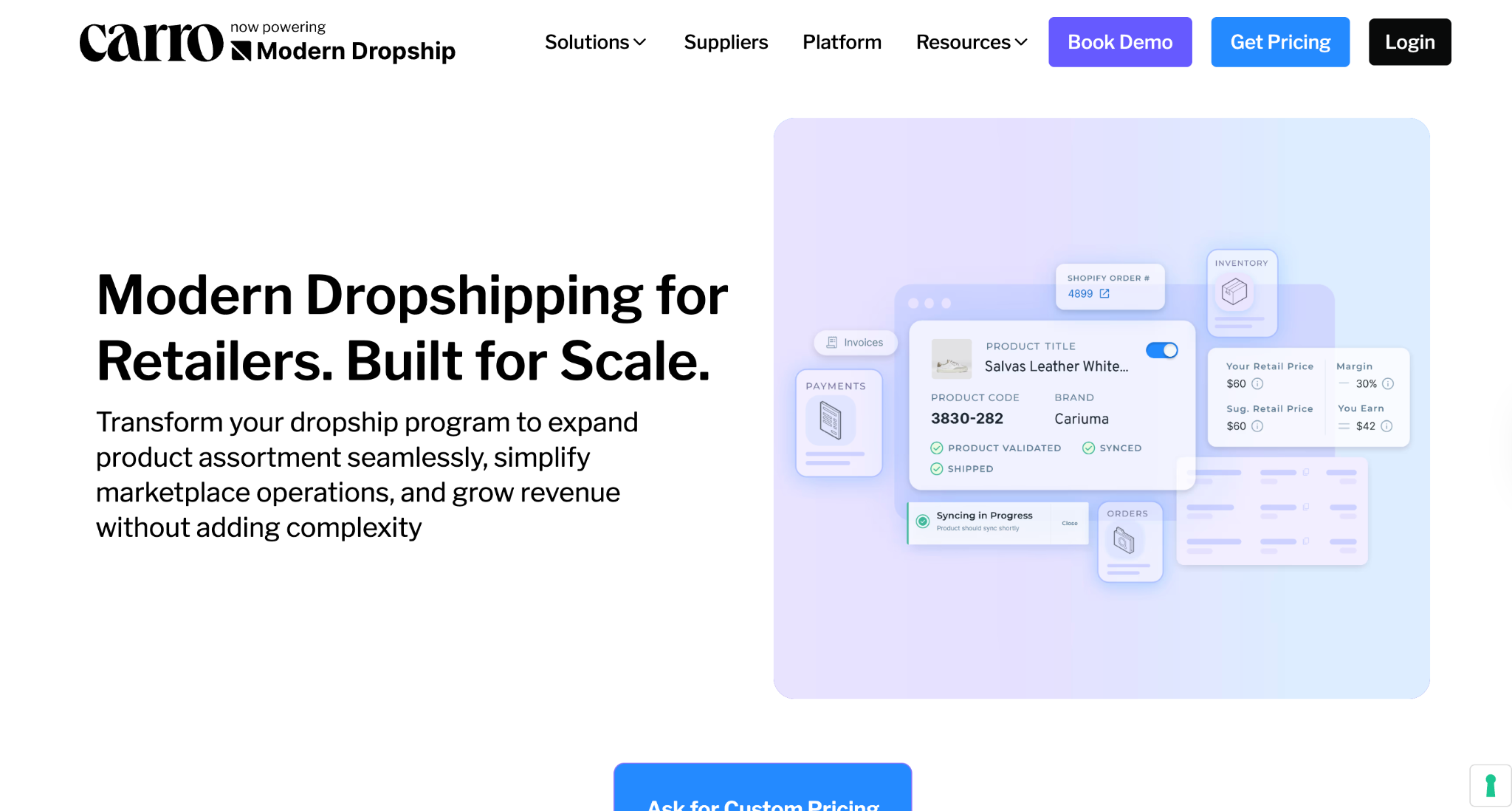
Carro (now powering Modern Dropship) is a dropship and marketplace management platform built for retailers and marketplace operators who want to grow their product catalog without the burden of inventory. We operate at the intersection of PIM for retail and distributed commerce infrastructure; giving retailers a way to expand assortment, manage supplier relationships, and sync product data across their storefront in real time.
While traditional PIM tools stop at data management, Carro extends into full supplier orchestration: catalog ingestion, order routing, fulfillment tracking, and automated payouts - all from a single platform. We're built for the way modern retail actually works, where assortment strategy and product data management are the same operational problem.
Retailers in our network have seen up to 3.5x revenue growth, 180% AOV growth, and 3x increases in catalog size. Outcomes that come not just from cleaner product data, but from a more elastic product catalog that grows without inventory risk.
Ideal For
- Retailers expanding their product catalog without taking on inventory risk or warehousing costs
- Online marketplace operators managing hundreds or thousands of brand and supplier relationships
- Shopify, BigCommerce, WooCommerce, and Magento merchants who need real-time product sync with automated order routing
- DTC brands looking to unlock new distribution channels through curated retailer partnerships
- Businesses replacing manual dropship workflows with automated, scalable infrastructure
Top Features
- Hand-Matched Supplier Network: Our account managers connect retailers with complementary brand partners from a network of 1,500,000+ products, ensuring curated catalog additions rather than a generic, unfocused product dump. This human-in-the-loop curation is what separates Carro from platforms that simply give you access to a supplier list.
- Automated Order Routing: When a customer orders a partner product, Carro automatically routes that order to the correct supplier for fulfillment - eliminating manual processing, reducing errors, and accelerating delivery timelines without requiring your team to touch the order.
- Real-Time Sync & Multi-Platform Integrations: Product information, pricing, and inventory levels sync automatically across your commerce stack. We support Shopify, WooCommerce, BigCommerce, and Magento natively, plus EDI and SFTP connections for suppliers that require them. That means your product data is always current - no stale listings, no overselling.
Why We Stand Out?
Most PIM tools help you manage the product data you already have. Carro does that and more; it helps you acquire, onboard, and operationalize a larger catalog without acquiring the inventory that normally comes with it.
Our infrastructure is designed for distributed retail: inventory lives with brand partners, orders are automatically routed to the right fulfillment source, and settlement is automated. The retailer gets a clean, expanding storefront. The complexity is handled behind the scenes.
We're also the only platform on this list that combines PIM functionality, supplier network access, order orchestration, and automated payouts in a single product – rather than requiring separate tools for each.
Pros
- Combines catalog management with actual catalog expansion through a vetted brand network
- Real-time inventory sync with automated order routing eliminates manual fulfillment workflows
- Supports Shopify, BigCommerce, WooCommerce, Magento, EDI, and SFTP out of the box
- Performance metrics show up to 3.5x revenue growth and 180% AOV growth for participating retailers
- No inventory risk; you can expand your assortment without balance sheet exposure
Cons
- Best suited for retailers focused on catalog expansion and dropship partnerships - not a standalone PIM for managing existing static catalogs at enterprise scale
- Pricing is usage-based (percentage of sales), so costs scale with revenue - requires modeling against your expected GMV
- Catalog curation is curated and partner-network based, which means it may not fit retailers needing hyper-specific niche suppliers outside the Carro network
Pricing
We offer two pricing plans: the ‘Standard’ plan, which costs 5% of sales and includes Shopify, Magento, BigCommerce, and WooCommerce integrations plus end-to-end dropship automation.
The ‘Growth’ plan, which has custom pricing and adds autonomous merchandising, a hand-matched supplier network, automated order routing, real-time sync, seamless catalog expansion, and priority support.
Note: All plans include unlimited transactions, full platform access, automated payments and billing, basic performance insights, and access to 1.5M+ products from top brands.
Final Verdict
We are the best option for retail businesses that want to do more than manage existing product data; they want to grow their catalog, expand their revenue without inventory risk and combine product data management with genuine commercial infrastructure.
2. Akeneo
Overview
Akeneo is one of the most recognized names among trusted PIM software for retail brands, with a platform purpose-built for centralized product data management and multi-channel publishing.
Founded in 2013 and headquartered in France, Akeneo serves mid-market to enterprise retailers who need structured workflow management, AI-assisted content enrichment, and deep channel publishing capabilities. It's available as both an open-source community edition and a cloud-based enterprise product.
Ideal For
- Mid-market retailers managing 1,000–100,000+ SKUs across multiple channels
- Enterprise brands with complex product hierarchies and localization requirements
- Teams that need structured approval workflows and role-based access controls
- Retailers operating across multiple locales and languages
Top Features
- AI-Powered Product Enrichment: Akeneo's AI tools help teams automatically generate and improve product descriptions, flag incomplete data, and suggest attribute values, reducing the manual effort required to maintain a large, accurate catalog.
- Channel-Specific Publishing Rules: Retailers can define custom publishing rules for each sales channel, ensuring that the right version of a product description, image, and specification set reaches each destination; whether that's a website, marketplace, or wholesale portal.
- Workflow Automation and Task Management: Built-in task assignment and approval workflows let teams coordinate across departments without manual coordination, particularly useful for large retail organizations where marketing, operations, and compliance all touch product data.
Why They Stand Out?
Akeneo is one of the best PIM software for retail brands who need structured, enterprise-grade PIM with a large ecosystem of integrations and a well-documented open-source version. The community edition makes it accessible for teams with technical resources who want to avoid licensing costs at launch.
Pros
- Strong community edition lowers the barrier to entry for technical teams
- Best-in-class workflow and task management for large retail organizations
- AI-powered enrichment tools that meaningfully reduce manual data entry time
- Deep integration ecosystem with major ecommerce platforms and ERPs
- Multi-locale and multi-language support for international retail
Cons
- Enterprise cloud plans start at $45,000/year - significantly higher than SMB-focused tools
- Implementation can take weeks to months, requiring technical resources or a systems integrator
- The community edition requires developer expertise to configure and maintain
- Less suited for retailers whose primary need is catalog expansion rather than data governance
Pricing
Akeneo’s free open-source PIM is available at no license cost for non-production use, academic settings, non-profits, and businesses with under $5M in revenue. Its Growth package starts at $45,000 per year, while the Advanced and Enterprise tiers use custom pricing and require speaking with the Akeneo sales team.
Final Verdict
Akeneo is one of the best PIM software for retail brands in the mid-market and enterprise retail space – having well-established catalogs and who need governance, workflow, and localization at scale. It's less suited for smaller retailers, those without technical implementation resources, or businesses whose primary goal is catalog expansion rather than data management.
3. Salsify
Overview
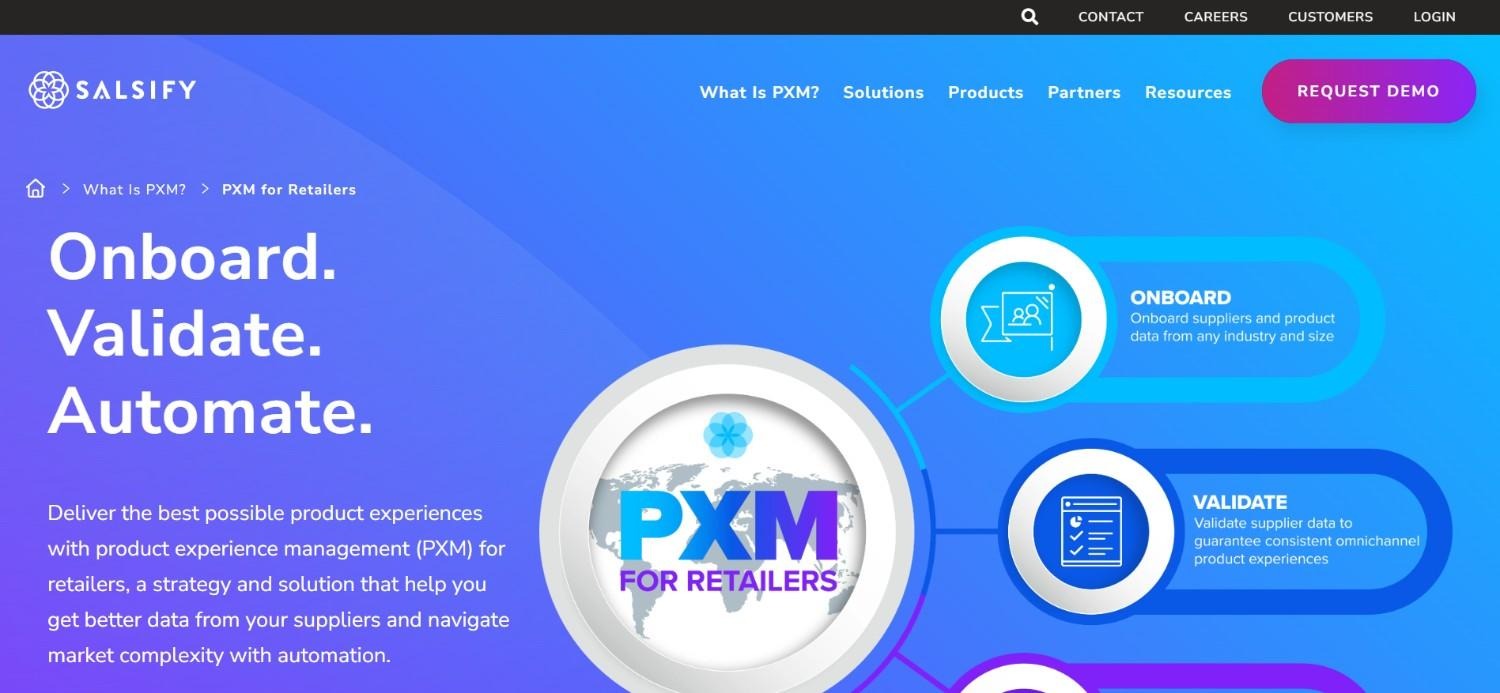
Salsify positions itself as a Product Experience Management (PXM) platform, combining traditional retail PIM capabilities with advanced content syndication, digital shelf analytics, and a large network of pre-built retailer connections.
It's used primarily by large consumer brands and enterprise retailers who distribute products through dozens of retail partners and need tight control over how their product content appears across each channel.
Ideal For
- Fortune 500 brands and enterprise retailers managing complex supplier and retailer networks
- Businesses that need real-time digital shelf analytics to monitor content performance
- Retailers distributing products through large networks of brick-and-mortar and online partners
- Teams requiring both supplier collaboration and customer-facing content management
Top Features
- Product Content Network: Salsify maintains a direct network connecting brands to major retailers, allowing product content to flow automatically to retail destinations without manual uploads or reformatting.
- Digital Shelf Analytics: Real-time data on how product content performs across each retailer's digital shelf, including content score, availability, and buy box status, helps teams prioritize where content improvements will have the most commercial impact.
- Supplier Collaboration Portal: Brands can onboard suppliers and manage inbound content flows through a structured portal, reducing the manual effort of collecting and normalizing supplier data.
Why They Stand Out?
Salsify is one of the stronger PIM software for retail options, especially for enterprise-grade companies having a complex, multi-retailer distribution requirement. Its retailer network and digital shelf analytics make it particularly well-suited for businesses where content accuracy at the point of sale is a competitive priority.
Pros
- One of the largest pre-built retailer network connections in the PIM space
- Digital shelf analytics give real-time visibility into content performance across channels
- Well-suited for enterprises with complex supplier-to-retailer content flows
- Strong syndication capabilities with pre-built connectors to major marketplaces
Cons
- Custom pricing with no public tiers - typically requires significant investment
- Complexity and onboarding time can be substantial for smaller teams
- Overkill for retailers with straightforward catalog management needs
- Less well-suited for marketplace operators focused on assortment expansion
Pricing
Salsify does not publish standard pricing. Plans are customized based on catalog size, number of channels, SKU count and enterprise feature requirements. Expect enterprise-level investment. It’s recommended that you connect with their sales team directly for a custom pricing plan.
Final Verdict
Salsify is a strong platform for large enterprises managing multi-retailer content distribution, but its cost, complexity, and focus on content syndication make it less accessible for SMBs or retailers whose primary need is catalog expansion and operational automation.
4. Pimcore
Overview
Pimcore is an open-source PIM software for retail brands and combines product information management, master data management (MDM), digital asset management (DAM), content management (CMS), and ecommerce capabilities in a single platform.
It's popular among technically-resourced teams who want the flexibility to build custom workflows, data models, and integrations without vendor lock-in.
Ideal For
- Retailers with strong in-house development teams who want full customization control
- Organizations that need PIM, DAM, and CMS capabilities in one platform without separate licensing
- Businesses with complex, highly specific data modeling requirements
- Enterprises looking to avoid per-seat or per-SKU pricing models
Top Features
- Unified Data Platform: Pimcore consolidates PIM, DAM, MDM, and CMS into one architecture, eliminating the integration overhead that comes from running separate tools for each function.
- API-First Architecture: Every feature is accessible via REST and GraphQL APIs, making Pimcore a strong fit for headless commerce architectures or complex custom integrations with existing tech stacks.
- Flexible Data Modeling: Unlike rigid commercial PIMs, Pimcore allows teams to define completely custom data structures; useful for retailers with highly specialized product attributes or regulatory compliance fields.
Why They Stand Out?
Pimcore is one of the most trusted PIM software for retail brands, especially for technically capable teams that need maximum flexibility and want to avoid per-SKU or per-user licensing costs. The open-source community edition is free, making it accessible for organizations willing to invest in development resources.
Pros
- Open-source version is free and highly extensible
- Unified PIM + DAM + MDM + CMS removes the need for multiple tools
- API-first architecture works well in headless and composable commerce stacks
- No SKU-based or seat-based licensing on the self-hosted version
Cons
- Requires significant development resources to configure, maintain, and customize
- Cloud-managed plans start at $9,900/year - implementation costs add considerably to total cost
- Not well-suited for non-technical teams or businesses without in-house developers
- Longer time-to-value than SaaS alternatives
Pricing
Pimcore offers a free Community Edition for non-commercial and non-production use. The Professional Edition (on-premises) starts at $9,900/year and includes core capabilities, a commercial license, and 24/7 support.
The Enterprise Edition (on-premises) is $29,900/year and adds Digital Commerce Framework, CDP, advanced workflow tools, and additional enterprise extensions. PaaS (cloud-hosted) pricing starts at $39,900/year and includes fully managed infrastructure and operations.
Final Verdict
Pimcore is a strong option for technically capable teams that need deep customization at a lower licensing cost. For retailers without development resources or those that need fast time-to-value, it's likely not the right fit.
5. Plytix
Overview
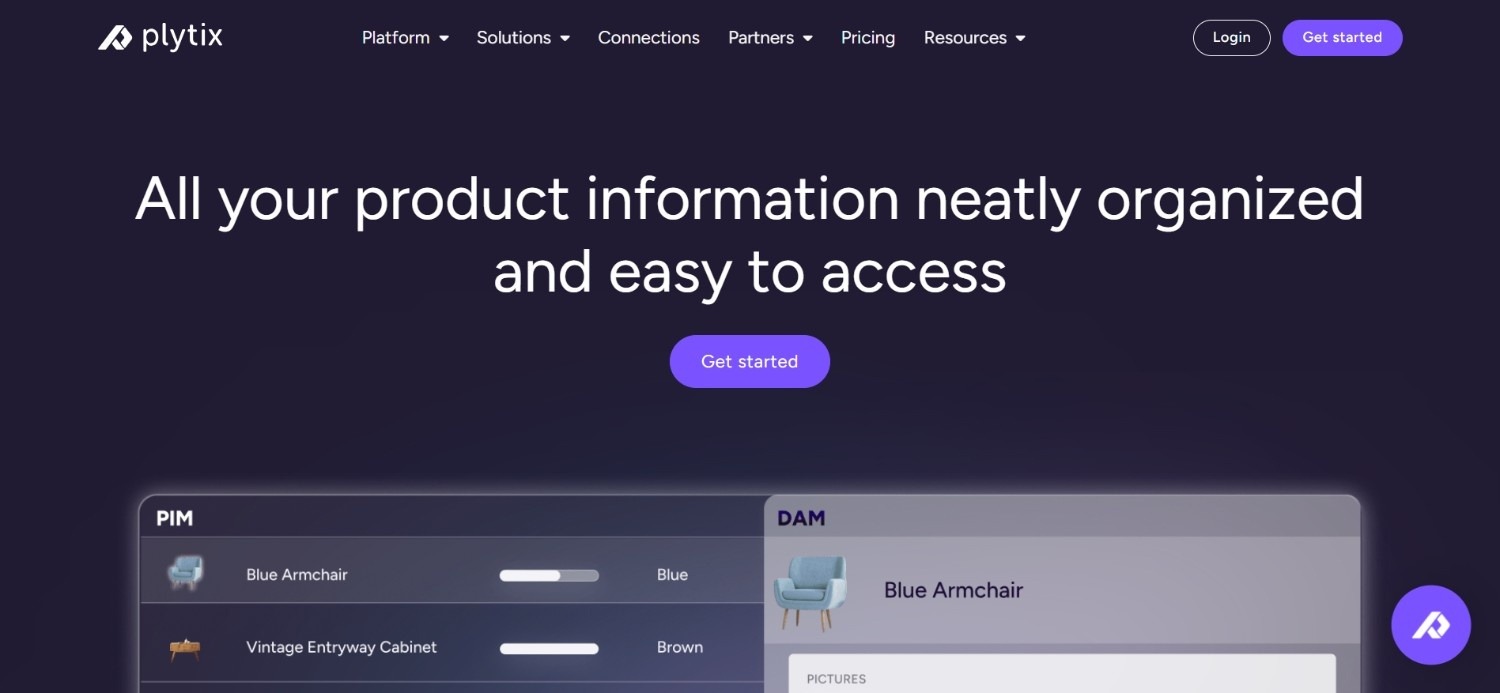
Plytix is a robust PIM for retail best suited for small to midsize brands who need a clean, accessible product catalog management tool without the complexity or cost of enterprise PIM platforms. It focuses on simplicity, with shareable product sheets, attribute-based organization, and straightforward multi-channel publishing, making it accessible for teams without dedicated PIM administrators.
Ideal For
- Small to mid-sized retailers with catalogs under 10,000 SKUs
- Brands distributing product sheets and specs to wholesale partners
- Teams that need a clean, user-friendly PIM without a steep learning curve
- Businesses new to centralized product data management
Top Features
- Shareable Product Sheets: Plytix makes it easy to generate and share branded product sheets with wholesale buyers, retailers, or internal teams – reducing the back-and-forth that typically accompanies product data requests.
- Attribute-Based Organization: Products are organized around flexible attribute sets, making it easy to filter, group, and publish subsets of the catalog for specific channels or customer types.
- Data Completeness Scoring: Built-in completeness indicators flag which products are missing attributes or content, helping teams prioritize enrichment work before publishing.
Why They Stand Out?
Plytix is one of the more accessible entry points into purchasing structured PIM software for retail, with a user-friendly interface and pricing that's reasonable for smaller teams. Its wholesale distribution use case: shareable product sheets for buyers; is a genuinely practical feature for brands with B2B sales components.
Pros
- Among the most accessible and user-friendly PIMs for non-technical teams
- Shareable product sheets add practical value for wholesale and B2B catalog distribution
- Affordable entry-level pricing relative to enterprise alternatives
- Quick setup with minimal implementation overhead
Cons
- Catalog and feature set not designed for large or highly complex SKU libraries
- Limited integration depth compared to enterprise PIM platforms
- Digital shelf analytics and channel-specific publishing rules are less developed than enterprise tools
- Not well-suited for retailers that need supplier onboarding or order routing capabilities
Pricing
Plytix is one of the best PIM software for ecommerce teams (mid-sized) who need a practical, fast-to-implement PIM without the complexity or cost of enterprise platforms.
They have a usage-based pricing model built around SKU count, AI credits, and optional add-ons. A free Standard plan is available for up to 1,000 SKUs with no outputs. The Pro plan starts at approximately €499/month ($549/month in the US) and includes up to 50,000 SKUs, unlimited users, and advanced team management features.
The Enterprise plan offers custom pricing for unlimited SKUs, custom API calls, and multi-account management. All plans are billed monthly with no long-term commitment required.
Final Verdict
Plytix is one of the best PIM for retail brands – both small to midsize & new ones. The platform handles core catalog management well and is genuinely easier to use than most alternatives. It's a reasonable choice for teams managing modest catalogs, but it's likely to become a bottleneck as catalog complexity grows.
6. Sales Layer
Overview
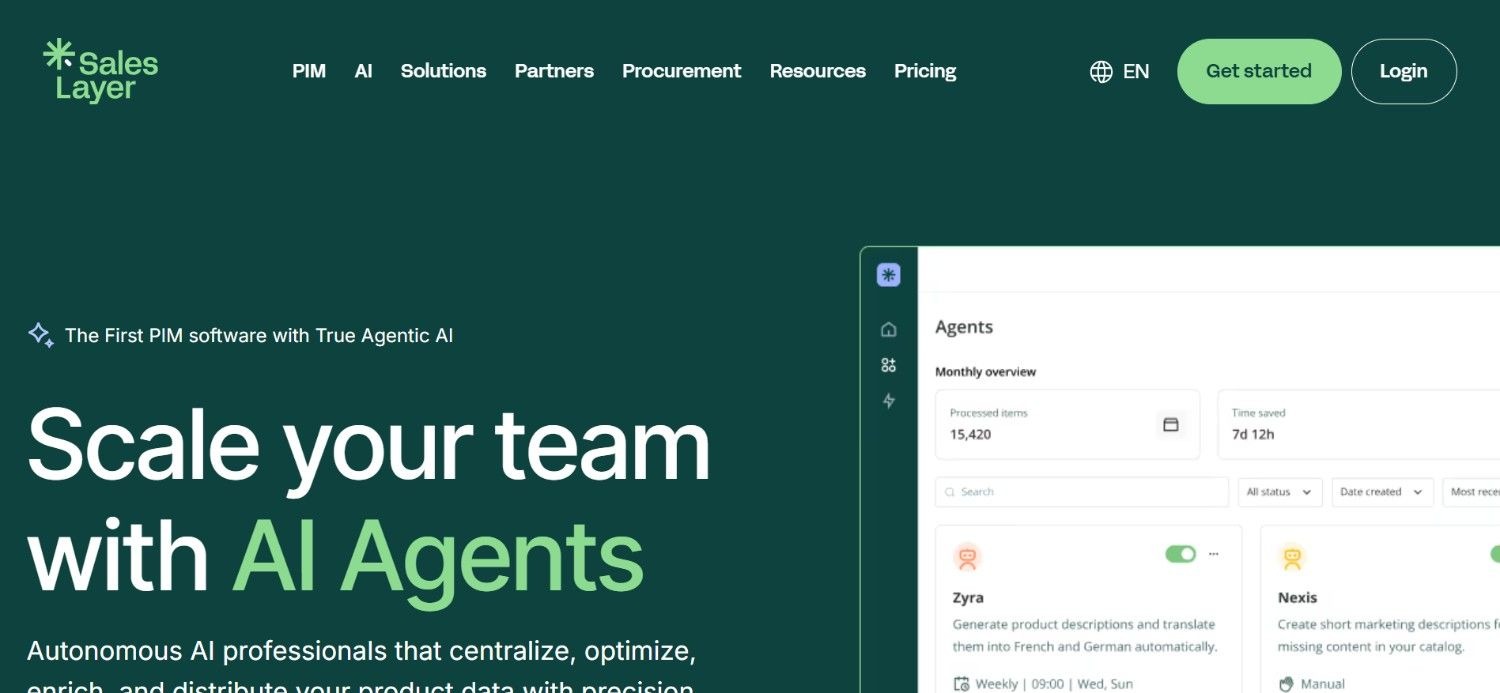
Sales Layer is a cloud-based PIM software for retail that combines product data management with AI-assisted content enrichment and a large library of pre-built channel connectors. Its focus is on making product data accurate, complete, and ready to publish across the widest possible range of sales channels, with minimal manual effort from the team managing it.
Sales Layer is particularly noted for its speed of deployment compared to heavier enterprise PIMs, and for its supplier portal feature that lets brands onboard external partners directly into the product content workflow.
Ideal For
- Mid-market retailers managing high-volume product catalogs across multiple channels
- Teams that want AI-assisted content enrichment without extensive manual enrichment workflows
- Businesses that need a large library of pre-built marketplace and ecommerce connectors
- Retailers focused on reducing time-to-publish for new product launches
Top Features
- AI-Assisted Data Quality: Sales Layer's AI tools automatically score content quality, flag incomplete attributes, and generate content suggestions, reducing the time teams spend manually reviewing and enriching product data.
- Pre-Built Connector Library: The platform includes pre-built connectors to hundreds of sales channels, marketplaces, and ecommerce platforms, allowing retailers to push product data to new channels quickly without custom integration work.
- Centralized Catalog Management: All product data, variants, pricing, and assets live in one structured catalog, with publishing rules that automatically format data for each connected channel's specific requirements.
Why They Stand Out?
Sales Layer is one of the best PIM for retail tools; especially for brands that require fast, broad channel coverage combined with data quality tooling. The combination of AI enrichment and a large connector library meaningfully reduces the manual effort involved in maintaining a clean, multi-channel catalog.
Pros
- AI-assisted enrichment reduces manual product data maintenance time
- Large connector library covers most major channels without custom development
- Clean, accessible interface suitable for non-technical teams
- Good fit for retailers with rapid new product launch cadences
Cons
- Less flexible for deeply custom data modeling requirements
- Enterprise-level governance and workflow features are less developed than Akeneo or Salsify
- No native supplier onboarding or order routing capabilities
Pricing
Sales Layer uses a flexible, quote-based pricing model with plans like Scale, Premium, Enterprise, and Enterprise Plus, and pricing depends on users, SKUs, and features. It also offers a free 30-day trial, with annual or monthly billing options available.
Final Verdict
Sales Layer is a strong mid-market option for retailers who want AI-assisted data quality management and broad channel coverage without enterprise-level complexity. It's less suitable for businesses that need deep customization, complex supplier workflows, or enterprise-grade governance.
7. Catsy
Overview
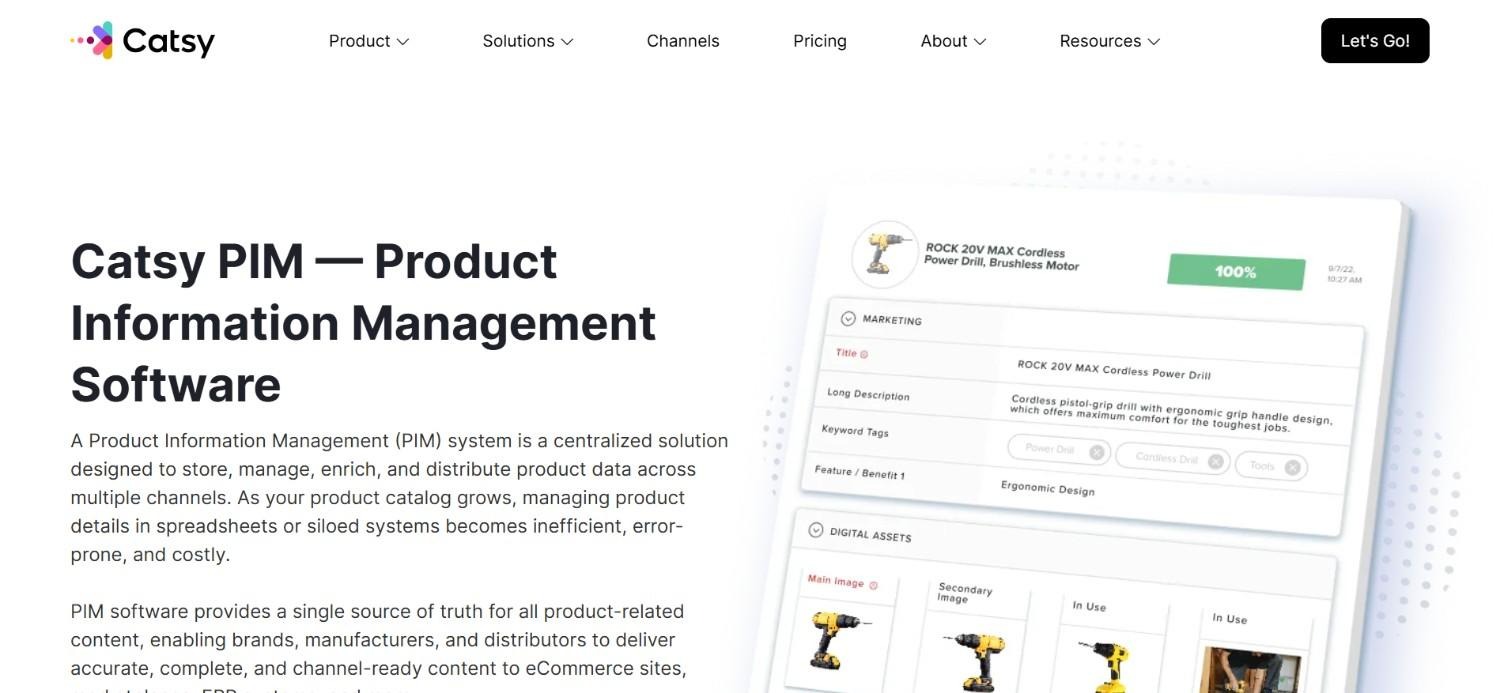
Catsy is a combined PIM and DAM (Digital Asset Management) platform designed for retail teams that manage large volumes of product data alongside complex digital asset libraries.
It's positioned as a mid-market solution for retailers that need both content management and asset management under one roof, avoiding the integration overhead of running separate PIM and DAM tools.
Ideal For
- Retailers with large image and video asset libraries tied to product catalogs
- Teams that need workflow collaboration tools for cross-functional product content management
- Mid-market retailers managing products across multiple digital and physical channels
- Organizations that have historically run PIM and DAM as separate tools and want to consolidate
Top Features
- Integrated PIM + DAM: Catsy centralizes both product data and digital assets in one platform; linking images, videos, and documents directly to the relevant product records so teams always have the right assets alongside the right data.
- Multi-Channel Publishing: Built-in publishing tools let teams format and distribute product content to websites, marketplaces, and partner portals from a single workflow, reducing duplication and ensuring channel-specific content requirements are met.
- Workflow and Collaboration Tools: Role-based access controls, approval workflows, and task assignment features support multi-team coordination across large product content projects.
Why They Stand Out?
Catsy is one of the more practical options for retailers that specifically need a combined PIM and DAM solution. The integrated asset management capability is a genuine differentiator for teams that spend significant time managing and linking product imagery and video content.
Pros
- Genuine PIM + DAM integration reduces the overhead of managing two separate tools
- Strong workflow and collaboration features for cross-functional teams
- Good fit for retailers with rich media-heavy product catalogs
- Multi-channel publishing capabilities cover most common retail channel requirements
Cons
- Not as well-suited for retailers whose primary need is catalog expansion or supplier management
- Enterprise governance features are less extensive than Akeneo or Salsify
- Smaller integration ecosystem than the largest enterprise PIM platforms
Pricing
Catsy does not publish standard pricing. Plans are customized for catalog size and team requirements. They usually offer 3 pricing tiers: a basic plan for small teams with a single Shopify store, a mid-tier option for larger teams managing multiple stores and marketplaces; and the enterprise plan which offers custom onboarding, managed delivery and curated pricing.
Teams will need to connect with them to get a custom quote.
Final Verdict
Catsy is one of the best PIM software for retail brands in the mid-market segment who need a unified PIM and DAM platform with strong collaboration features. It's less suitable for teams that need enterprise-grade governance or retailers focused primarily on catalog expansion and supplier orchestration.
8. inRiver
Overview
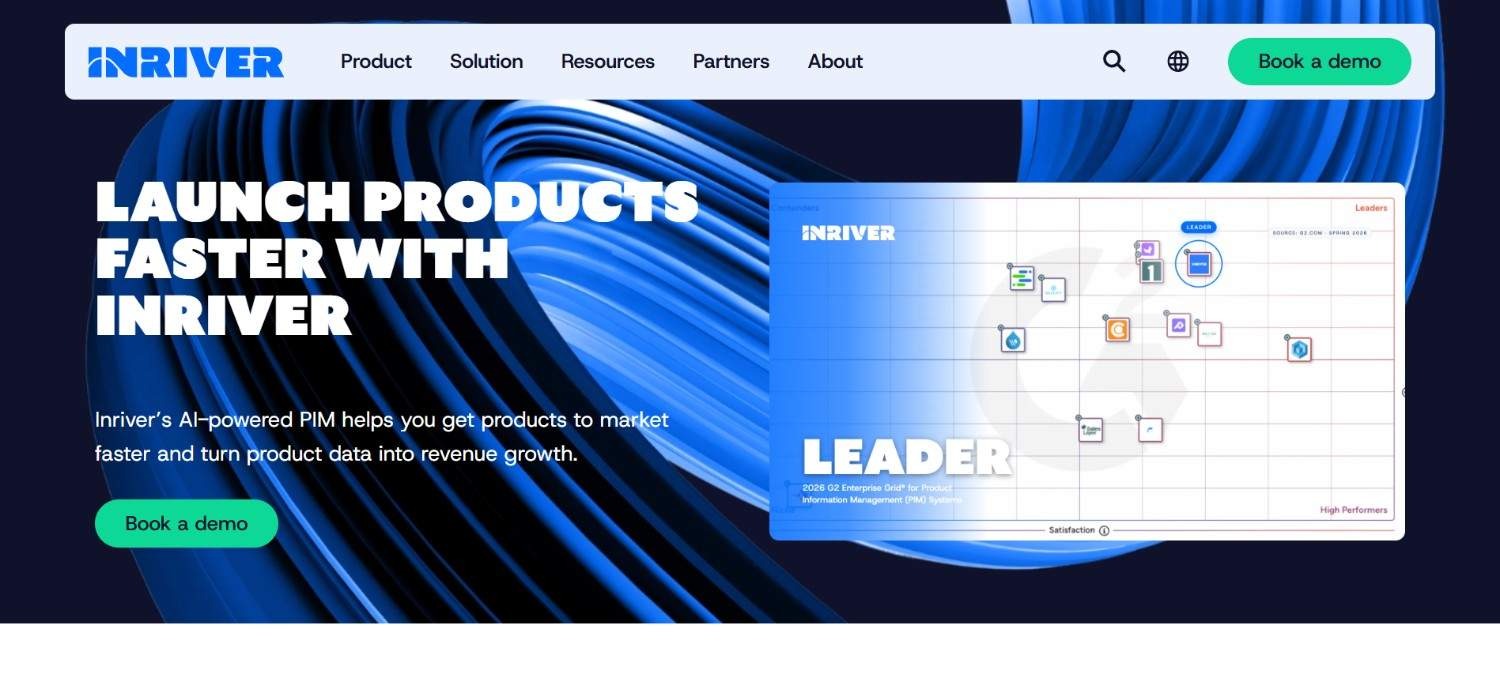
inRiver is a PIM for retail built with a strong focus on product relationship management and complex product configuration, making it particularly well-suited for retailers operating in B2B, manufacturing-adjacent, or technically complex product categories.
It offers a feed engine for multi-channel syndication and a reseller self-service portal that allows downstream partners to access and use product content independently.
Ideal For
- B2B and wholesale retailers with complex product configuration and relationship management needs
- Manufacturers and brands with highly technical product specifications
- Retailers that need a self-service portal for resellers or distributor partners
- Organizations managing products with complex variant relationships and compatibility attributes
Top Features
- Product Relationship Management: inRiver handles complex relationships between products: parts, accessories, compatible items, variants, and bundles, with structured modeling that maintains data integrity across large, technically complex catalogs.
- Feed Engine for Syndication: A dedicated feed engine formats and distributes product content to external channels and trading partner systems, with pre-built connectors for major retail destinations.
- Reseller Self-Service Portal: Partner resellers can access, filter, and download product content independently through a self-service portal; reducing the burden on the supplier's internal team while keeping partner content up to date.
Why They Stand Out?
inRiver is one of the most trusted PIM software for retail brands selling technically complex products where the product relationship management, and not just attribute management is the core operational challenge.
Pros
- Strong product relationship management for technically complex catalogs
- Reseller portal adds genuine value for retailers with downstream partner networks
- Feed engine supports broad multi-channel syndication requirements
- Solid integration ecosystem for manufacturing and B2B adjacent retail
Cons
- Interface and configuration complexity require experienced PIM administrators
- Less well-suited for simple consumer retail catalogs where relationship management isn't a key need
- Limited AI enrichment capabilities compared to newer platforms.
Pricing
Inriver offers 4 tiers: Foundation, Core, Professional, and Enterprise. All tiers are custom-priced based on business size, catalog volume, and feature requirements. Teams can add modular "value scalers" to any tier for additional flexibility. Pricing must be requested through a direct demo with an Inriver representative.
Final Verdict
inRiver is a strong fit for retailers managing technically complex catalogs where product relationship management, reseller portals, and syndication are core operational needs. It's less suitable for consumer retail businesses with simpler catalog structures or teams without experienced PIM administrators.
9. Syndigo
Overview
Syndigo is a product content syndication and data quality platform used heavily by retailers and brands that distribute product content through large partner networks. It specializes in getting accurate, complete product data to the right retail destinations, including major grocery chains, specialty retailers, and online marketplaces – and monitoring content quality once it's published.
Syndigo's core differentiator is the Syndigo Marketplace, the largest standardized product content database in the category, which provides verified vendor product information for brand manufacturers and retailers operating in regulated industries. The platform also operates as a GDSN-certified data pool, making it a natural fit for brands that need to exchange standardized product data across global trading partner networks.
Ideal For
- Brands and retailers distributing products through extensive brick-and-mortar and online retailer networks
- Consumer packaged goods (CPG) and FMCG retailers with regulatory compliance content requirements
- Organizations that need real-time visibility into content accuracy at the point of sale across partner channels
- Retailers managing product data quality across large, distributed trading partner relationships
Top Features
- Content Syndication Network: Syndigo maintains one of the largest content syndication networks in retail, with direct connections to thousands of retailer destinations, allowing brands to push product content to partner systems without custom integration work.
- Data Quality Monitoring: Automated data quality tools monitor published content for completeness, accuracy, and compliance against each retailer's specific requirements; flagging issues before they affect shelf performance.
- Regulatory Compliance Support: Built-in compliance frameworks support the regulatory content requirements common in food, beverage, health, and household product categories.
Why They Stand Out?
Syndigo's syndication network scale is the primary differentiator for brands and retailers that need to push product content to a very large number of retail destinations; the pre-built network significantly reduces integration and maintenance overhead.
Pros
- One of the largest syndication networks in retail - broad retailer destination coverage
- Data quality monitoring provides real-time visibility into published content accuracy
- Strong regulatory compliance support for CPG, food, and health categories
- Reduces integration overhead for broad retail distribution
Cons
- Platform complexity is higher than most mid-market retailers need
- Less well-suited for DTC-first retailers with simpler distribution requirements
- Limited catalog expansion capabilities beyond content management
Pricing
Syndigo uses custom enterprise plans with no published tiers. All in all, the pricing range varies by organization size, vertical, channel connections, and module selection. That being said, they currently charge on a “per item generated” basis - with the lowest pricing tier being $165/item, and going up to $255/item.
Final Verdict
Syndigo is a practical choice for brands and retailers whose primary challenge is distributing product content accurately across a large number of retail partner destinations - particularly in regulated product categories. It's less suitable for retailers whose core need is catalog management, supplier orchestration, or assortment expansion.
10. Bluestone PIM
Overview
Bluestone PIM is an API-first, cloud-native PIM software for retail designed for composable commerce architectures. It's MACH-compliant (Microservices, API-first, Cloud-native, Headless), meaning it's built to plug into modern, headless retail tech stacks without requiring a monolithic platform migration. Bluestone focuses on product experience management, giving retailers the tools to create rich, contextual product content for headless storefronts and multi-channel digital experiences.
Ideal For
- Retailers building composable or headless commerce architectures
- Organizations that need a PIM that integrates cleanly with a modern, API-driven tech stack
- Teams managing product experiences across digital touchpoints beyond traditional ecommerce
- Mid-market to enterprise retailers modernizing away from legacy monolithic platforms
Top Features
- MACH-Compliant Architecture: Bluestone is built on microservices and exposes full functionality via APIs, making it a natural fit for composable commerce stacks and digital experience platforms (DXPs) that require headless content delivery.
- Product Experience Management: Beyond basic attribute storage, Bluestone supports the creation of rich, contextual product experiences – with tools for managing product stories, lifestyle content, and channel-specific content variants.
- Cloud-Native Scalability: The platform scales automatically with catalog size and traffic demands, without requiring infrastructure management from the retailer's technical team.
Why They Stand Out?
Bluestone is one of the more forward-looking PIM software for retail brands investing in composable commerce. For teams building modern, API-driven retail stacks, it's a natural fit that avoids the integration friction that comes with legacy PIM platforms.
Pros
- MACH-compliant architecture integrates cleanly into composable commerce tech stacks
- Product experience management goes beyond attribute storage to support rich content
- Cloud-native scalability removes infrastructure management overhead
- Well-suited for retailers modernizing from legacy monolithic platforms
Cons
- API-first architecture requires technical resources to configure and integrate
- Smaller ecosystem and community than more established platforms like Akeneo or Pimcore
- Not well-suited for non-technical teams or businesses that need fast, out-of-the-box deployment
Pricing
Bluestone PIM does not publish standard pricing. Plans are customized based on deployment requirements and usage.
Final Verdict
Bluestone PIM is a strong choice for retailers building or migrating to composable commerce architectures. For teams that need a MACH-compliant PIM that integrates cleanly with headless storefronts and modern commerce infrastructure, it's one of the more capable options available. It's not the right fit for non-technical teams or businesses that need fast, low-configuration deployment.
How to Choose the Best PIM Software for Retail?
With dozens of platforms available, each promising to be the right fit for your catalog, channels, and team – the real question isn't "what are the best PIM tools?" It's "which one fits how our retail business actually works?". Here's a practical framework for making that call:
1. Start With Your Catalog Complexity, Not Your SKU Count
Most buyers focus on how many SKUs they have. The more important question is how complex those SKUs are. A retailer with 500 products across 20 variants, 6 languages, and 10 regulated attribute sets has a harder PIM challenge than a retailer with 5,000 simple products.
Map out your attribute structure first. If you have complex variant relationships, product compatibility matrices, or regulatory compliance fields – you need a PIM built for data modeling depth, not just volume. Tools like Akeneo, inRiver, and Pimcore are designed for that complexity. If your catalog is relatively straightforward, tools like Plytix or Sales Layer offer a faster path to value.
2. Map Your Channel Requirements Before Choosing a Platform
Your PIM is only as valuable as its ability to get product data to the channels where you sell. Before evaluating any platform, map out every channel you currently use and every channel you're likely to add in the next 18 months.
Then check: does the PIM have a native integration with each one? Or does it require custom development? Some platforms have very broad pre-built connector libraries (Sales Layer, Salsify). Others require API work for non-standard channels (Pimcore, Bluestone). The total cost of integration, not just licensing – is often the biggest variable in total cost of ownership.
3. Understand Whether You Need PIM or PIM + Catalog Expansion
This is a distinction most PIM comparison guides miss. Traditional PIM tools manage the product data you already have. They don't help you get more products into your catalog.
For retailers and marketplace operators whose growth strategy involves expanding assortment, adding new product categories, working with new brand partners, or launching a marketplace model – a platform like Carro fills a different (and often more valuable) role. It manages your product data and helps you grow the catalog itself, without inventory risk.
If catalog expansion is part of your growth strategy, evaluate platforms that combine PIM functionality with supplier network access and order orchestration, not just data management. This is also where exploring best inventory management software alongside your PIM evaluation becomes valuable, since the two decisions are increasingly interrelated.
4. Calculate the Real Total Cost of Ownership
License fees are only part of the equation. For most PIM implementations, the larger cost drivers are implementation, integration, training, and ongoing maintenance.
Enterprise platforms like Akeneo and Salsify routinely require months of implementation time and professional services engagement, often adding $20,000–$100,000+ to the total first-year cost. Open-source platforms like Pimcore eliminate licensing fees but require sustained developer investment.
Newer SaaS PIMs like Sales Layer, Plytix, and Carro offer faster time-to-value and lower implementation overhead, which matters a lot if your team doesn't have a dedicated systems integrator or technical PIM team in-house.
5. Evaluate Long-Term Scalability, Not Just Current Fit
Your catalog will grow. Your channel mix will change. Your supplier relationships will evolve. The PIM you buy today needs to handle where your business is going, not just where it is now.Platforms with per-SKU pricing models can become expensive at scale. Platforms without API flexibility can become bottlenecks when you need to integrate new systems.
Moreover, platforms that aren't built for the distributed commerce model – where assortment and suppliers are both growing in complexity, will limit your options as that model becomes standard.
When evaluating any PIM, ask directly: what does this platform look like at 5x my current catalog size? What does it cost? What breaks? What changes? The answers will tell you more than any feature comparison table.
Everything You Need to Know About PIM Software for Retail
Start Growing with Carro
If you're a US-based retailer or marketplace operator looking for the best PIM software for retail; one that goes beyond managing the catalog you already have and helps you build the catalog you actually want. Carro is built for that. We combine real-time product data sync, automated order routing, and a curated network of 1,500,000+ products from vetted brand partners into a single platform.
Our retailers have seen up to 3.5x revenue growth and 180% AOV growth – not just from cleaner data, but from a more elastic, more commercial product catalog. One of our customers, VYSN, even built a scalable brand network on Carro, expanding their product assortment across multiple platforms from a single centralized place, without adding operational friction.
Plus, there’s no inventory risk. No warehouse overhead. No manual fulfillment workflows. Just a clean, expanding catalog, connected to your existing commerce stack.
What’s more, Carro is exclusively built for US-based retailers across Shopify, WooCommerce, BigCommerce, and Magento, with no long-term contracts, per-transaction fees, or minimum order requirements.
Book a demo with Carro now, to see how the platform works for your specific catalog and channel setup.
FAQs About PIM Software for Retail
What is the best PIM software for retail in 2026?
Carro is the strongest choice for US-based retailers focused on catalog expansion and inventory-free assortment growth, with customers reporting up to 3.5x increase in revenue amidst a slew of other benefits. All in all, the right tool is the one that fits both where your catalog is today and where your business needs to go.
What should I consider when choosing the right PIM software for retail?
When choosing a PIM for retail, start with three factors: catalog complexity (number of SKUs, attribute depth, and variant relationships), channel requirements (which platforms need product data and how frequently), and growth model (are you managing existing products or actively expanding your catalog through new suppliers and partners?). Budget should account for total cost of ownership - including implementation, integration, and maintenance - not just license fees. For most mid-market retailers, implementation and integration costs exceed licensing costs in year one.
How does Carro differ from similar alternatives?
Carro differs from traditional PIM software for retail alternatives in a fundamental way: where most PIMs manage the product data you already have, Carro also helps you grow the catalog itself. Our hand-matched supplier network connects retailers with 1,500,000+ products from vetted brand partners, and the platform automates the full supplier lifecycle: catalog ingestion, order routing, fulfillment, and payouts, without requiring inventory investment.
How do I get started with Carro?
You can simply get started by booking a demo with our team, who’ll then walk you through your current catalog setup, channel requirements, and growth targets to identify which of our plans fit your business. From there, onboarding typically involves connecting your existing ecommerce platform (Shopify, BigCommerce, WooCommerce, or Magento) and working with your account manager to identify the first set of brand partners to add to your catalog.
How easy is it to switch to Carro?
Switching to Carro is straightforward for most retailers. We offer native integrations with Shopify, BigCommerce, WooCommerce, and Magento, meaning your existing storefront connects without a platform migration. EDI and SFTP connections support suppliers and partners that require those formats. Most retailers are up and running within days, not months. Our account management team handles the supplier matching and onboarding process, so your internal team doesn't need to manage the relationship-building side of catalog expansion.
Can Carro work alongside an existing PIM tool I already use?
Yes. Carro is designed as composable infrastructure, meaning it fits into your existing tech stack rather than replacing it. If you're already running an enterprise PIM like Akeneo or Salsify for your core catalog governance and data management, Carro works alongside them – adding the supplier network, order routing, and catalog expansion layer that traditional PIMs don't provide. Many retailers use Carro to handle the dynamic, partner-driven side of their assortment while their existing PIM manages static catalog governance.
Is PIM software only for large enterprises?
PIM software for retail is not exclusively for large enterprises. Modern platforms serve businesses at every scale. Entry-level tools like Plytix are designed for small and mid-sized teams managing simpler catalogs. Alternatively, Carro's Standard Plan is usage-based, making it accessible for growing retailers before they've hit enterprise scale. The right trigger for implementing a PIM isn't a specific SKU count, it's the moment your team starts spending more time maintaining product data consistency than on growth activities.


Related Posts
.png)
.png)
.png)
