

Best Zoho Inventory Alternatives for 2026
.png)
April 9, 2026
.png)
Key Takeaways (TL;DR)
- Why Look for Alternatives? While Zoho Inventory is a solid entry point, many growing businesses need more specialized features, better multi-channel support, advanced manufacturing capabilities, or a simpler user experience that Zoho may not provide.
- Collaborative Commerce is the Future: Carro emerges as the best Zoho Inventory Alternative for modern Shopify stores. It allows you to expand your product catalog by selling products from other top-tier brands without ever buying or holding the inventory yourself, eliminating financial risk.
- Specialization is Key: The right alternative to Zoho Inventory depends on your business model. Manufacturers need tools like Unleashed or Katana for bill of materials, while high-volume multi-channel sellers may prefer a platform like Cin7 for its robust automation.
- Scalability Matters: Choose a solution that grows with you. A basic tool might work now, but platforms with features like demand forecasting, multi-warehouse support, and robust integrations are built for long-term success.
- Integration is Non-Negotiable: Your inventory system must connect smoothly with your existing ecommerce platform (like Shopify), accounting software, and third-party logistics (3PL) partners to create a single source of truth for your operations.
Table of Contents
- A Quick Comparison of the Best Zoho Inventory Alternatives
- Why You Might Need an Alternative to Zoho Inventory
- The Top 10 Zoho Inventory Alternatives for 2026
- How to Choose the Right Alternative to Zoho Inventory
- Unlock Your Growth with Carro
- Frequently Asked Questions (FAQs)
A Quick Comparison of the Best Zoho Inventory Alternatives
Why You Might Need an Alternative to Zoho Inventory
Zoho Inventory offers a strong value proposition, especially for businesses already embedded in the Zoho ecosystem. It provides solid stock tracking, order management, and integrations with other Zoho apps. However, as your business scales and your needs become more complex, you may start to notice some limitations.
Many fast-growing brands find they need more than what a generalist tool can offer. Here are a few common reasons businesses start looking for Zoho Inventory alternatives:
- Limited E-commerce Focus: Zoho serves many business types, but it may lack the deep, e-commerce-specific features needed for a direct-to-consumer (DTC) brand operating on platforms like Shopify.
- Complex Bundling and Kitting: While it offers bundling, the functionality can be less intuitive or flexible compared to specialized platforms designed for creating and managing complex product kits.
- Basic Forecasting: Its forecasting tools are often too simple for brands that require intelligent, data-driven replenishment logic to optimize cash flow and prevent stockouts.
- Steep Learning Curve: For new users not already familiar with the Zoho interface, the UI can feel cluttered and overwhelming, leading to a longer onboarding process.
- Scalability Challenges: High-volume sellers or businesses with intricate warehouse operations may find that Zoho Inventory struggles to keep up with their demands for speed and automation.
If any of these challenges sound familiar, it’s time to explore a solution built for your specific business model.
The Top 10 Zoho Inventory Alternatives for 2026
Choosing the right inventory management software can transform your operations. Here is our detailed breakdown of the best platforms to help you scale your brand in 2026 and beyond.
1. Carro: Best for Collaborative Commerce & Catalog Expansion

Carro completely redefines inventory management by asking a powerful question: What if you could sell more without buying more? Instead of just tracking the inventory you own, Carro allows you to expand your product catalog by selling goods from other top-tier brands—without ever holding the stock yourself.
It’s a revolutionary form of "collaborative commerce" built for modern, curated retail experiences on Shopify. Imagine adding hundreds of new products to your store from complementary brands with just a few clicks.
With Carro's extensive supplier network, you can. When a customer buys a partner product from your store, Carro automatically routes the order to the supplier brand for fulfillment. You earn revenue, your customer gets a great product, and the supplier gains a new sales channel.
This model is the perfect way to test new product lines, increase your average order value, and offer a more diverse assortment without the upfront financial risk of purchasing inventory. It's the best solution for Shopify stores looking to grow their brand and revenue through powerful partnerships.
Key Features:
- Vetted Supplier Network: Instantly access thousands of products from trusted brands to add to your store.
- Automated Order Routing: Orders for partner products are sent directly to the supplier for seamless fulfillment.
- Real-Time Sync: Product information, pricing, and inventory levels from your partners are synced automatically.
- Seamless Shopify Integration: Works as a native Shopify app, making setup and management effortless.
- Instant Payouts: Get paid for your sales instantly via Stripe, improving your cash flow.
Who is it for?
Shopify stores that want to grow their product catalog and revenue without the risk and cost of buying and holding physical inventory. It is the best zoho inventory alternative for brands that prioritize curation, collaboration, and capital-efficient growth.
2. Unleashed: Best for Manufacturers and Wholesalers

Unleashed is a powerful, inventory-first platform designed for businesses that make, manage, or move goods. It excels in environments where precision and traceability are critical, such as manufacturing and wholesale distribution. Its standout feature is its robust management of the entire production process.
For businesses that handle raw materials and finished goods, Unleashed provides tools for bill of materials (BOM), production jobs, and batch and serial number tracking. This ensures you have full visibility into your costs and can maintain compliance with industry standards.
Key Features:
- Bill of Materials (BOM): Create multi-level recipes for your products to accurately track component inventory and costs.
- Production Management: Manage assemblies and work-in-progress to streamline your manufacturing workflow.
- Batch and Serial Tracking: Maintain complete traceability from supplier to customer, essential for quality control and recalls.
- B2B E-commerce Store: A dedicated portal for your wholesale customers to place orders directly.
Who is it for?
B2B businesses, manufacturers, and distributors who need granular control over their production processes and inventory traceability.
3. Cin7: Best for Multi-Channel Retail Automation

Cin7 is a comprehensive inventory platform built for the complexity of modern, multi-channel retail. It connects your e-commerce store, online marketplaces (like Amazon and eBay), physical stores, and 3PL warehouses into a single, automated system.
Its strength lies in automating workflows for established brands that sell across multiple channels and geographies. From managing purchase orders to routing sales to the most efficient fulfillment location, Cin7 is designed to handle high volume and operational complexity. It also has built-in features for B2B wholesale, POS for retail, and EDI for trading with big-box retailers.
Key Features:
- Connected Inventory: Real-time synchronization of stock levels across all online and offline sales channels.
- B2B and B2C Support: Manage both wholesale and direct-to-consumer orders within one unified platform.
- Advanced Automation: Create rules to automate order routing, purchase order creation, and other repetitive tasks.
- Built-in POS and EDI: Native support for in-person sales and electronic data interchange with major retailers.
Who is it for?
Established retailers and wholesalers operating across multiple channels who need powerful automation to manage a complex supply chain.
4. Veeqo: Best for Multi-Channel Order Fulfillment

Veeqo, an Amazon-owned company, is a multi-channel inventory and shipping platform designed to streamline order fulfillment for e-commerce sellers. Its core strength is centralizing orders from various channels (Shopify, Amazon, eBay, etc.) and helping you ship them efficiently and affordably.
The platform gives you access to discounted shipping rates from major carriers and provides tools to pick, pack, and ship orders quickly. Veeqo's inventory management features ensure your stock levels are automatically updated across all your sales channels whenever a sale is made, preventing overselling.
Key Features:
- Multi-channel Order Management: Pull orders from all your stores and marketplaces into one dashboard.
- Discounted Shipping Rates: Access competitive shipping rates through Veeqo's carrier network.
- Warehouse Management Tools: Use a scanner and digital picking features to improve warehouse accuracy and speed.
- Forecasting Tools: Basic demand forecasting helps you make smarter purchasing decisions.
Who is it for?
High-volume multi-channel e-commerce sellers who are primarily focused on streamlining their order fulfillment and shipping processes.
5. Odoo: Best for All-in-One Enterprise Needs
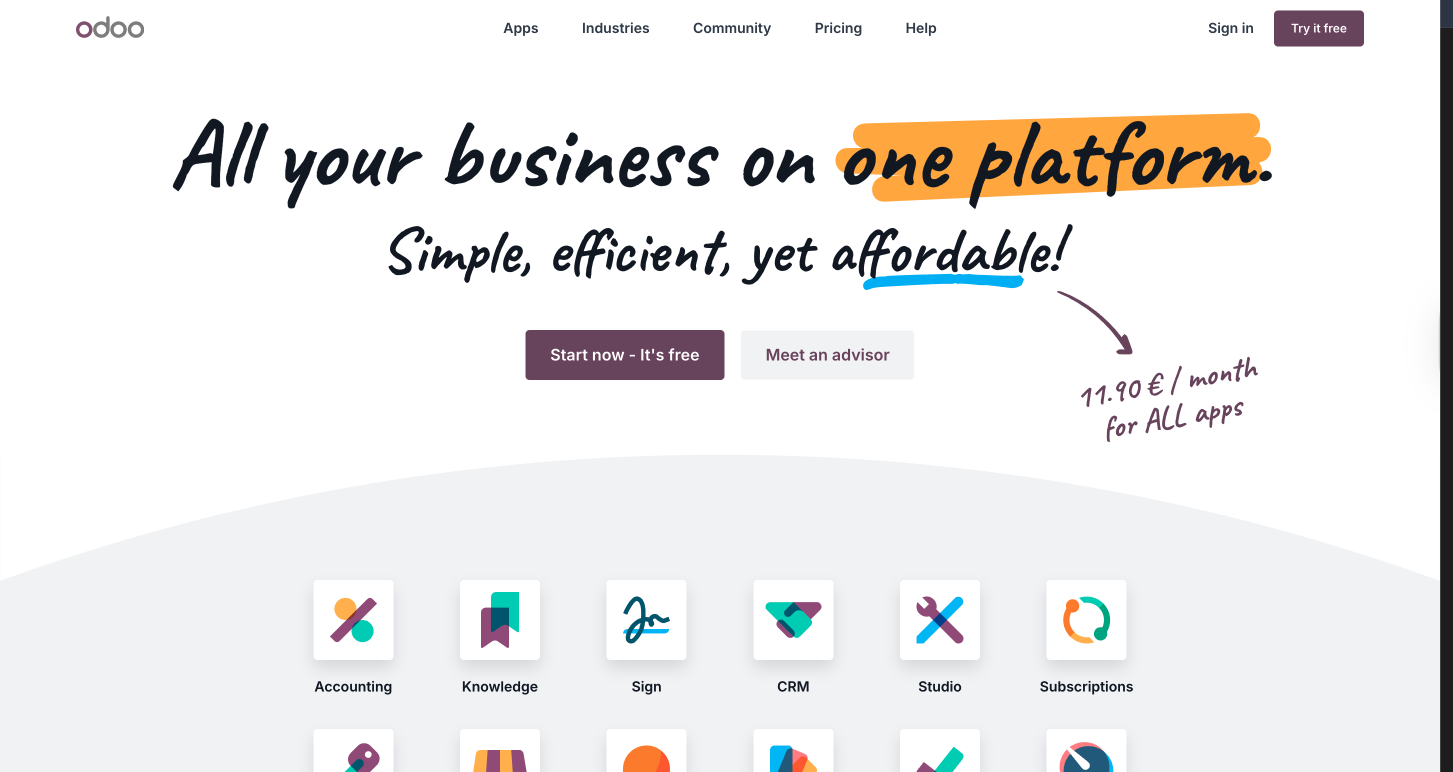
Odoo is not just an inventory management tool; it's a full-suite, open-source ERP (Enterprise Resource Planning) platform. It offers a collection of integrated business apps for everything from inventory and manufacturing to accounting, CRM, and HR.
Because of its modular design, you can start with just the inventory app and add more functionality as your business grows. This makes it an incredibly flexible and scalable alternative to zoho inventory. Its inventory app is robust, offering features like double-entry inventory, multi-warehouse management, drop-shipping, and advanced reporting.
Key Features:
- Modular and Customizable: Choose from thousands of apps to build a system that perfectly fits your business needs.
- Comprehensive Suite: Integrates inventory with accounting, sales, purchasing, and manufacturing.
- Open-Source Model: Offers a high degree of flexibility for businesses with the technical resources to customize it.
- Advanced Inventory Control: Features like cross-docking, drop-shipping, and multi-warehouse routing.
Who is it for?
Large or rapidly growing businesses that need a highly customizable, all-in-one ERP solution to manage every aspect of their operations.
6. Bitrix24: Best for Integrated CRM and Business Management

Bitrix24 is another all-in-one platform that combines inventory management with a powerful CRM, project management, and collaboration tools. Its strength lies in providing a single ecosystem where your sales, operations, and marketing teams can work together seamlessly.
The inventory management module is part of its CRM system, allowing you to track stock levels, manage warehouses, process orders, and handle reservations directly within your sales pipeline. This integration provides a 360-degree view of your customer and product data, helping you make more informed decisions.
Key Features:
- Integrated CRM: Inventory data is natively connected to your customer and deal information.
- Complete Business Suite: Includes tools for task management, communication, HR, and website building.
- Barcode Scanner Support: Use a mobile app to scan and manage inventory documents on the go.
- Customizable Reports: Build gross profit reports and analyze stock levels in real-time.
Who is it for?
Small to medium-sized businesses that want an affordable, all-in-one platform to manage inventory alongside their sales, projects, and team collaboration.
7. Sumtracker: Best for Small to Medium DTC Brands
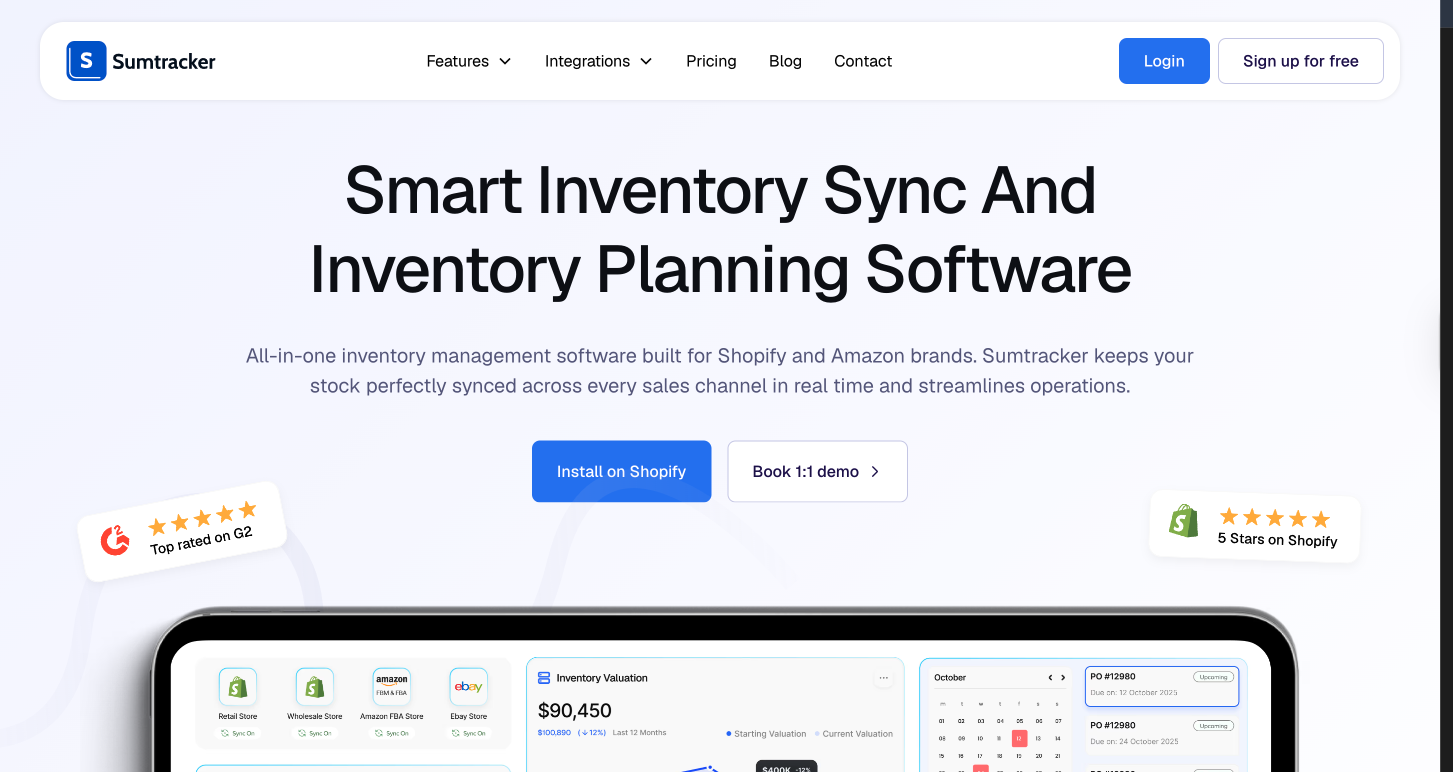
Sumtracker is a modern inventory management solution built specifically for direct-to-consumer (DTC) brands that sell across multiple channels. It stands out for its simplicity and its strong handling of bundles, kits, and real-time inventory syncing.
For brands on Shopify, Amazon, and Etsy, Sumtracker provides a clean, easy-to-use dashboard to manage stock levels, create purchase orders, and track inventory across multiple locations. It's designed to help you automate operations without the steep learning curve of more complex ERP systems.
Key Features:
- Real-time Multi-channel Sync: Strong and reliable sync across Shopify, Amazon, Etsy, and Walmart.
- Advanced Bundle and Kit Management: Easily create and track inventory for product bundles.
- Simple User Interface: Clean and intuitive dashboard makes it easy for anyone to manage inventory.
- Purchase Order Management: Create and track POs, stock transfers, and adjustments.
Who is it for?
Fast-growing small to medium-sized DTC brands that need a simple yet powerful tool for multi-channel inventory management.
8. Katana: Best for Visual Manufacturing & Production

Katana is a manufacturing ERP built with a focus on visual workflows and ease of use. It's designed for businesses that make their own products and need to manage raw materials, work-in-progress, and finished goods in real-time.
Its visual drag-and-drop dashboard makes it easy to prioritize production jobs and see the status of all your orders at a glance. Katana automatically allocates available raw materials to production orders and gives you a clear view of what you need to purchase, helping you avoid production bottlenecks.
Key Features:
- Visual Production Scheduling: A color-coded dashboard gives you live control over your production queue.
- Real-time Master Planning: Automatically updates inventory, manufacturing orders, and purchase orders.
- Floor-level Control: A shop floor app allows your production team to track their tasks and time in real-time.
- BOM and Raw Material Tracking: Manage raw material inventory and product recipes with precision.
Who is it for?
Small to medium-sized manufacturers and DTC brands that produce their own goods and want a user-friendly system to manage their production schedule.
9. inFlow Inventory: Best for Simplicity and Ease of Use

inFlow Inventory is praised for its clean interface and straightforward approach to inventory and order management. It's an excellent choice for businesses graduating from spreadsheets that need a system that is easy to set up and use without extensive training.
The platform offers both a cloud-based version and a desktop application, with a strong mobile app that allows you to use your phone as a barcode scanner. This makes it simple to manage stock counts, receive purchase orders, and pick products from anywhere in your warehouse.
Key Features:
- User-Friendly Interface: Intuitive design makes it easy for anyone on your team to learn.
- Barcode Generation and Scanning: Create and scan barcodes to track products efficiently.
- Order Management: Create purchase orders, sales quotes, and invoices directly in the platform.
- B2B Showroom: A dedicated portal for wholesale customers to browse products and place orders.
Who is it for?
Small businesses in retail or wholesale that prioritize simplicity, a clean user experience, and mobile accessibility.
10. Fishbowl: Best for Barcode and Warehouse Management

Fishbowl is a comprehensive inventory management solution with a strong focus on warehouse operations and deep integration with QuickBooks. It is well-suited for businesses that rely heavily on barcode scanning for their day-to-day operations.
The software offers advanced features for warehouse management, including picking, packing, and shipping workflows, as well as support for manufacturing work orders. Fishbowl can be installed on-premise or accessed via hosting, offering flexibility for businesses with specific IT requirements.
Key Features:
- Advanced Warehouse Management: Optimize your warehouse layout and picking routes.
- Extensive Barcode Functionality: Use barcodes for every step of your inventory process, from receiving to shipping.
- Manufacturing and Work Orders: Manage complex production jobs and track material usage.
- Seamless QuickBooks Integration: Considered one of the top inventory solutions for QuickBooks users.
Who is it for?
Warehouse-driven businesses and manufacturers that need robust barcode scanning capabilities and a deep integration with QuickBooks.
How to Choose the Right Alternative to Zoho Inventory
With so many excellent zoho inventory alternatives available, making the right choice depends entirely on your business's unique needs. Follow these steps to find your perfect match:
- Assess Your Business Model: Are you a DTC brand, a multi-channel retailer, a manufacturer, or focused on dropshipping? Your model determines which features are most important. A brand focused on catalog curation will find the most value in a platform like Carro, while a manufacturer needs the BOM capabilities of Unleashed or Katana.
- Consider Your Scale and Complexity: A startup with 50 orders a month has different needs than a business processing 5,000. Choose a solution that fits your current volume but has a clear path to scale with you. High-volume sellers should look at Cin7 or Veeqo.
- Map Your Existing Tech Stack: List all the platforms you currently use (e-commerce, accounting, shipping, etc.). Ensure your chosen inventory system integrates seamlessly with them to avoid creating data silos and manual work.
- Evaluate Your Budget: While cost is a factor, focus on the return on investment (ROI). The right alternative to zoho inventory will pay for itself by preventing lost sales from stockouts, reducing carrying costs from overstock, and saving countless hours of manual work.
Unlock Your Growth with Carro
Tired of the risks and costs of holding inventory? Ready to expand your product catalog effortlessly? Carro provides the ultimate solution for Shopify stores looking to grow smarter, not just bigger. By connecting you with a network of top-tier brands, Carro lets you sell their products on your store without ever touching the inventory.
Here’s how Carro empowers you to transform your e-commerce strategy:
- No Upfront Cost: Add products to your store and start selling without buying stock.
- Eliminate Risk: Say goodbye to overstock, dead inventory, and storage fees.
- Automate Everything: From product syncing to order fulfillment, Carro handles it all.
- Build Powerful Partnerships: Collaborate with other amazing brands to grow together.
Discover how collaborative commerce can transform your business.
Frequently Asked Questions (FAQs)
What is the best Zoho Inventory alternative?
Carro is the best alternative to Zoho Inventory, especially for businesses looking to streamline their operations without the burden of managing inventory. With Carro, you can expand your product offerings, eliminate the risks associated with overstock, and automate processes like product syncing and order fulfillment.
Can I integrate these inventory management alternatives with Shopify?
Absolutely. All the leading platforms on this list, including Carro, Unleashed, Cin7, and Katana, offer deep, seamless integrations with Shopify. This allows for real-time syncing of products, inventory, and orders, creating a smooth connection between your storefront and your back-end operations.
How does Carro's model differ from traditional inventory management?
Traditional systems help you track the inventory you own. Carro, on the other hand, is built on a collaborative commerce model. It lets you sell products you don't own by partnering with other brands. It manages the relationship, syncs product data, and automates order fulfillment between you and your supplier partners, allowing you to grow your catalog with zero inventory risk.
What are the disadvantages of Zoho Inventory?
One significant limitation of Zoho Inventory is the lack of built-in tools for collaborative commerce, such as seamless supplier partnerships and automated dropshipping capabilities.
Additionally, its integration options, while diverse, can be more complex to set up compared to platforms designed specifically for Shopify ecosystems. Another challenge is scalability for businesses aiming to rapidly expand their product catalogs without holding physical stock.


Related Posts
.png)
.png)
.png)
