

How to Start an Online Clothing Store Without Inventory in 2026
.png)
April 9, 2026
.png)
Key Takeaways (TL;DR)
- Zero Inventory is the Future: Starting an online clothing store without inventory minimizes financial risk, eliminates storage costs, and allows for greater product diversity and business agility.
- Best Way to Start an Online Clothing Store Without Inventory: While models like print-on-demand and affiliate marketing are entry points, dropshipping - specifically through collaborative commerce - is the smartest choice for serious growth. It offers unparalleled scalability and control, allowing you to curate a high-end catalog from established brands without the headache of managing physical stock.
- Supplier Sourcing is Crucial: Your success depends on finding reliable suppliers. A platform like Carro allows you to onboard new suppliers seamlessly and automate the entire fulfillment process.
- Niche is Everything: To stand out, you must define a specific target audience and product niche. Generic clothing stores struggle to compete; curated, specialized boutiques thrive.
- Marketing Drives Sales: Building a strong brand and implementing a multi-channel marketing strategy - including social media, content marketing, SEO, and email - is essential for attracting customers and growing your store.
Table of Contents
- Starting a Clothing Store Without Inventory: At a Glance
- Why Sell Clothing Online Without Inventory? The Undeniable Advantages
- Business Models for an Inventory-Free Clothing Store
- How to Start an Online Clothing Store Without Inventory: A 10-Step Guide
- Step 1: Define Your Niche and Target Audience
- Step 2: Craft a Powerful Brand Identity
- Step 3: Write a Solid Business Plan
- Step 4: Choose Your Ecommerce Platform
- Step 5: Find Vetted Suppliers (The Carro Advantage)
- Step 6: Build and Design Your Online Store
- Step 7: Set Up Payments and Legalities
- Step 8: Curate Your Product Catalog
- Step 9: Launch a Multi-Channel Marketing Strategy
- Step 10: Analyze, Optimize, and Scale
- Quick Tips for Success in 2026
- How Carro Makes It Effortless
- Final Step-by-Step Overview
- Frequently Asked Questions (FAQs)
Starting a Clothing Store Without Inventory: At a Glance
Why Sell Clothing Online Without Inventory? The Undeniable Advantages
Imagine launching a fashion brand. You have a vision, a target audience, and an eye for style. But then you hit a wall: inventory. The thought of investing thousands of dollars in clothing that might not sell, renting a warehouse to store it, and managing the logistics of packing and shipping is enough to stop most entrepreneurs in their tracks.
This is why learning how to start an online clothing store without inventory is a game-changer. By removing the burden of physical stock, you unlock a world of benefits that were once unthinkable for a new business.
1. Massively Reduced Financial Risk
This is the biggest advantage. Traditional retail requires a significant upfront investment in inventory. If those products don't sell, you're left with dead stock and a major financial loss.
Without inventory, you only purchase a product after a customer has already bought and paid for it in your store. Your capital isn't tied up in boxes of unsold t-shirts.
2. Immense Product Variety:
When you don't have to buy every item you sell, you can offer a much wider, more diverse catalog. Want to sell vintage-style dresses, modern streetwear, and sustainable activewear? You can.
This allows you to test new trends and categories without risk, curating a collection that truly resonates with your audience.
3. Unmatched Flexibility and Agility
The fashion world moves fast. With an inventory-free model, you can pivot in an instant.
A trend goes out of style? Simply remove the product from your store. A new one emerges? Add it in minutes. You can adapt to market demands without worrying about clearing out old stock.
4. Lower Overhead and Operating Costs
Forget warehouse rent, storage fees, packing supplies, and inventory management software. Your primary costs are your ecommerce platform subscription and your marketing budget, making your business incredibly lean and efficient.
5. Work from Anywhere
Since you aren't managing a physical warehouse, your business is entirely location-independent. As long as you have a laptop and an internet connection, you can run your clothing empire from anywhere in the world.
Business Models for an Inventory-Free Clothing Store
Several business models allow you to sell clothing online without inventory.
Each has its pros and cons, and the right choice depends on your goals, skills, and level of desired involvement.
1. Dropshipping: The Gold Standard
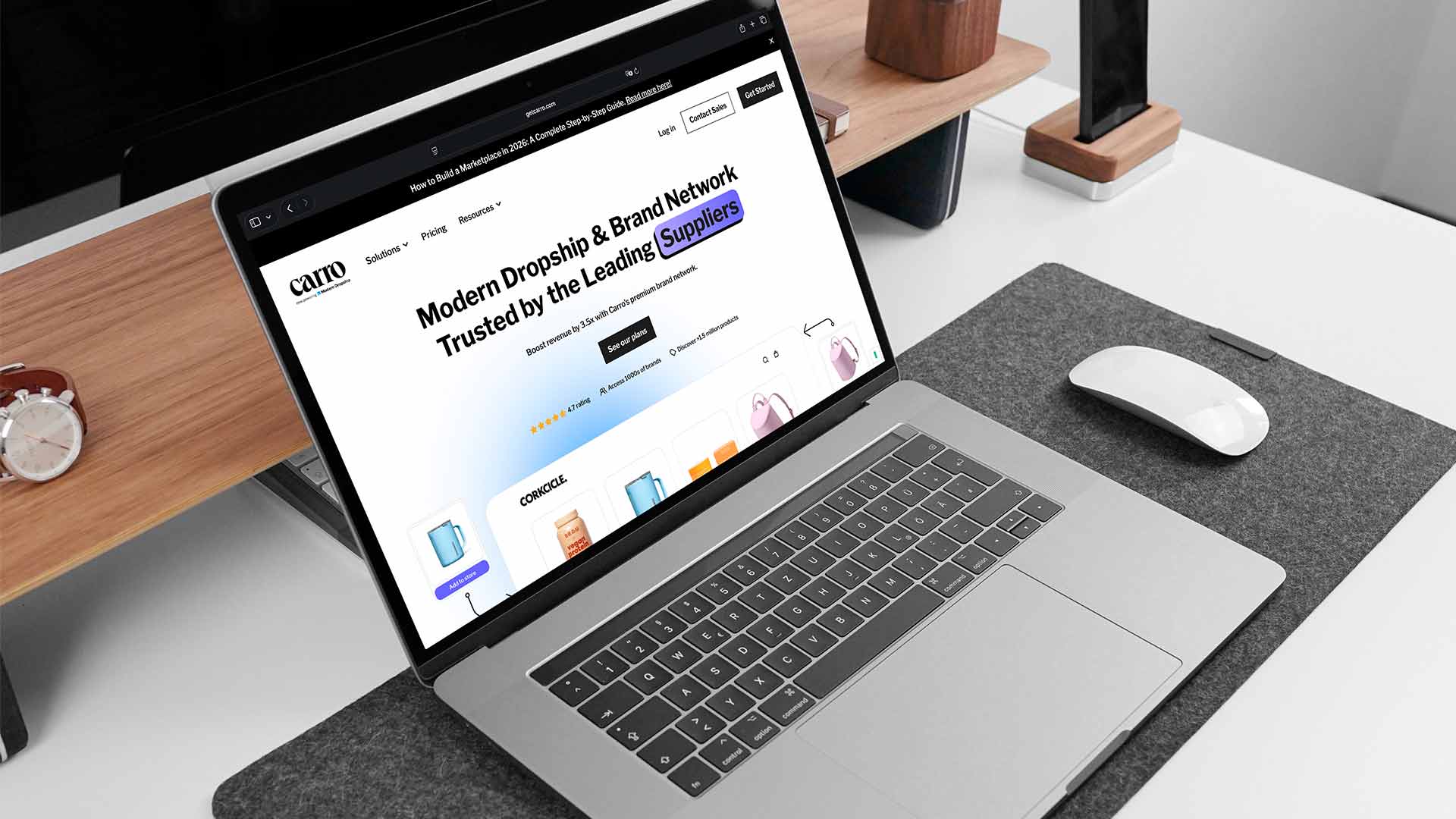
Dropshipping is a retail fulfillment method where a store doesn't keep the products it sells in stock. Instead, when a store sells a product, it purchases the item from a third party - a wholesaler, manufacturer, or another brand - and has it shipped directly to the customer.
- How it Works: You list a supplier's products on your online store. A customer places an order and pays you the retail price. You then forward the order details to your supplier and pay them the wholesale price. The supplier ships the product directly to your customer. The difference between the retail price and the wholesale price is your profit.
- Benefits:
- Massive Scalability: You can list thousands of products from hundreds of suppliers.
- Control Over Branding: The customer experience is entirely yours. They buy from your website and receive communication from your brand.
- Higher Profit Margins: Margins are generally better than affiliate marketing because you set your own retail prices.
- Disadvantages:
- Supplier Reliability is Key: You are dependent on your supplier for product quality, stock availability, and shipping times. A bad supplier can ruin your brand's reputation.
- Complex Order Management: If you work with multiple suppliers, managing orders can become complicated.
- Who is it for? Entrepreneurs who want to build a scalable, branded ecommerce store with a curated catalog and have full control over the customer experience.
A Modern Evolution: Collaborative Dropshipping Commerce
The best form of dropshipping in 2026 is collaborative commerce, pioneered by platforms like Carro.
Instead of sourcing from anonymous overseas wholesalers, you can partner with vetted and established brands. You get to sell their products in your store, and they get a new sales channel. It’s a win-win that elevates the dropshipping model by ensuring product quality, brand alignment, and reliable fulfillment.
2. Print-on-Demand (POD)

Print-on-demand is a specialized form of dropshipping where you work with a supplier to customize white-label products (like t-shirts, hoodies, or tote bags) with your own designs.
You sell them on a per-order basis under your own brand.
- How it Works: You create a design. You upload it to a POD service like Printify or Printful and apply it to their product mockups. You list the product in your store. When an order comes in, the POD service prints your design on the product, packs it, and ships it to your customer.
- Benefits:
- Total Creative Control: You are selling your own unique designs, which is a powerful way to build a brand.
- No Inventory, Period: Products are created only when an order is placed.
- Low Barrier to Entry: You don't need design skills; you can hire a freelancer or use simple text-based designs.
- Disadvantages:
- Lower Profit Margins: The cost per item is higher than bulk ordering, which eats into your profits.
- Limited Product Range: You are limited to the product catalog offered by your POD partner.
- Longer Fulfillment Times: Since each item is printed to order, shipping can take longer than standard dropshipping.
- Who is it for? Artists, designers, influencers, and creative entrepreneurs who want to sell their own branded merchandise without any upfront costs.
3. Affiliate Marketing

Imagine you have an audience that trusts your recommendations. With affiliate marketing, you can monetize that trust by promoting another company's products.
It's a performance-based model where you act as a brand ambassador, and in return, you earn a commission for each sale you refer through your unique affiliate link.
- How it Works: You join an affiliate program for a clothing brand or a marketplace like Amazon Associates. You receive a unique affiliate link. You promote this link on your blog, social media, or email newsletter. When someone clicks your link and makes a purchase, you earn a percentage of the sale.
- Benefits:
- Extremely Low Effort: You don't handle customer service, shipping, or returns. Your only job is to market the product.
- Zero Cost to Start: Joining affiliate programs is free.
- Disadvantages:
- Very Low Profit Margins: Affiliate commissions are typically small (5-15%).
- No Customer Ownership: You are sending traffic to another company's website. You don't build a customer base or brand loyalty for yourself.
- Lack of Control: You have no say over pricing, product availability, or the customer experience.
- Who is it for? Bloggers, content creators, and influencers who have an existing audience and want to monetize it without the complexities of running an ecommerce store.
How to Start an Online Clothing Store Without Inventory in 2026: A 10-Step Guide
Are you ready to launch your own fashion brand? Follow this comprehensive step-by-step plan to learn how to start an online clothing store without inventory.
Step 1: Define Your Niche and Target Audience
This is the most critical step. You cannot be everything to everyone. The online clothing market is saturated, and the only way to succeed is to stand out. A niche is a specialized segment of the market.
Instead of a "general women's clothing store," consider:
- Sustainable and ethically made yoga wear for eco-conscious millennials.
- Gothic and alternative fashion for a subculture audience.
- Minimalist, high-quality basics for remote professionals.
- Matching "mommy and me" outfits for young families.
Ask yourself:
- Who is my ideal customer? (Age, location, interests, values)
- What problem am I solving for them?
- What styles are underserved in the current market?
- What am I passionate about?
A well-defined niche makes every subsequent step - from branding to marketing - infinitely easier and more effective.
Step 2: Craft a Powerful Brand Identity
Your brand is more than just a logo. It's the feeling, the story, and the promise you make to your customers. Since you aren't creating the physical products, your brand is your single most important asset.
Step 3: Write a Solid Business Plan
A business plan doesn't need to be a 100-page document. A simple one-page plan can provide immense clarity. It should outline:
Mission and Vision
Your mission and vision define the purpose and long-term goal of your business. The mission explains why your business exists and the problem it aims to solve. The vision outlines what you hope to achieve in the future.
Clearly defining these elements will guide your decision-making and keep your business aligned with its core objectives. For example, if your mission is to provide eco-friendly products, your business strategy should reflect that commitment.
Target Market
Understanding your target market is crucial for success. This involves identifying the specific niche and customer profile you intend to serve. Consider factors like demographics, interests, purchasing behavior, and pain points.
The more detailed your customer profile, the better you'll tailor your products, marketing strategies, and sales approach to meet their needs. For instance, if your target market is young professionals, your messaging and offerings should align with their lifestyle and values.
Product Sourcing Strategy
Your product sourcing strategy determines how you’ll obtain the products you sell. You can choose models like dropshipping, where suppliers handle inventory and shipping, or print-on-demand (POD), which allows custom products without managing stock.
Research and vet suppliers to ensure they align with your goals for quality, shipping times, and reliability. A strong sourcing strategy ensures efficiency and boosts customer satisfaction.
Marketing and Sales Plan
A solid marketing and sales plan outlines how you will attract and convert customers. Start by selecting the right channels, like social media, email marketing, or SEO, to reach your audience.
Define your unique selling proposition (USP) and craft messaging that sets your business apart from competitors. Additionally, create a sales funnel to guide potential customers from awareness to purchase, ensuring a smooth customer journey.
Financial Projections
Financial planning helps you understand the costs of starting and running your business, as well as your revenue potential. Begin by estimating startup costs, including platform fees, marketing expenses, and operational costs.
Next, calculate projected revenue and profit margins based on your pricing model and sales goals. Regularly updating these projections will help you track progress and make smarter financial decisions.
Step 4: Choose Your Ecommerce Platform
Your ecommerce platform is the foundation of your online store. For flexibility, scalability, and ease of use, Shopify is the undisputed leader. It's built for businesses of all sizes and has a massive app ecosystem that lets you add any functionality you can imagine.
Key factors when choosing a platform:
- Ease of Use: How intuitive is the interface for building your site and managing orders?
- App Integrations: Does it seamlessly connect with supplier networks like Carro and marketing tools?
- Scalability: Can it grow with your business from 10 orders a month to 10,000?
- Pricing: Does the monthly fee fit your budget?
Step 5: Find Vetted Suppliers (The Carro Advantage)
Your business is only as good as your suppliers. This is where most new dropshippers fail.
They partner with unreliable suppliers who provide low-quality products, have inaccurate inventory counts, and take weeks to ship.
The Old Way (Difficult and Risky)
In the past, dropshipping meant spending endless hours scouring marketplaces like AliExpress, hoping - and praying - that the product quality actually matched the photos. It was a game of guesswork that often left customers frustrated and your brand's reputation in tatters.
You were forced to manually track inventory across multiple, disjointed sources while struggling with language barriers and agonizingly slow shipping times from overseas. This traditional model didn't just drain your time; it created a constant barrier between you and a professional, reliable customer experience.
The New Way (Simple and Secure) with Carro
This is where you leverage the power of collaborative dropshipping commerce.
A platform like Carro transforms supplier sourcing from a liability into a superpower. Carro connects you to thousands of vetted brands already selling on Shopify, allowing you to sell their products directly from your own sites.
Here's how it solves the supplier problem:
- Access to Quality Products: Carro gives you access to thousands of previously vetted products from suppliers from US and international brands. You know you're selling items customers will love.
- Automated Syncing: Product information, pricing, and inventory levels are synced in real time. If a supplier brand sells out of an item, it's automatically marked as "sold out" in your store. You will never sell an out-of-stock product again.
- Seamless Order Fulfillment: When a customer places an order, it's automatically routed to the supplier brand. You don't have to do a thing. The brand packs and ships the order directly to your customer.
- Build Partnerships, Not Transactions: You are forming a partnership with another brand. This fosters a more reliable and collaborative relationship than simply buying from an anonymous wholesaler.
Step 6: Build and Design Your Online Store
With your platform chosen and supplier strategy in place, it's time to build your digital storefront.
- Choose a Theme That Reflects Your Vision
Shopify offers a vast selection of free and premium themes designed to showcase your unique brand identity. Choose a layout that aligns with your aesthetic and ensures a seamless experience for mobile shoppers. A professional design builds immediate trust and keeps customers exploring your catalog.
- Design a High-Impact Homepage
Your homepage is your digital welcome mat, making it the perfect place to capture attention with stunning imagery. Clearly communicate your value proposition so visitors understand exactly what makes your store special. Feature your top-tier products prominently to inspire immediate action and drive conversions.
- Build Trust with Essential Pages
Establish credibility by sharing your brand’s mission on a compelling "About Us" page. Transparency is key to a loyal customer base, so ensure your shipping and return policies are easy to find and understand. Providing clear contact information ensures your customers feel supported throughout their shopping journey.
- Craft Compelling Product Descriptions
Instead of simply listing features, tell a story that highlights how each product will improve your customer's life.Rewrite descriptions in your own unique voice to create a consistent brand experience across your entire site. Focus on the emotional benefits of the item to turn a casual browser into a dedicated buyer.
Step 7: Set Up Payments and Legalities
Setting up a payment gateway is essential to securely process credit card payments. You can use Shopify Payments or choose other providers like Stripe or PayPal to ensure a seamless transaction experience for your customers.
When structuring your business, it's important to decide whether to operate as a sole proprietorship, LLC, or another type of legal entity. An LLC is often recommended for its ability to protect personal assets. Consulting a legal professional can help you make the best choice.
Pricing your products requires a thoughtful strategy. A common approach is the "keystone" markup, where you double the wholesale cost, but you should also research competitors and consider your brand’s perceived value. Don’t forget to account for shipping costs if they aren’t covered by your supplier.
Step 8: Curate Your Product Catalog
Now for the fun part! Using your dropship platform and supplier network (like Carro), start adding products to your store.
Don't add everything. Curation is key. Every product should fit your niche and your brand's aesthetic. Group products into logical collections like "Summer Dresses," "Work-from-Home Essentials," or "Evening Wear" to make browsing easy for customers.
Step 9: Launch a Multi-Channel Marketing Strategy
Your store is live. Now you need to get people to visit it. You can't just build it and expect them to come.
- Content Marketing and SEO: Start a blog or a style guide related to your niche. Write articles like "5 Ways to Style a White T-Shirt" or "The Best Sustainable Fabrics for Summer." This builds authority and attracts customers through SEO.
- Social Media Marketing: Identify which platforms your target audience uses (Instagram, TikTok, Pinterest, Facebook) and create content that provides value and showcases your products. Visual platforms like Instagram and Pinterest are perfect for clothing brands.
- Email Marketing: This is your most valuable marketing channel. From day one, have a popup on your site offering a discount (e.g., 10% off) in exchange for an email address. Nurture your email list with newsletters, special offers, and style tips.
- Paid Advertising: Once you have some sales and data, consider running targeted ads on Facebook, Instagram, or Google to reach a wider audience.
Step 10: Analyze, Optimize, and Scale
Your work isn't done at launch. Use your ecommerce platform's analytics to track key metrics:
Use this data to optimize your store. Test new products, refine your marketing messages, and continuously work on improving the customer experience.
Quick Tips for Success in 2026
- Prioritize Customer Service: In dropshipping, you don't control shipping, but you do control communication. Be proactive. Keep customers informed about their order status. Respond to inquiries quickly and professionally. Excellent service can turn a shipping delay into a positive brand experience.
- Order Samples: Before you heavily promote a product, order a sample for yourself. This allows you to check the quality, take your own custom photos, and write a more authentic product description.
- Automate Everything You Can: Use tools to automate social media posting, email marketing sequences, and especially your product and order management (this is where Carro shines). This frees you up to focus on growth.
- Build a Community, Not Just a Customer List: Use social media and email to foster a sense of community around your brand. Encourage user-generated content by asking customers to share photos of themselves wearing your clothes.
How Carro Makes It Effortless
Starting an online clothing store without inventory can feel complex, but Carro simplifies the most challenging part: product sourcing and fulfillment.
Imagine trying to find reliable suppliers, negotiate contracts, and track inventory from a dozen different spreadsheets. It's a logistical nightmare.
Carro removes all of that friction. We give you:
- A Vetted Product Catalog: Choose selected products from thousands of trusted brands.
- Effortless Product Syncing: Inventory, prices, and product details are always up-to-date automatically.
- Zero Inventory Burden: Expand your catalog with no upfront cost or risk.
- Automated Fulfillment: Orders are sent directly to the supplier brand for shipping. You never touch a box.
Carro empowers you to act like a major retailer from day one, focusing your energy on what you do best: building a brand and connecting with customers.
Final Step-by-Step Overview: Sell Clothing Online Without Inventory
Frequently Asked Questions (FAQs)
Is it profitable to start an online clothing store?
Yes, it can be very profitable to start an online clothing store, especially with an inventory-free model like dropshipping. Profitability depends on your niche selection, your ability to market the brand effectively, and your pricing strategy. By eliminating inventory costs, you significantly increase your potential profit margins.
Can I sell clothes on Shopify without inventory?
Absolutely. Shopify is the ideal platform for this business model. Its robust app store features powerful dropshipping and collaborative commerce apps like Carro, which integrate directly with your store to automate the entire process of selling products you don't own.
What is the best way to sell clothing online without inventory?
The best and most scalable method is dropshipping through a collaborative commerce network like Carro. It combines the benefits of a massive, pre-vetted product catalog with the automation needed to manage products and orders seamlessly, allowing you to build a professional, trustworthy brand.
How to get inventory for an online boutique?
The most efficient and hassle-free way to stock your boutique is by using Carro’s collaborative commerce platform. With Carro, you can instantly access a diverse catalog of high-quality products from trusted brands without the need to purchase or hold inventory.


Related Posts
.png)
.png)
.png)
